Does your company have an app to run your business? Is your company model built on an app? If you have not opted for a mobile app yet, then it’s time to work with a localized mobile app in 2025. Everyone must begin somewhere, thus it’s crucial to aim toward dominating your local market. However, if you have a popular app that is gaining popularity, downloads, and favourable reviews, it’s time to consider mobile app localization. Why? Because having your app available in just one app store market means you’ll lose out on millions of potential purchases. Did you realize that most internet users aren’t based in the United States? This might surprise you. The world’s largest concentration of mobile subscribers is in the Asia/Pacific area. But mobile usage is rising from Southern America to Northern Africa. It’s time to invest in expansion by localizing your mobile app if you want to see further growth in your company. Many companies present in the global market are providing app localization services, Check out 5 important benefits of mobile app localization that can boost your business growth here:
Benefits of mobile app localization
- Access to the international market
- Increase Your Reach Worldwide
- Competitive Advantage
- Increased Visibility
- Guaranteed ROI
1. Access to the international market
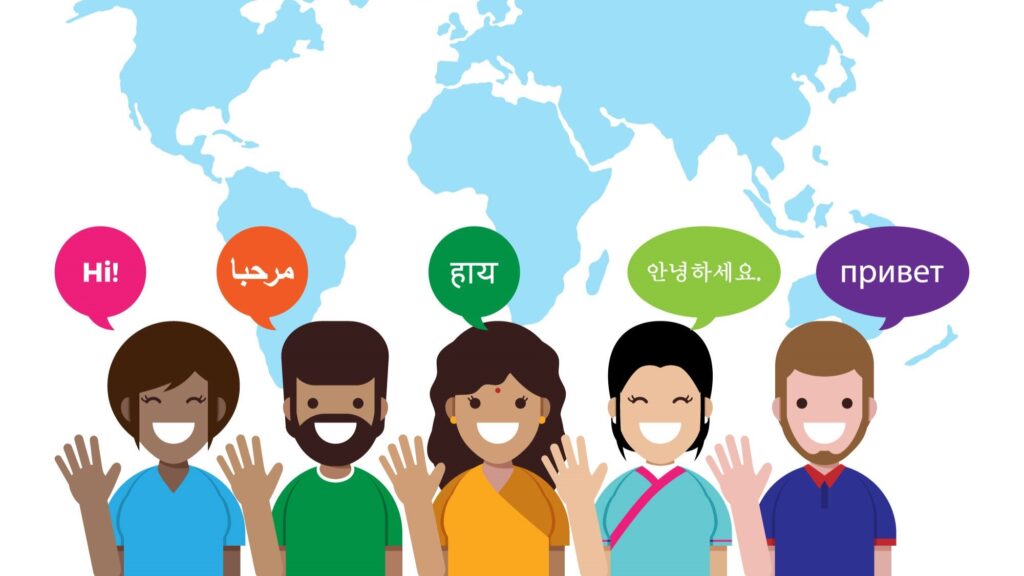
Depending on the nations you chose to localize your mobile app for, the choices are practically unlimited. You won’t be able to roll out a full international mobile app localization project at once, so select the countries that indicate higher demand for your product or service. Your industry’s very nature gives you access to a global market. But that doesn’t mean that you should strive to access the entire global market, particularly without performing an in-depth preliminary investigation. You will be able to make your app available to your target audience all over the world, which is one of the main advantages of localizing it. If you try to sell your non-localized app in a foreign market, it’s likely that the local user won’t be interested in learning about your app because it’s not in their native tongue.
2. Increase Your Reach Worldwide
Nowadays, mobile apps are a major driver of global corporate growth. And there is no ignoring the reality that 99% of these apps are offered in the English language by default. Despite the fact that English is the language used the most today, some people are illiterate in even this language. As a result, you need to understand the importance of localization of your mobile app to expand its reach globally.
3. Competitive Advantage
The app market, as you well know, is a competitive area. The first step in promoting your software is getting consumers to download it. Your app won’t endure very long if it doesn’t live up to expectations. Nearly 90% of people delete apps right away after downloading them. Among them, only 16% will download an app again. Why does this matter? You will have a competitive edge unlike any other if you invest in mobile app localization that is faultless and provides your target market with the best user experience possible.
Additionally, you’ll need to understand how to prepare your software for regional app stores. For iOS, this involves ensuring sure your keywords are in the titles and app names. For Google Play, your app description will be scanned, so make sure you know the important search terms used by users in this market. Even if you aren’t converting your software into another language, you still need to think about unit conversions, currency, and regional slang. Irish people, for instance, don’t take vacations; they take holidays, so your ASO strategy will need to change. If you localize your mobile app correctly, you will stand head and shoulders over the rivals who do not. Not to mention those who fail to release their app in the intended language.
4. Increased Visibility
Even if your software is well-liked in the US, it still needs to be modified for other English-speaking areas. Your ASO approach should be incorporated from the outset, whether you’re localizing for the UK, India, or Russia. Localizing the text, graphics, and descriptions of your program will increase its visibility in the Google Play and Apple App Store. Make sure that your app has the proper amount of keywords without stuffing.
A great ASO plan will encourage more downloads since your app will appear to more users. Even if you’re on a small budget, some element of mobile app localization is necessary if you want to get in front of the correct users. Additionally, thorough app localization is necessary to prevent your software from being destroyed if you want to encourage positive reviews to raise your position.
5. Guaranteed ROI
Localization of mobile applications will pay out financially. The localization process may initially appear expensive, particularly if you need to deal with native-speaking, qualified translators. But if you localize your app effectively, your ROI is certain. It will also be simpler once the localization process has begun each time you expand into a new nation. Why? Well, you’ll still have to come up against different laws, languages, and buyer behaviour, but you’ll build up a knowledge curve and efficient methods for getting things done. ROI is not an exact science, and not all businesses will see the same ROI. However, a study discovered that localized apps received greater downloads. How many more? A staggering 128% more! Therefore, if you’ve been thinking about localizing your mobile app, the time is now! Day Translations can assist you with completing a successful mobile app localization project for iOS or Android, for any country in the world. For further details or a free estimate, get in touch with us right away. You’ll be happy you did because localization has so many benefits.
Conclusion
App localization initially appears to be pricey. To make your material available to people all over the world and maximise your results, you will need a team of committed developers, native translators, and local marketing professionals, particularly if you plan to expand into many different markets. Therefore, you will greatly increase your chances of success if you release your mobile app in various languages for each market you intend to target. You will eventually need to use app localization to reach a bigger audience if you provide a service or own a business. Mobile apps must be localized immediately. This expands the markets for your goods and services while increasing revenue. If you want your software to become well-known, earn money, and expand your company, give it a try. This makes it possible for businesses to localize their apps and attract more customers by tailoring the app experience to the user’s region. VerboLabs is a language translation company that can build your mobile app and grow your business.
It would be smart to take into account the potential benefits that a mobile app could have for your company as well. If it is enabling your success and offering your brand a competitive edge among a sea of rivals. The process of developing a mobile app could be challenging. Designing a mobile app that can fulfil your customers’ demands and go above and beyond to exceed their expectations is a smart practice to keep in mind. Instead of wanting them to be let down, you want them to be impressed. Customers are more inclined to make another purchase if they are happy with it.