The importance of language and communication is deeply connected to human life. From childhood to adulthood, we use language to express thoughts, share emotions, build relationships, and grow in society. Without language, structured interaction would not exist. Every conversation at home, every classroom lesson, every business meeting, and every digital message depends on human communication.
In today’s world, communication goes beyond spoken words. It includes gestures, facial expressions, tone, digital messages, and even AI-driven interactions. In a multilingual and globalized society, understanding the true language importance becomes even more critical. It shapes education, business growth, cultural identity, and global connections.
This blog talks about the importance of language and communication, its role, functions, impact on individuals and society, and how it influences business and globalization in the modern digital era.
Understanding Language and Communication

Communication is the exchange of ideas, thoughts, and emotions. Language is the tool that makes this exchange possible. It gives structure to our thoughts and makes it possible to express complex feelings or detailed information.
But communication is not just about speaking—it’s about understanding. Tone, context, and even cultural background influence how messages are interpreted. This is especially important in multilingual contexts, where a small error can change meaning entirely. Professional translation support becomes valuable in ensuring accuracy and clarity across languages.
What Is Language? Understanding the Foundation of Human Communication

Language is a structured system of symbols, sounds, and signs used by people to express ideas and emotions. It is the primary language of communication that makes interaction meaningful. Language includes:
- Words (spoken and written)
- Grammar rules
- Symbols and signs
- Sounds and tones
Human communication becomes possible because language provides structure. Without structure, messages would be confusing. There is a small difference between language and communication:
- Language is the system.
- Communication is the process of sharing information using that system.
In simple terms, language is the tool, and communication is the action.
What Is the Relationship Between Language and Communication?
The language and communication relationship is direct and interdependent. Language enables communication. Communication becomes effective when language is:
- Clear
- Shared by both parties
- Contextually appropriate
When communication becomes effective when language is simple and understandable, misunderstandings reduce. For example:
- A teacher explaining a math concept in simple English improves understanding.
- A doctor using clear language builds patient trust.
- A brand using familiar words connects better with customers.
Thus, language is the foundation that supports meaningful communication.
Why Is the Importance of Language in Communication So Critical?
The importance of language in communication lies in three major areas:
- Expression of Thoughts: Language allows individuals to express ideas clearly. Without words, emotions remain unspoken.
- Emotional Connection: Language builds bonds. Saying “thank you” or “I understand” strengthens relationships.
- Knowledge Transfer: Education depends on language. Scientific discoveries, legal systems, and cultural values are preserved through language.
To briefly explain the role of language in communication, it acts as the bridge between mind and society. At the individual level, it shapes identity. At the societal level, it builds systems and order.
What Are the Functions of Language in Communication?
The functions of language in communication are diverse. Each function serves a different purpose. Before exploring them, understand that language does more than share facts. It influences feelings, decisions, and culture. Key Functions:
- Informative Function: Shares facts and knowledge. Example: News reporting.
- Expressive Function: Shows emotions and opinions. Example: Personal conversations.
- Persuasive Function: Influences decisions. Example: Advertisements.
- Social Function: Builds relationships. Example: Greetings and small talk.
- Cultural Preservation: Passes traditions and history to future generations.
When we explain the role of language in communication, we see that it supports society at every level: education, law, politics, media, and business.
Why Is Language Essential for Humans?
To explain why language is essential for humans, we must look at psychological and social aspects. Language supports:
- Cognitive development (thinking ability)
- Social bonding
- Identity and belonging
- Learning and education
So, what is the importance of language in our life? It defines who we are. It helps children develop reasoning skills. It allows communities to grow and cooperate. Studies show that children exposed to strong communication environments perform better academically. This proves the practical impact of language on development.
What Is the Role of Language in Everyday Communication?

The answer to what is the role of language in everyday communication can be seen in daily activities. Language supports:
- Family conversations
- Workplace meetings
- School education
- Media and entertainment
Effective communication in daily life depends on clarity and empathy. Poor language use can damage relationships. How communication shapes relationships is simple: respectful and clear language builds trust, while harsh or unclear language creates distance. At work, clear communication increases productivity by up to 25% (based on workplace productivity studies). This shows the real-world value of language.
What Is the Role of Non-Verbal Communication Alongside Language?
The role of non-verbal communication is equally important. Non-verbal elements include:
- Body language
- Facial expressions
- Tone of voice
- Eye contact
For example, saying “I agree” with a negative tone sends mixed signals. In different cultures, gestures have different meanings. This connects directly to language diversity and society, where cultural understanding becomes essential. Non-verbal cues strengthen or weaken spoken messages. Therefore, both verbal and non-verbal communication must align.
How Does Language Diversity Impact Society in a Globalized World?
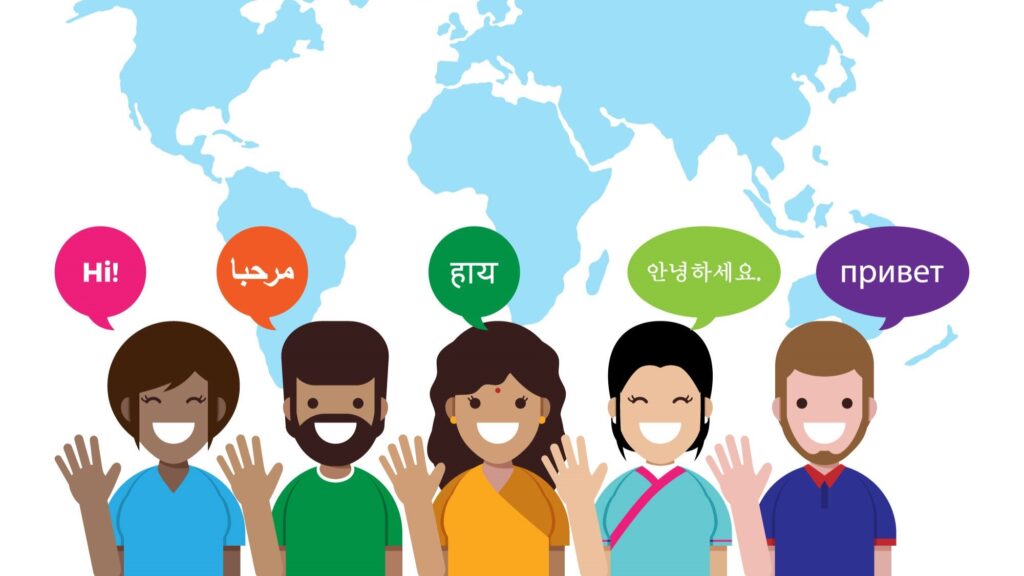
Language diversity and society are closely connected in modern times. We live in a multilingual world. India alone has 22 official languages. Globally, over 7,000 languages exist. In terms of global society communication, digital platforms have made cross-border communication easy.
Which means of communication has the most important role in making the world a global society?
→ Language-enabled digital communication through internet platforms. Communicating across languages and cultures promotes inclusion and understanding. However, language can also become a barrier if not translated correctly.
What Is Language? Discuss the Importance of Language in Business Communication
To answer what is language discuss the importance of language in business communication, we must see its impact on:
- Internal communication
- Customer trust
- Brand messaging
- Cross-border expansion
Companies that invest in multilingual communication strategies reach wider audiences. Businesses often focus on overcoming communication barriers in business by using professional translation and localization. Clear language improves brand credibility. Miscommunication can result in financial loss and reputational damage.
As language evolves, so does the need for accurate translation. Modern translation workflows combine the speed of AI tools with the precision of human linguists. Many language service providers, including VerboLabs, adopt this balanced approach to ensure translations stay both fast and contextually correct.
What Is the Influence of Technology on Language?

The influence of technology on language is significant. The evolution of digital communication includes:
- Emails
- Messaging apps
- Social media
- AI chatbots
Technology increases speed but may reduce emotional depth. AI translation tools help in communicating across languages and cultures, but they require human review to ensure linguistically accurate communication. Technology must support clarity, not replace human sensitivity.
How VerboLabs Supports the Importance of Language and Communication
When discussing the importance of language and communication, professional support becomes essential. VerboLabs provides:
- Professional translation support
- Culturally aligned translation
- AI-driven translation with human refinement
- Multimedia localization services
They focus on linguistic accuracy and sector-specific expertise, ensuring businesses connect globally without losing meaning. By maintaining cultural awareness in translation, VerboLabs enables strong global society communication.
Learn more at VerboLabs or explore their professional localization services to request a free consultation.
What Are the Challenges in Language and Communication?
Even though language is powerful, challenges exist. Before listing them, understand that most problems arise due to lack of clarity or cultural understanding.
Major Challenges:
- Language barriers
- Cultural misinterpretation
- Over-reliance on technology
- Poor translation quality
Solutions include:
- Clear messaging
- Cultural awareness in translation
- Professional translation support
- Regular communication training
This approach supports overcoming communication barriers in business and society.
Conclusion
The importance of language and communication remains central to human life. It shapes identity, builds relationships, supports education, strengthens businesses, and connects the world. From daily conversations to international trade, human communication drives progress.
In today’s multilingual and digital world, clarity, inclusivity, and cultural awareness are more important than ever. Whether in family life, education, or business, the correct use of language ensures trust and understanding. As technology evolves, the need for linguistically accurate communication and cultural sensitivity increases.
Understanding the language and communication relationship helps individuals and organizations grow responsibly. Language is not just a tool; it is the foundation of human civilization and global cooperation. If you want to strengthen your global communication with professional, culturally aligned translation and localization support, connect with VerboLabs today and take your message beyond borders.

Strengthen your global communication. Partner with VerboLabs for accurate, culturally aligned translation services.
FAQs
Language helps people express thoughts and emotions clearly. It forms the base of meaningful and structured communication.
Language supports daily interactions at home, school, and work. It reduces confusion and builds better understanding.
Shared language creates trust and emotional bonding. It allows people to share experiences and values easily.
Clear language builds professionalism and customer confidence. It prevents misunderstandings and strengthens brand image.
Technology makes communication faster and global. However, it requires careful language use to maintain clarity and cultural sensitivity.
Language barriers and cultural differences can cause misinterpretation. Poor translations may also impact trust and business outcomes.
Using multiple languages promotes inclusion and respect. It helps people from different cultures connect effectively.
Cultural awareness ensures messages are respectful and contextually accurate. It prevents misunderstandings in global and business communication.