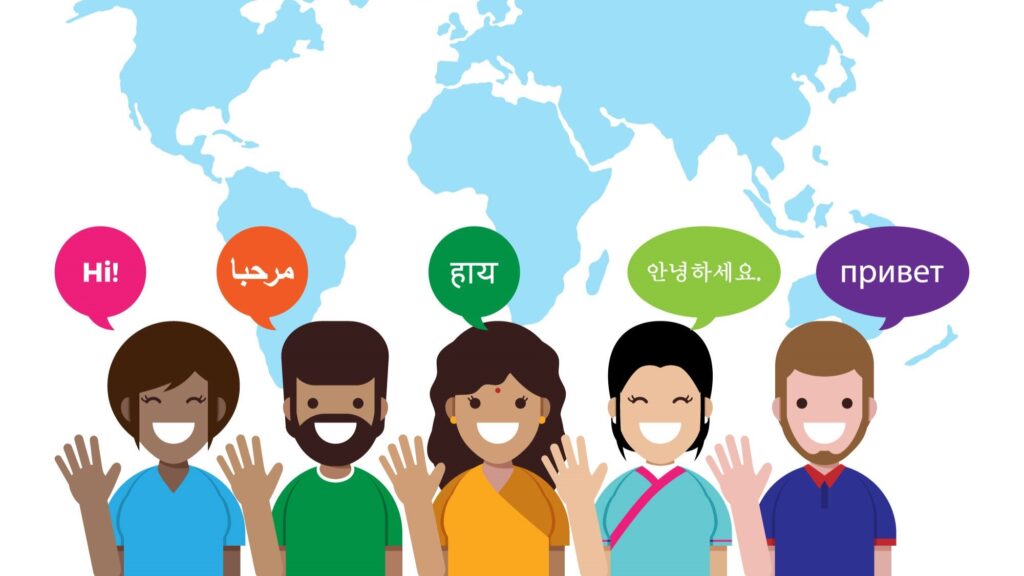

Communication is not merely a matter of words, but is highly cultural. Culture is significant in the manner in which individuals receive messages, instructions, tone, and intent. Misunderstanding of this context will result in a breakdown of global communication, thus unsuccessful UX, inefficient marketing, and unsuccessful localization processes. One of the most important frameworks for understanding these differences is high-context vs. low-context cultures.
The two types of communication are important to the delivery and reception of meanings between regions, and are of paramount importance to translation, localization, and international user interaction.
This guide defines what high-context or low-context culture is and gives actual examples, how they influence business and localization, and offers best practices in adapting material to meet the needs of global audiences.
What is the meaning of the terms, high context vs low context culture?
A high context culture definition refers to societies where communication relies heavily on implicit meaning, shared understanding, non-verbal cues, and relationships. A lot of the message in these cultures is between the lines, and what is not said may be as important as what is actually said.
By contrast, examples of low-context culture imply a communication style in which messages are not hidden, indirect, and vague. The meaning is well stated, instructions are clear, and ambiguity is minimised as much as possible.
These concepts matter because cultural context in communication determines how messages are perceived. Even the correct translation may be confusing, obnoxious or unhelpful without the alignment of the translation to the style of the target context.
Real-Life Applications of High and Low-Context Cultures
The cultures that belong to the high context are usually located in Japan, China, South Korea, and the majority of Arab countries. The communication in these cultures focuses on relationships, respect, hierarchy, and indirect communication. There is meaning in silence, tone and situation awareness.
Low context cultures refer to nations such as the United States, Germany, the Netherlands and Scandinavia. In this case, communication is appreciative, transparent and efficient. There are no grey areas in instructions, and comments are precise; anyone who is ambiguous is viewed as having a problem.
The global environment, be it through email communication, UX microcopy, or a marketing slogan, is frequently associated with confusion when a specific cultural approach is introduced to another one without any adaptations.
The Effect of High-Context vs Low-Context Cultures Communication on Global Business

In international business, differences in high vs low context in business communication can create friction if not understood.
Multinational teams can suffer in the process of misunderstanding; when direct feedback from the low-context cultures is found uncivilised to the high-context team, or where indirect communication can be perceived as unclear or evasive to low-context teams.
There is also a difference in leadership styles, negotiation styles and decision-making styles. To give an example, a short e-mail message that demands immediate response can be valued in a low-context society but can be viewed as rude or disrespectful in a high-context one.
Without clear cross-cultural communication strategies, these differences can slow projects, damage relationships, and reduce trust.
Influence on Localization and Translation
Localization goes far beyond language–it is fundamentally about cultural adaptation in translation. A statement that is perfectly effective in one cultural situation will fail dismally in another.
High-context cultures tend to use gentler wording, polite expressions, indirect demands and words that are used to build relationships. Low-context cultures, in turn, presuppose clear and simple directives, clarity, and efficiency.
Literal translation frequently fails when contextual communication in localization is ignored. Even a technically correct translation can be unnatural, confusing or an inappropriate translation when cultural expectations are not taken into account.
Best Practice in Cross-Cultural Communication between High Context and Low-Context Cultures

Global communication needs to be deliberate and studied. Teams must research cultural norms, user expectations, style of communication, and localize content before creating or localizing it.
The tone must be changed throughout the content of the UI, marketing copy, help documentation, and customer support. The localized content can be tested by native users to detect any tone problems in the test early.
Having cultural style guides in the localization workflow would ensure consistency. It is important to have knowledge of when directness and relationship cues are to be prioritised, as part of the balance between clarity and cultural sensitivity.
Useful Guidelines on Localization Teams
To localization professionals, the meaning of implied meaning is paramount. Very often, translators should be able to register what is meant and not what is said.
Native reviewers and cultural consultants are useful in the discovery of tone mismatches and unintentional interpretations. The match between voice and message with the local expectations enhances engagement and usability.
Examples can be making onboarding flows more welcoming than instructional, making error messages less blameful, or modifying marketing campaigns so that they speak more to the heart than to the head in high-context markets.
Use of AI in Localization by Context
Advances in AI translation and cultural context have improved speed and scalability in localization. AI has the ability to detect trends, propose culturally relevant expressions, and expedite business processes.
Nonetheless, AI tends to be ineffective at subtleties, connotation, and etiquette. AI can be misleading unless human validation is directly provided to determine the level of politeness, humour, or indirect intent.
A hybrid solution is the best solution; the AI should be used on the initial stage, and the final step is to have the work checked by the human experts to make sure it is culturally accurate and relevant.
The Way VerboLabs Assists Brands in Cross-Cultural Communications
VerboLabs is a mixture of linguistic accuracy and profound cultural understanding that enables brands to perform well in the international market. It pays attention to both linguistic and contextual approaches.
The services are localized translation services, UX and copy adaptation services and cultural validation services across markets. By addressing cultural nuance in global messaging, VerboLabs helps reduce misinterpretation and increase user trust.
What is achieved is increased engagement, better communication and content that is more native-like, not translated.
Conclusion
Understanding high-context vs. low-context culture is essential for anyone involved in global communication, localization, or international business. Context styles have an influence on the interpretation, beliefs, and behaviours of messages.
Effective localization services are not only about words but also about culture, tone, and common meaning. Organisations can become more engaged with international audiences by adjusting their communication strategies and workflows to the cultural context.
To communicate effectively and culturally in their brands, collaboration with the knowledgeable localization companies, such as VerboLabs, is the difference.

Looking to localize your content with cultural accuracy—not just correct words? Partner with VerboLabs for expert translation and localization worldwide.
Frequently Asked Questions
High-context cultures rely on implied meaning and shared understanding, while low-context cultures communicate ideas directly and explicitly.
They influence tone, clarity, and interpretation—what feels polite in one culture may seem vague or rude in another.
Japan, China, and Arab countries are typically high-context, while the U.S., Germany, and Scandinavia are low-context cultures.
AI tools help with speed, but they often miss nuance and intent without human cultural review.
Because effective localization adapts meaning, tone, and intent—not just words—to fit cultural expectations.
Use indirect language, relationship-oriented messaging, and culturally appropriate tone supported by native review.
Common errors include literal translation, overly direct tone, and ignoring local communication norms.
It affects how instructions, errors, and calls-to-action are perceived, shaping trust, usability, and engagement.