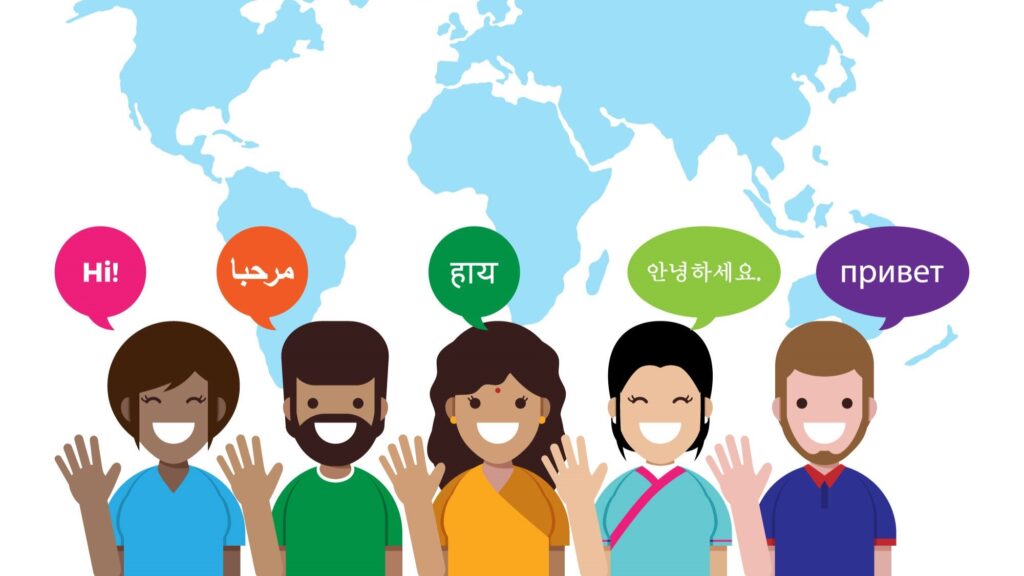

In 2026, global marketing will be focused on hyper-personalisation, AI-assisted content development, and local-first strategies grounded in cultural relevance, trust, and regulatory compliance. As global marketing trends in 2026 evolve, organizations must rethink their international marketing strategies to support sustainable global expansion. Brands that will succeed on a global scale will leverage language and culture as strategic assets rather than treating them as afterthoughts.
Global growth no longer means just expanding into more countries; it means connecting with diverse audiences in meaningful ways across multiple countries.
This blog highlights the changing face of global marketing in 2026 by examining the key trends driving international growth and identifying actionable steps for organizations to maintain their competitive advantage.
The New Landscape of Global Marketing in 2026

As brands’ growth has changed due to digital acceleration and increased reliance on AI, they now view global expansion with a focus on providing an authentic local experience for each audience rather than a generalised global message. This shift reflects a broader move toward global digital marketing strategies that emphasise localization and regional relevance.
Some key trends developing within 2026 and how brands will approach international growth are:
- AI technology is used throughout the entire workflow of content creation
- A demand for brands to provide a hyper-personalised connection with their audiences
- A stronger emphasis on providing localized and culturally relevant messaging
- Increased regulations regarding global data privacy and compliance
The combination of these trends will force marketers to re-evaluate their planning, execution and eventual scaling of their marketing efforts through multiple geographic locations.
Also Read,
- The Complete Guide to Localization Services: Make Your Brand Global in 2026
- Why Is Multilingual Content Marketing Essential?
- Boost Your Conversions with Professional Copywriting & Content Creation
Prediction #1 — Hyper-Personalised Global Experiences
Unlike translating content into multiple languages for global marketing, hyper-personalisation involves personalising a brand’s marketing strategy in 2026 across three main dimensions; culture, regional buying behaviour, and context.
An example of cultural preference-based personalisation would be using different images, tones, humour, and calls to action in a global campaign based on the region you are marketing in. Local relevance has a direct relationship to engagement, trust and conversion rates. This approach is central to modern multilingual marketing strategies designed for effective cross-border engagement.
Prediction #2 — Language Matters More Than Ever
In 2026, localized content of native quality enhances brand credibility, whereas poorly translated materials lead to negative consumer perceptions and lower ROI. Consumers expect multilingual content throughout the entire customer journey, and companies that implement Language are now a core pillar of localization in global marketing, not a final execution step. AI-assisted localization improves output but will still require human input regarding cultural sensitivity, nuance, and tone.
Prediction #3 — AI-Driven Content Creation and Optimisation
Global content production is being driven by AI. The coordination of these two is being used by marketers to:
- Help marketers produce language versions of advertising copy
- Create landing pages in foreign languages
- Tailor messages to audiences, based on the latest performance results
Although these strategies are working well, the combination of AI and human resources should be the way forward. AI enables scalable international growth strategies when paired with human editorial oversight.
Using AI provides speed and stability, while a team of human reviewers supports accuracy, soundness, and cultural sensitivity related to a brand’s voice. The combination of AI and human resources will allow a brand to be more efficient while still retaining high-quality associations.
Prediction #4 — Global Social Commerce Growth
The growth of social commerce worldwide can be attributed to the explosion of social media as a means for businesses to drive internationalised sales. Localization is vital when using social media for business. Localization relates to elements such as captions, hashtags, and slang. Influencer partnerships, platform-specific content formats, etc.
Each region has its own cultural differences regarding humour, trends, and engagement; therefore, businesses should localize their content (on social media) to reach their potential audience and generate maximum sales. This makes social commerce a key channel for successful cross-border marketing.
Prediction #5 — Mobile-First Global Engagement
Mobile usage continues to dominate, particularly in emerging markets. In 2026, global marketing strategies prioritise:
- Mobile-optimised localized websites
- In-app messaging and push notifications
- SMS and conversational campaigns in local languages
Mobile-first execution is now fundamental to any global expansion strategy, ensuring accessibility, clarity, and engagement for diverse audiences.
Prediction #6 — Cultural Intelligence as a Competitive Edge
Cultural intelligence is no longer optional. Successful global campaigns are informed by:
- Local market insights
- Cultural research and regional expertise
- Close collaboration with localization teams
Cultural intelligence directly supports effective cultural localization in marketing, helping brands avoid stereotypes, prevent miscommunication, and build long-term loyalty.
Prediction #7 — Voice Search and Conversational Marketing
Voice assistants and conversational interfaces are growing worldwide. Global marketers must adapt content for:
- Local speech patterns and dialects
- Region-specific search behaviour
- Conversational tone rather than written formality
This requires localization that accounts for how people actually speak, not just how they write.
Prediction #8 — Data Privacy and Compliance in Global Campaigns
Global marketing in 2026 operates under increasingly stringent data privacy and regulatory requirements. Regulation compliance includes:
- Consent messaging
- Privacy policies and disclaimers
- Data collection and storage practices
To ensure legal compliance and user trust worldwide, all must be clarified and localized.
Prediction #9 — Global Brand Consistency Across Channels
Achieving brand consistency globally while localizing is challenging. Key best practices to do so are:
- Maintain centralised glossaries and style guides
- Have unified brand messaging frameworks
- Use structured localization workflows
These three elements will enable a global experience while maintaining local relevance.
Prediction #10 — Rise of Community-Led Localization
User-generated content and community participation are becoming strategic tools for localization. In 2026:
- Brands leverage local communities for authentic language use
- Community feedback improves cultural accuracy
- Co-creation strengthens regional brand loyalty
This approach complements professional localization rather than replacing it.
The Role of Translation and Localization in Global Marketing

Professional translation and localization future-proof global marketing strategies. While translation focuses on linguistic accuracy, localization ensures cultural relevance, usability, and emotional connection.
Modern global campaigns rely on:
- Hybrid AI + human localization workflows
- Scalable multilingual content management
- Early integration of language strategy into marketing planning
These capabilities form the foundation of a resilient global brand strategy, enabling faster expansion without sacrificing quality or consistency.
Conclusion
Global marketing in 2026 is shaped by AI innovation, cultural intelligence, and localization-first thinking. Brands that embed language and cultural strategy into every stage of campaign planning will build stronger global relationships, improve performance, and reduce risk.
International growth is no longer about speaking to everyone—it is about speaking to each market in a way that feels authentic, relevant, and human.

Ready to scale globally with confidence?
Partner with VerboLabs for expert translation and localization that help your brand connect, comply, and convert across markets.
Frequently Asked Questions (FAQ)
It will be highly personalised, AI-assisted, localization-driven, and tightly aligned with cultural and regulatory expectations.
Localization builds trust, improves engagement, and ensures campaigns resonate culturally rather than feeling generic.
AI accelerates multilingual content production, while human oversight ensures quality, tone, and cultural accuracy.
Balancing speed with quality, maintaining brand consistency, and navigating diverse regulations across markets.
No. Machine translation supports scale, but human expertise is essential for nuance, creativity, and brand voice.
It prevents miscommunication, avoids cultural missteps, and strengthens emotional connection with audiences.
They require clear, localized consent and privacy messaging tailored to regional legal frameworks.
Platform-specific localization, regional influencer partnerships, and culturally adapted content strategies.
Global marketing focuses on a unified brand strategy adapted locally, while international marketing often treats each market as a separate initiative.