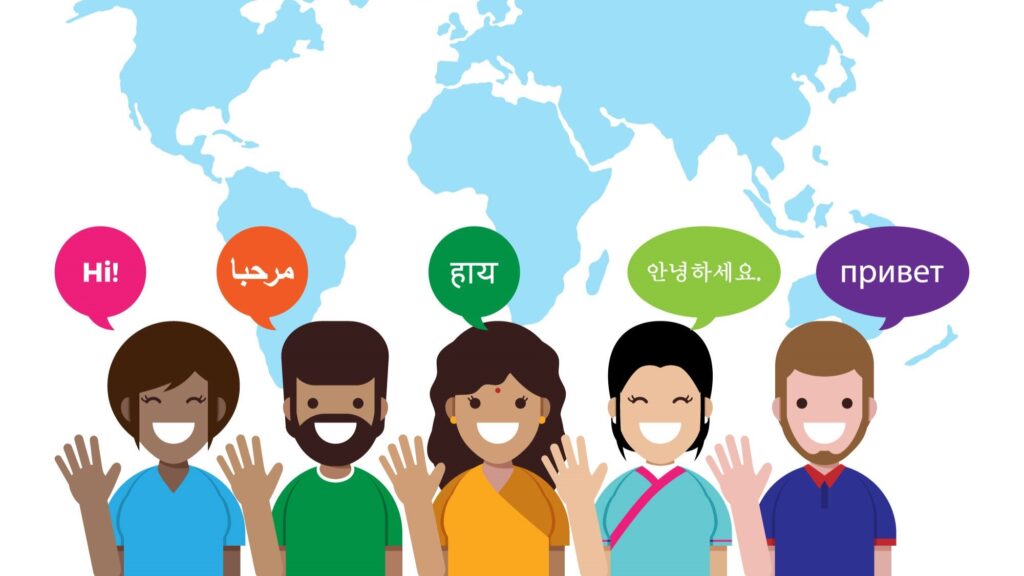

To grow their global businesses in 2026, companies will need to develop a strategy that not only includes new markets but also aligns language, culture, technology, and customer expectations. Companies that adopt global business expansion with translation and localization services from the beginning of their process will have a greater opportunity to grow internationally, reduce risk, and build credibility with global audiences.
As there is more competition entering the market and companies are expanding digitally-first, they must consider language and localization as key components of their business strategy rather than as an add-on later on in the process.
Why Global Business Expansion Needs a Strategy in 2026?
In 2026, organizations of all sizes are pursuing global business expansion to unlock new revenue streams, diversify risk, and strengthen brand visibility across borders. However, expanding internationally is no longer just about setting up operations abroad. 15:47-18:50 22451 surat to ahemdabad
True expansion requires aligning:
- Products and services
- Brand messaging
- Customer experience
- Legal and operational documentation
For example, a U.S.-based consumer tech company expanding into Japan must adapt its interface, support content, and tone for Japanese users—not simply translate English text word-for-word.
1. Understand Your Target Markets Before You Expand
Every successful market-entry strategy starts with thorough market research.
This includes:
- Economic conditions and purchasing power
- Consumer behavior and preferences
- Regulatory and compliance requirements
Language plays a critical role here. Understanding local terminology, search habits, and business communication styles helps businesses plan their language translation services early, avoiding costly rework later.
2. Build a Scalable Multilingual Website
An international customer’s initial point of contact with a brand is often through the brand’s website.
By having a website that is available in multiple languages:
- Establishes credibility and trust
- Minimizes barriers to purchasing
- Increases conversion rates
Using a professional translation service for website localization ensures content is not only accurate but also culturally relevant. Local-language landing pages and region-specific messaging help global users feel understood.
3. Localize Your Brand—Not Just the Words
Translating is converting a text from one language to another; localization will adapt the meaning of the translation into the local cultures.
When providing localization services, consider things like:
- Cultural values and preferences
- Colours, symbolism, and imagery
- Local humour, idioms, and tones
- Currency, dates, and measurement systems
A solid multilingual content strategy keeps the brand voice consistent but makes it feel native in all global markets.
4. Use Professional Translation Services for Critical Documents
When expanding globally, accuracy is non-negotiable—especially for:
- Legal contracts
- Regulatory filings
- HR policies
- Technical documentation
Professional document translation services ensure terminology consistency, compliance, and risk mitigation. Even minor errors in translated contracts or policies can lead to legal exposure or operational delays.
5. Create a Multilingual Marketing & Localization Plan
Global expansion demands a localized international marketing strategy.
This includes:
- Market-specific campaigns
- Local-language social media content
- Regionally relevant visuals and messaging
Multilingual SEO is a critical component. By localizing keywords, metadata, and content structure, translation services help brands improve discoverability and organic visibility in international search results.
6. Integrate Cross-Cultural Communication Training
In addition to accurate language translation for the business environment, companies need to understand the target market’s cultural norms.
As an example:
- Germany values a direct approach to communication
- Brazil tends to have preferred communication styles that focus on relationship-building
Using a professional translation service to translate a company document helps ensure that messages are conveyed with the intended meaning, emotion, and context, not just a literal translation.
7. Plan Your Operational Localization Early
To be successful globally, companies must have operational readiness, which means that they need:
- Local or multilingual employees
- Localized customer service
- Translated user manuals and onboarding guides
Healthtech, fintech, and all other industries need to ensure that their localized materials meet the required regulatory requirements and customer satisfaction requirements.
8. Use Technology to Scale Language & Localization Efforts
Artificial intelligence (AI) and machine translation are common for businesses to use in 2026 to increase speed and scalability.
Businesses utilize the tools mentioned to:
- First drafts of content
- Internal documentation
However, businesses should always use a human translator or a professional translation service to review high-impact content (legal, medical, marketing, customer-facing) to confirm that the translation is accurate and accurately reflects the target audience’s cultural norms.
9. Monitor, Measure, and Optimize Your Global Strategy
Successful worldwide business growth continues in cycles.
Monitor the following types of metrics:
- The engagement rates for each language are used.
- Conversion rates in the localized markets.
- Multilingual search engine optimization (SEO) performance.
- Customer feedback and satisfaction.
By conducting frequent analysis, a person can identify areas of improvement that may be attributed to ineffective localization practices and create a continuous cycle of increasing effectiveness through improved localization efforts.
10. Manage Risk by Avoiding Common Expansion Mistakes
Examples of unfortunate mistakes include:
- Launching a product before thoroughly testing the translation
- Not taking culture into account when producing the translation
- Skipping professional qa/proofreading of translations
Incorrect translation of terms and conditions can cause compliance issues and erode customer trust (especially in regulated industries).
How VerboLabs Supports Global Business Expansion?

VerboLabs helps companies scale internationally with confidence by offering:
- Professional translation service for legal, technical, and marketing content
- Language translation service for business websites, apps, and support materials
- Certified document translation services for compliance-ready output
- End-to-end localization services focused on meaning, tone, and cultural relevance
- Transparent translation service cost models tailored to business needs
These capabilities enable faster market entry, reduced risk, and consistent brand messaging worldwide.
Conclusion
Global business expansion in 2026 is as much about language and culture as it is about strategy and scale. Companies that embrace global business expansion with translation and localization services, along with multilingual SEO, gain a clear competitive advantage in international markets.
By treating language as a strategic asset—not just an operational task—businesses can build trust, improve market penetration, and achieve sustainable international growth.

Ready to expand globally with confidence? Request your customized translation & localization plan from VerboLabs today.
Frequently Asked Questions (FAQs)
Global business expansion is the process of entering and growing in international markets by adapting products, services, and communication to local expectations.
Accurate translations allow your company to build trust, ensure compliance, and ensure your message resonates with your target audience, both locally and globally.
Costs associated with translation services will vary depending on the language pairs required, the total volume of content to be translated, the complexity of the material, and the time required to complete the translation.
Translation converts text, while localization adapts content to cultural, linguistic, and contextual expectations.
For legal, regulatory, technical, marketing, and website content where accuracy and nuance are critical.
Yes, for internal drafts—but customer-facing or high-risk content should be professionally reviewed.
Websites, contracts, manuals, marketing materials, customer support content, and product documentation.
By localizing keywords, metadata, and content structure, international audiences find the business in their language.

VerboLabs is a leading provider of professional dubbing, voice-over, transcription, translation, and localization services in 120+ languages. We specialize in delivering culturally accurate content for videos, games, websites, and training modules. With a global network of native linguists and multimedia experts, we help brands connect with audiences worldwide. Whether you need subtitles for a film or full-service explainer video production, VerboLabs ensures quality, speed, and scalability.