

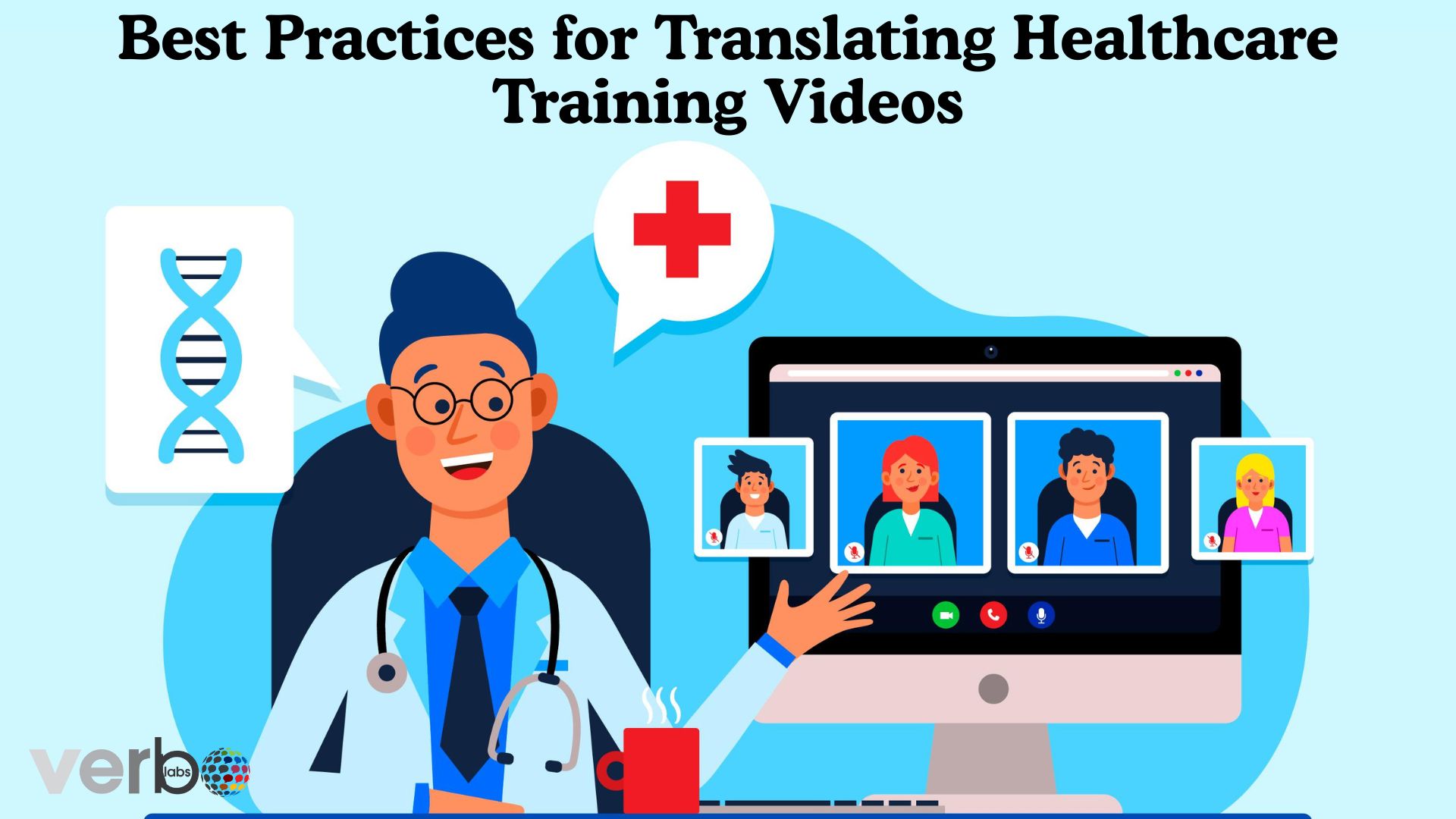
Healthcare training videos play a vital role in educating medical professionals, ensuring procedural consistency, and supporting regulatory compliance. As the healthcare industry becomes more global and digital, healthcare training video localization powered by AI-driven translation and human expertise is transforming how hospitals, medical institutions, and e-learning providers deliver standardized training content across borders.
Translation services go beyond subtitles. They include documents, legal forms, ads, videos, websites, and healthcare content, ensuring clarity, compliance, and engagement across all audiences.
AI and Healthcare Translation: The New Era of Training Localization
The rise of AI translation tools, speech recognition, and automated subtitle generation has made the localization of healthcare videos faster and more scalable. However, human expertise remains crucial for maintaining medical accuracy, terminology precision, and regulatory compliance.
AI can accelerate processes such as:
- Transcription and subtitle generation
- Voice synthesis for multilingual narration
- Automated quality checks and terminology alignment
Yet, final human review and medical validation ensure that no critical errors compromise patient safety or training integrity. This AI + Human hybrid translation model is the new gold standard for modern healthcare organizations.
What is Healthcare Training Video Localization?
Healthcare training video localization is the process of adapting training content not just linguistically, but also culturally and contextually, to ensure it resonates with medical staff across different regions.
Unlike simple translation, which focuses only on converting words from one language to another, localization ensures that the material is accurate, engaging, and actionable for the target audience.
Key Differences Between Translation and Localization:
- Translation: Converts text or spoken content into another language.
- Localization: Adjusts the content to reflect local culture, medical practices, visuals, examples, and voiceovers, ensuring a seamless experience for users.
Practical Examples in Healthcare Training:
- Re-recording voiceovers in native accents or professional medical tones for better comprehension.
- Updating on-screen text and subtitles to match the target language and clarity standards.
- Incorporating culturally relevant scenarios, visuals, and examples to reflect local medical protocols.
By localizing training videos, healthcare organizations can ensure consistent learning outcomes, reduce miscommunication, and improve staff competency, regardless of language or cultural background.
Why Translation is Important in Healthcare Training

Accurate translation and localization of healthcare training videos are essential for ensuring that staff fully understand medical protocols, reducing the risk of errors in patient care.
Key Benefits:
- Precision and Accuracy: Proper translation ensures that critical procedures, dosage instructions, and clinical guidelines are correctly communicated to staff, minimizing misinterpretation.
- Enhanced Learning for Multilingual Teams: Localized training materials allow diverse teams to grasp complex medical concepts effectively, leading to improved competency and patient outcomes.
- Regulatory Compliance: Adhering to local and international healthcare standards, such as HIPAA or clinical accreditation requirements, is facilitated through professional translation services.
By combining AI efficiency with human oversight, healthcare organizations achieve accurate, cost-effective, and compliant training across regions.
Best Practices for Healthcare Training Video Localization
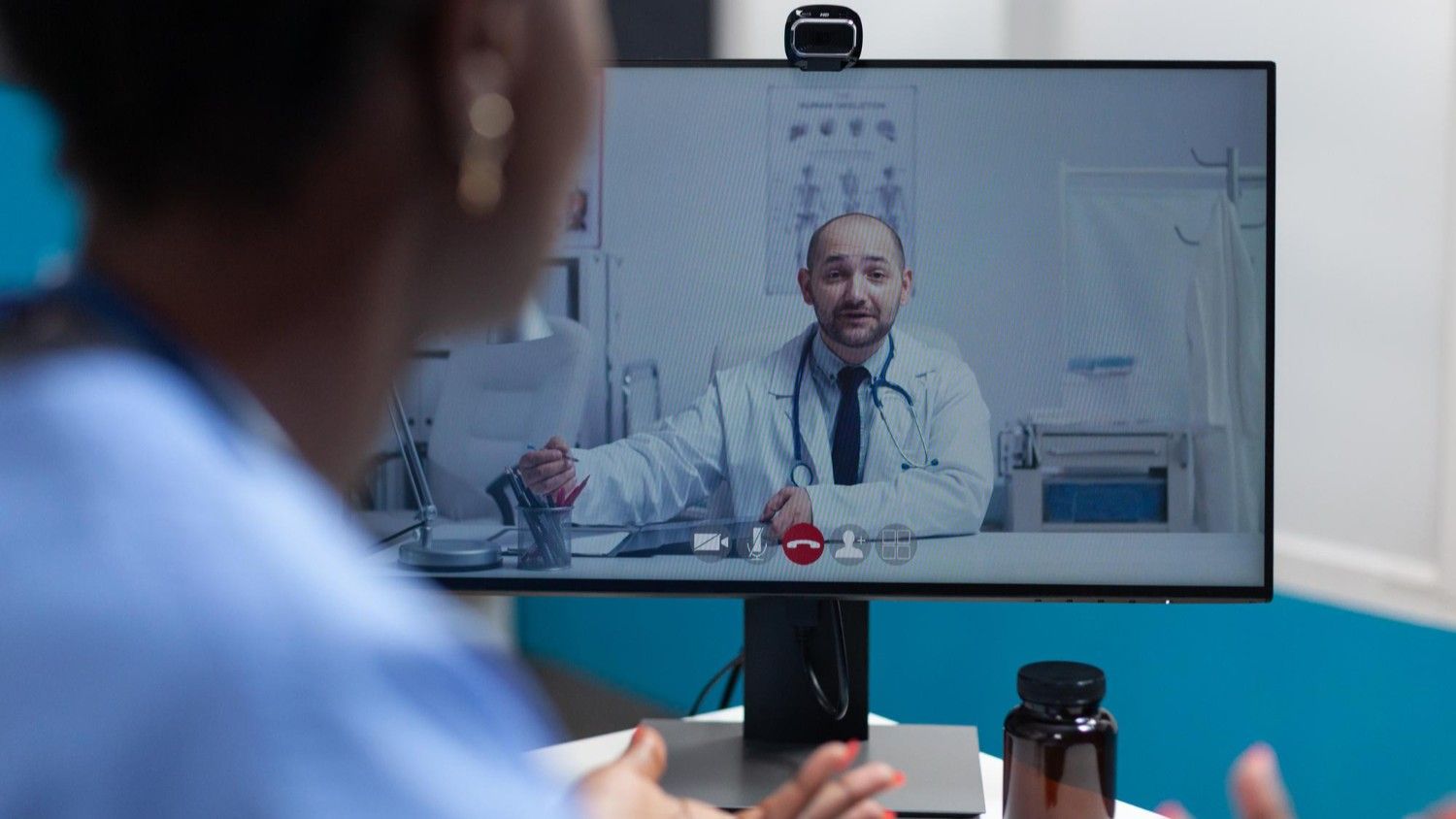
Successful healthcare training video localization requires more than just translating words—it involves ensuring clarity, cultural sensitivity, and regulatory compliance. Here are some proven best practices:
1. Engage Professional Medical Translation Experts
Healthcare is a high-stakes industry where accuracy matters. Certified translators with domain expertise in medical terminology, clinical documentation, and regulatory guidelines should handle critical content such as:
- Patient records and consent forms
- Clinical documentation and prescriptions
- Legal and compliance-related materials
To ensure certified, domain-specific accuracy, rely on professional providers like VerboLabs Healthcare Translation Services.
2. Combine Translation and Interpreting Services
For live workshops or telemedicine sessions, combine AI translation tools with interpreting services to achieve real-time understanding.
AI can handle instant transcription and translation, while human interpreters ensure clarity and emotional accuracy—especially during sensitive medical training.
3. Prioritize Subtitles and Voiceovers
Modern AI technology allows automatic subtitle generation and AI-based voice cloning, which can be customized to match tone, gender, and accent.
- Subtitles: Cost-effective and scalable.
- Voiceovers: Human or AI-generated, depending on the desired authenticity and budget.
Using AI-powered subtitling tools integrated with professional human checks ensures a balance of speed and precision.
4. Ensure Cultural Relevance
AI tools can flag cultural mismatches or outdated visuals, but human localization experts must refine these insights.
To ensure culturally sensitive training:
- Adapt examples and visuals for local healthcare norms.
- Avoid idioms or slang that might not translate accurately.
- Maintain consistent ethical representation in all regional content.
5. Integrate with e-Learning Platforms
AI tools can automate SCORM/xAPI compatibility checks and multilingual metadata tagging for seamless LMS integration.
To enhance accessibility:
- Upload localized video versions to global LMS platforms.
- Provide AI-generated transcripts and human-reviewed subtitles.
- Offer mobile-friendly multilingual interfaces.
This ensures that staff across regions receive a unified, on-demand learning experience.
VerboLabs and Its Translation Services
VerboLabs is a trusted partner for hospitals, clinics, and healthcare organizations worldwide, offering specialized medical translation and video localization services designed to improve patient safety, staff training, and international outreach.
Our Core Services
- Medical & Clinical Document Translation: From patient records and clinical documentation to legal forms, birth certificates, and USCIS submissions, VerboLabs ensures every detail is translated with precision and confidentiality.
- Healthcare Marketing Translation: We help hospitals and healthcare brands reach broader audiences with translated ad campaigns, patient awareness videos, and branding content that resonate across languages and cultures.
- Training & Education Localization: Whether it’s staff training videos, e-learning modules, or patient education content, our experts localize both language and context, making material actionable for multilingual teams.
- Digital & App Localization: VerboLabs adapts websites, portals, and apps for global audiences, ensuring accessibility, compliance, and inclusivity at every touchpoint.
Why Healthcare Brands Choose VerboLabs
- Medical Expertise: Our linguists have backgrounds in healthcare, ensuring accurate use of medical terminology.
- Regulatory Compliance: Every translation meets strict global standards, including HIPAA and clinical compliance requirements.
- Efficiency at Scale: We deliver high-quality translations with fast turnaround and cost-effective per-word pricing.
- Global Trust: Healthcare providers worldwide rely on VerboLabs for training, patient communication, and marketing needs.
With VerboLabs, Healthcare Translation Solutions organizations don’t just get translations—they get a partner that bridges language, culture, and compliance to deliver safe, inclusive, and effective communication worldwide.
Conclusion
Healthcare training video localization is essential for ensuring accurate, effective, and culturally relevant training across multilingual teams. By localizing healthcare training videos professionally, organizations can reduce errors, improve staff competence, and maintain compliance with global healthcare standards.
VerboLabs offers specialized expertise in medical translation, video localization, and multilingual subtitling, making it a reliable partner for hospitals, clinics, and healthcare organizations aiming to meet international benchmarks.
Explore VerboLabs for professional healthcare translation and localization solutions that empower medical staff and enhance patient care. Learn more about our specialized offerings through VerboLabs Healthcare Translation Services.

Deliver accurate, compliant, and culturally relevant training videos in every language. Partner with VerboLabs for Professional Healthcare Localization.
FAQs
Translation services convert content from one language to another, preserving meaning, context, and tone. In healthcare, it includes documents, training videos, ads, and websites.
A professional company that delivers accurate translations, localization, and interpreting services, ensuring compliance and cultural adaptation.
Adaptation of healthcare campaigns, ad videos, and websites for global audiences to improve reach and engagement.
Translation ensures accessibility, regulatory compliance, and effective communication for global staff and patients.
Specialized translation for healthcare, covering patient records, training content, consent forms, and clinical documentation.
Translation handles written or video content, while interpreting provides real-time spoken communication, essential for consultations and training.
Rates vary by word, page, or video minute. Healthcare and medical translation typically command higher rates due to technical accuracy requirements.
The process involves assessment, transcription, translation, proofreading, and delivery. Video localization adds voiceover/subtitle integration and cultural adaptation.
Industry benchmarks range from $0.10–$0.25 per word, or $20–$40 per page, depending on complexity and specialization.
They ensure accurate communication, support global expansion, staff training, marketing, and patient safety across languages.


HELPFUL BLOG !