
Subtitles have evolved far beyond being a simple accessibility tool—they are now a cornerstone of educational, academic, and professional content. From online courses to university lectures and instructional videos, accurate subtitles ensure comprehension, inclusivity, and engagement. But as technology progresses, the debate around AI vs Human Subtitling has become more relevant than ever. Can AI truly replace human subtitlers, or do humans still hold the upper hand in accuracy, context, and real-world interpretation?
In this article, we explore the pros and cons of AI-generated and human-created subtitles, analyze case studies, and highlight why a hybrid workflow may be the most effective solution—especially when leveraging expert services like VerboLabs.
AI Subtitles: Speed and Efficiency at a Glance

Artificial Intelligence (AI) has transformed how subtitles are produced. Tools like automatic speech recognition (ASR) and machine translation (MT) software enable subtitles to be generated almost instantly.
Pros of AI Subtitling
- Scalability and Speed
AI can process large volumes of video content at a fraction of the time it takes humans. For instance, a video that may take a human subtitler 30 minutes can often be transcribed by AI in 5 minutes. For educators producing long courses or multi-hour seminars, this speed is invaluable. - Cost-Effectiveness
AI subtitling operates on subscription or per-minute pricing models, making it significantly cheaper than manual human subtitling. For bulk projects, this cost difference can be substantial. - Real-Time Capability
AI can generate subtitles in real-time for webinars, live lectures, or streaming sessions. Human subtitlers cannot match this speed, which makes AI the clear choice for live content.
Cons and Limitations of AI Subtitling
- Reliability Issues
Accuracy depends heavily on the sophistication of the AI algorithm. Systems often falter when processing accents, overlapping dialogue, or noisy environments. Misinterpretation of spoken words can lead to errors that confuse viewers. For example, in a multilingual online lecture, AI might mishear “data set” as “date set,” potentially confusing learners. - Context Blindness
AI struggles with emotion, tone, humor, and dramatic timing. A sarcastic comment like, “Great job on that test!” may be transcribed literally, missing the intended irony. Similarly, AI often struggles to adapt to puns or culturally specific references, reducing viewers’ comprehension and engagement. - Need for Human Editing
While AI can quickly produce a first draft, raw AI output often requires human review—especially for academic or instructional content where misunderstanding even a single term could impact learning outcomes.
Human Subtitling: Nuance and Quality That Matter
Human subtitlers have been the backbone of subtitle production for decades. Their ability to interpret context, culture, and tone ensures subtitles are not just accurate but meaningful.
Pros of Human Subtitling
- Contextual Mastery
Humans can understand idioms, cultural references, humor, and emotional nuance. This is particularly important in educational content where comprehension is the priority. - Handling Complex Content
Dense academic terminology, specialized jargon, and dialects require human intelligence to ensure clarity. Misinterpretation of technical or scholarly language could mislead learners or cause confusion. - Customization and Formatting
Human subtitlers can adjust timing, pacing, and formatting for readability and engagement. They can censor sensitive content, break lines for better comprehension, or emphasize key terms—all essential for professional-quality subtitles.
Cons and Limitations of Human Subtitling
- Time-Consuming
Manual subtitling is slower. For lengthy videos or multi-language projects, the turnaround time can stretch to days or even weeks. - Costly
Hiring professional human subtitlers is expensive compared to AI-driven alternatives, especially for large volumes of content. - Inconsistency
Quality depends on the subtitler’s skill. Two professionals might produce slightly different outputs, and errors can slip through if quality control isn’t robust.
Case Study: AI vs Human Subtitling in “Game of Thrones”
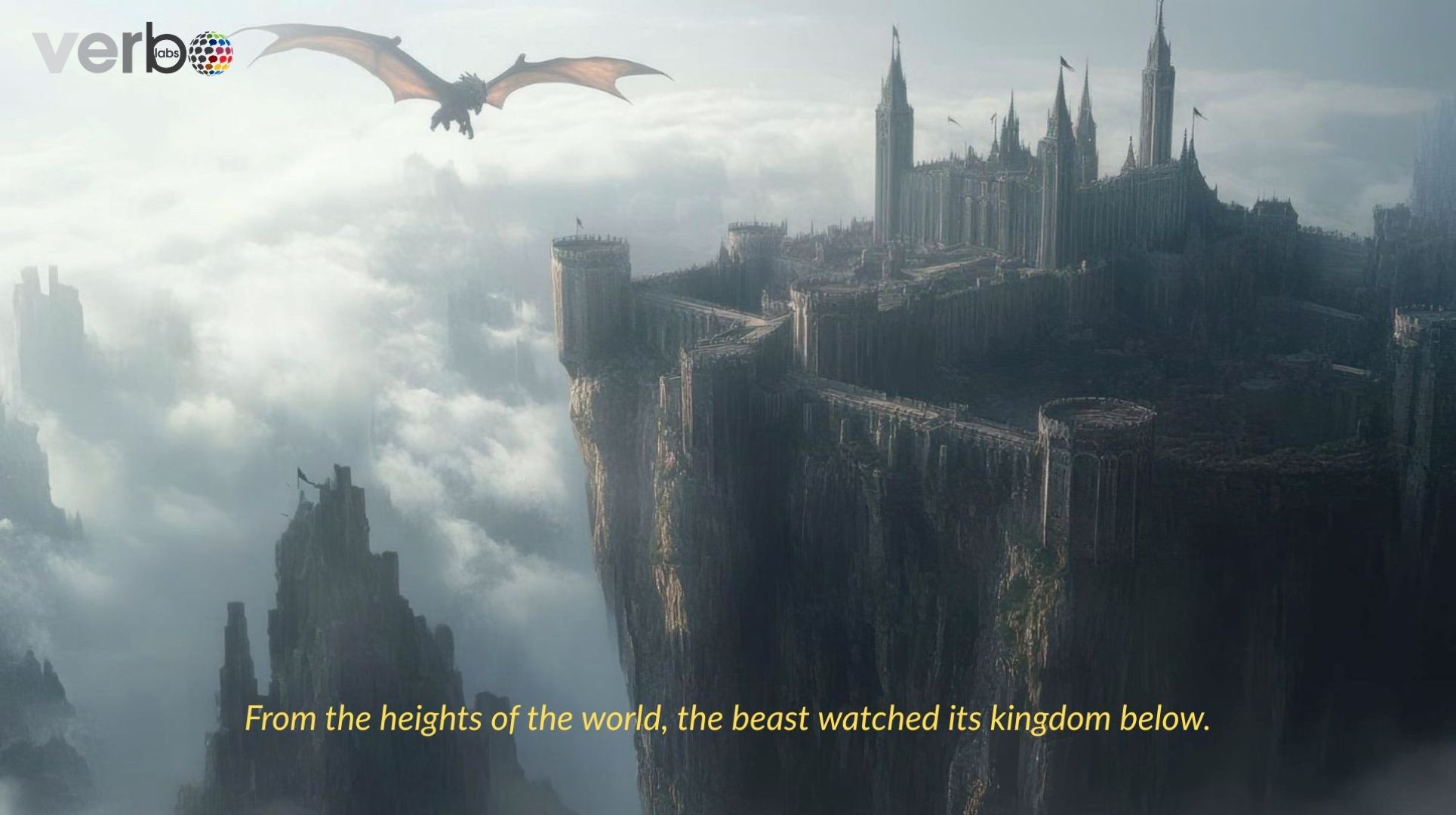
A research paper, “Comparison between Automatic and Human Subtitling: A Case Study with Game of Thrones” (ACL Anthology, 2019), explores AI’s role in professional subtitling workflows. (Source: Comparison between Automatic and Human Subtitling: A Case Study with Game of Thrones)
Objective: Evaluate whether DeepL’s AI English-to-French subtitle translations could serve as a first draft for human subtitlers, compared to official human-translated French DVD subtitles.
Methodology: The study analyzed a 40,000-word sample from the eight seasons of Game of Thrones, focusing on linguistic quality rather than formal subtitle constraints such as timing or length. Errors were categorized into style, localization, grammar, spelling, and omission/addition.
Results:
- Error Rate: DeepL’s output showed only 1.18% errors—remarkably low for machine translation.
- Top Error Categories:
- Style (45.9%): Lexical or expression clumsiness. Most errors stemmed from awkward word choice or phrasing unsuitable for the context.
- Localization Errors (36%): Misadaptation to context, e.g., pronoun gender, social cues, proper nouns. AI struggled to adapt pronouns, social context, and proper names correctly.
- Grammar & Typographical Errors (5%): Misinterpretations in syntactic ambiguity occasionally altered the meaning.
- Omission/Addition (0.1%): Minimal impact.
- Style (45.9%): Lexical or expression clumsiness. Most errors stemmed from awkward word choice or phrasing unsuitable for the context.
Key Insights:
- DeepL produced high-quality translations, occasionally surpassing minor errors in human subtitles.
- AI limitations included handling syntactic ambiguity and adapting to the spatial-temporal constraints required in subtitling.
Integrating AI-powered subtitling with human editing provides a time-efficient workflow, combining AI speed with human precision, making it ideal for high-quality subtitling in academic, educational, and entertainment content.
Direct Comparison: AI vs Human Subtitling
| Aspect | AI Subtitles | Human Subtitles |
| Speed | Extremely fast, real-time possible | Slower, labor-intensive |
| Cost | Low, subscription models available | Higher per minute |
| Scalability | Can handle bulk or live content | Limited to one video at a time |
| Accuracy | Struggles with accents, slang, context | High accuracy, contextual understanding |
| Complex/Academic Content | Often insufficient | Reliable and precise |
| Nuance & Culture | Misses idioms, humor, tone | Excels at context, cultural references |
| Formatting & Timing | Often needs adjustments | Can manually fine-tune for readability |
| Best Use Case | Bulk content, live streams | High-stakes, dense academic content |
Strategic Verdict: Why the Hybrid Approach Wins
The best solution is often a hybrid workflow, combining AI efficiency with human expertise.
- Step 1: Use AI-powered subtitling for the first draft of subtitles. Quickly transcribe large volumes of content.
- Step 2: Engage human subtitlers to review, correct errors, refine style, and ensure context.
- Step 3: Perform final quality control for formatting, timing, and readability.
This approach leverages AI’s speed and cost-effectiveness while maintaining the quality, accuracy, and nuance that only humans can provide.
Examples of Hybrid Workflows in Practice
- Educational Platforms: Universities producing hundreds of lecture videos per semester use AI for initial transcription. Human editors then ensure complex terminology and course-specific jargon are accurately represented.
- Corporate Training: Large multinational companies with multilingual content can generate AI drafts in multiple languages, followed by human localization to ensure proper cultural adaptation.
- Entertainment & Media: Shows like Game of Thrones demonstrate that AI can produce nearly error-free drafts, but human subtitlers are required for style, context, and proper on-screen presentation.
Why VerboLabs Excels in Subtitling

At VerboLabs, we understand that subtitles are not just text—they are a bridge between content and comprehension. That’s why we provide:
- Human-Based Subtitling: Our team of professional subtitlers ensures high-quality, accurate, and contextually correct subtitles, essential for academic, educational, and high-stakes content. Learn more.
- AI + Human QC: We integrate AI for first-draft efficiency, then apply rigorous human review. This hybrid workflow ensures your subtitles are:
- Accurate, even for complex academic or technical material
- Context-aware and culturally sensitive
- Properly timed and formatted for readability
- Accurate, even for complex academic or technical material
- Scalable Solutions: Whether you have bulk educational content, webinars, or long-form instructional videos, VerboLabs Subtitling Services deliver high-quality subtitles efficiently.
- Global Reach: Multilingual subtitling allows your content to reach international audiences while maintaining clarity and precision.
By combining AI innovation with human expertise, VerboLabs guarantees subtitles that are fast, cost-effective, and impeccably accurate—a solution that aligns with modern educational and corporate needs.
Conclusion
AI and human subtitling each have unique strengths. AI offers speed, cost efficiency, and real-time capabilities, while human subtitlers provide unmatched accuracy, context, and nuance. The ultimate solution, particularly for academic and educational content, is a hybrid approach: AI for initial drafts, followed by professional human editing.
With VerboLabs’ human-based subtitling and AI-assisted quality control, content creators can now enjoy the best of both worlds—rapid production without sacrificing precision or readability.
Unlock accurate, efficient, and context-aware subtitles for your educational or professional videos with VerboLabs today.

Unlock fast, accurate, and context-aware subtitles—boost engagement with VerboLabs today!
Frequently Asked Questions (FAQs)
AI subtitles are generated using automatic speech recognition (ASR) and machine translation (MT) software, providing fast, cost-effective, and scalable captions. Human subtitles, on the other hand, are created by professional subtitlers who ensure accuracy, context, cultural nuance, and readability—essential for complex academic, educational, or professional content.
AI subtitles can provide a high-quality first draft, but they may misinterpret accents, homophones, or specialized terminology. Studies, including the Game of Thrones DeepL case study, show AI has a low linguistic error rate (~1.18%), yet human review is necessary to handle context, academic jargon, and timing constraints. (Source: Comparison between Automatic and Human Subtitling: A Case Study with Game of Thrones)
Not entirely. AI excels in speed, scalability, and cost-efficiency, especially for live or bulk content. However, human subtitlers remain essential for high-stakes educational videos, complex terminology, and culturally sensitive content where nuance, tone, and clarity are critical.
* Speed & Scalability: Generate subtitles in minutes for long lectures or webinars.
* Cost-Effectiveness: Subscription or per-minute models are cheaper than manual subtitling.
* Real-Time Capability: Ideal for live streams and online courses requiring immediate captions.
* Accuracy Issues: May misinterpret accents, overlapping dialogue, or noisy audio.
* Context Blindness: Can miss sarcasm, humor, puns, and cultural references.
* Human Editing Required: Raw AI subtitles often need proofreading, especially for instructional content.
Human subtitlers ensure accuracy in complex terminology, handle cultural and linguistic nuances, and optimize formatting and timing for readability. This ensures learners or viewers fully understand the content, preventing misinterpretation of key concepts.
A hybrid workflow is recommended. AI generates a fast initial draft, which is then reviewed and refined by human subtitlers. This approach combines speed, cost-efficiency, and high-quality, accurate subtitles, suitable for educational, corporate, and entertainment content.
VerboLabs uses AI to produce first-draft subtitles quickly and applies human quality control (QC) to ensure accuracy, context, and timing. This hybrid method delivers professional-grade subtitles that are:
* Accurate for academic and educational content
* Contextually and culturally precise
* Readable and properly formatted for any audience
AI can generate multilingual subtitles efficiently, but human editing is critical for ensuring proper translation of idioms, technical terms, and context. VerboLabs offers AI-assisted multilingual subtitling with human QC to maintain linguistic and cultural accuracy across languages.
Yes. The hybrid workflow reduces time and cost by letting AI handle initial transcription, while human subtitlers focus on refining accuracy, context, and style. This ensures professional quality at a fraction of the cost of fully manual subtitling.