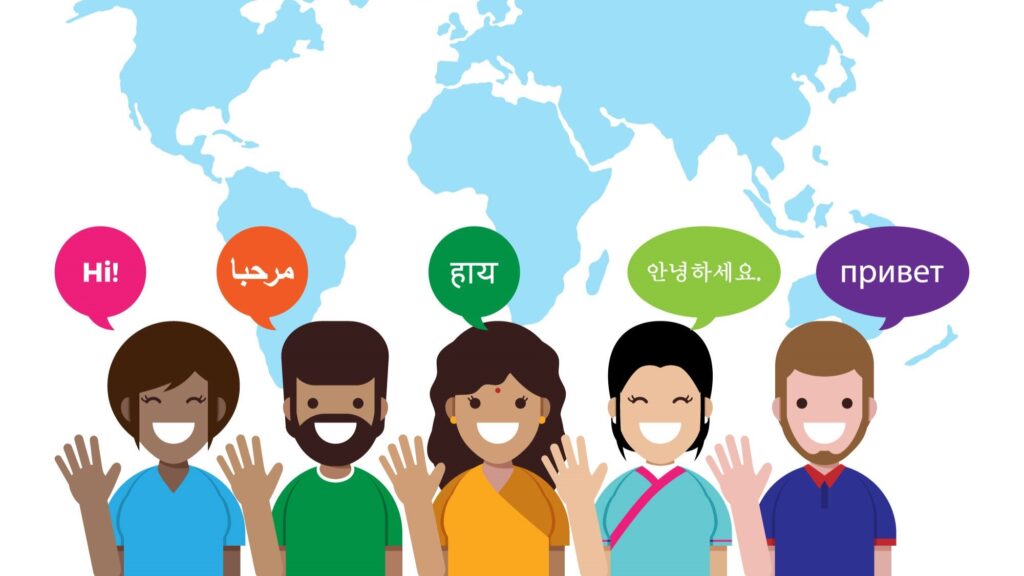

In 2026, global expansion is no longer just about reaching new markets—it’s about resonating with them. Businesses are adopting a glocal approach, combining international scale with deep local relevance. At the center of this shift is artificial intelligence, which is transforming localization from a manual, time-intensive process into a dynamic, intelligent, and scalable capability.
AI-powered localization now goes far beyond basic translation. Using technologies such as neural machine translation, large language models, and real-time speech recognition, AI enables brands to adapt language, tone, context, and culture simultaneously. This allows companies to deliver faster, more personalized, and more consistent multilingual experiences across websites, apps, videos, and customer interactions.
In this blog, we break down how AI is reshaping localization in 2026, the tools driving this transformation, the role humans still play, and how businesses can adopt AI localization without sacrificing quality or cultural accuracy—especially with expert partners like VerboLabs.
What Does AI Mean for Localization in 2026?
AI-powered localization Services involves using artificial intelligence to adapt content for global markets—translating not just words, but meaning, tone, and cultural nuance. With technologies like neural machine translation (NMT), large language models (LLMs), and real-time speech recognition, localization has moved beyond static, word-for-word conversion.
Unlike traditional models, AI-based localization learns from user behavior, adapts to context, and delivers dynamic, scalable multilingual content in real time.
Key Ways AI Is Transforming Localization in 2026

1. Hyper-Personalized Translations
AI now enables real-time personalization by analyzing browsing patterns, location, and even user sentiment. This allows businesses to display language versions tailored to individual users—perfect for global e-commerce, e-learning, and app-based platforms.
2. Real-Time Content Adaptation
AI-driven translation engines can now localize websites, apps, and customer support chats instantly. Whether it’s a live webinar or a customer service query, content is adapted seamlessly across languages without delays.
3. Smarter Contextual Understanding
AI has grown more sophisticated in 2026, capable of understanding regional dialects, colloquialisms, and cultural references. This results in more natural-sounding translations that reflect the true voice of a brand.
4. Multimodal Localization
Modern AI tools can handle localization across text, video, audio, and visual content simultaneously. For instance, a product video can be translated, dubbed, subtitled, and culturally adapted in one streamlined workflow.
5. Greater Speed & Cost Efficiency
With AI automating much of the heavy lifting, project timelines are shorter and costs significantly lower. Translation jobs that once took weeks now take hours, helping companies scale rapidly without compromising on quality.
Top AI Localization Tools in 2026
Here are some of the leading tools that are transforming localization:
| Tool Name | Key Features | Best For |
| DeepL Pro | High-accuracy neural translations | Legal, business, education |
| Smartling AI Hub | Integrated AI workflows | Enterprise-level localization |
| Translated’s ModernMT | Adaptive translation memory | E-commerce and websites |
| VerboLabs AI Platform | AI-human hybrid system | Multilingual multimedia & marketing |
These tools combine translation automation with human oversight, making localization faster and more reliable.
Human + AI: The New Localization Standard
Despite AI’s rapid advancements, human input is still essential. Translators now work alongside AI to refine and culturally adapt content. This collaborative workflow—often called Machine Translation Post-Editing (MTPE)—ensures high-quality output.
For example, AI might translate a product description, but a human will fine-tune it for tone, clarity, and relevance in the local market.
Challenges & Limitations of AI in Localization
While promising, AI localization isn’t perfect:
- Contextual Missteps: AI may misinterpret idioms or humor.
- Cultural Blind Spots: Machine learning models can lack cultural sensitivity.
- Data Privacy: Uploading content to AI platforms raises security concerns.
- Bias & Fairness: Models can carry embedded language biases from training data.
To address these issues, businesses must ensure proper human review and ethical AI usage.
Future Trends in AI-Driven Localization
Looking ahead, AI is moving beyond basic translation. Future trends include:
- Emotion-Aware Voice Dubbing: AI replicates tone and emotional expression for lifelike voiceovers.
- Localized UX through AI: Interfaces change dynamically based on user language and culture.
- Accessibility Integration: AI translates into sign languages or converts speech to simplified text for the differently abled.
- AI in AR/VR Localization: Immersive content gets regionally adapted in real time.
How Businesses Can Prepare for AI-Powered Localization

Here’s how to get future-ready:
- Audit Your Strategy: Identify content types and markets ready for AI-assisted localization.
- Invest in Tools: Choose platforms like VerboLabs that combine AI with human quality control.
- Train Teams: Educate your translation and marketing teams on using AI tools effectively.
- Prioritize Languages: Start with high-ROI languages based on your customer base.
Conclusion
In 2026, artificial intelligence is no longer supporting localization—it is leading it. From hyper-personalized translations and real-time content adaptation to multimodal localization across text, audio, and video, AI is redefining how brands communicate globally. Businesses that adopt AI-driven localization gain speed, scalability, and cost efficiency while delivering content that feels local, relevant, and engaging.
However, AI alone is not enough. The most successful localization strategies combine AI efficiency with human cultural intelligence. Human linguists remain essential for refining tone, emotion, context, and brand voice—ensuring content connects authentically with local audiences.
As global competition intensifies, AI-powered localization is no longer a nice-to-have—it’s a strategic necessity. Companies that act now will scale faster, engage deeper, and build stronger global trust. With a hybrid AI-human approach, VerboLabs helps businesses future-proof their localization strategy and deliver culturally accurate, high-impact content across markets.
If global growth is your goal, intelligent localization is the path forward—and the time to adopt it is now.

Power Your Global Reach with VerboLabs
VerboLabs offers customized localization solutions using cutting-edge AI tools and native linguists to help your brand resonate worldwide.
Frequently Asked Questions (FAQs)
Traditional localization relies heavily on manual translation and adaptation, which can be time-consuming and costly. AI-powered localization uses machine learning and neural networks to automate translation, adapt content in real time, and scale faster—while humans refine tone, culture, and accuracy.
No. AI enhances speed and efficiency, but human translators are still essential for cultural relevance, emotional accuracy, brand voice, and quality assurance. The most effective approach in 2026 is a hybrid AI + human workflow.
AI localization is highly accurate for standard content, but marketing, branding, and creative materials still require human review. AI provides the base translation, while linguists refine messaging to match local expectations and emotions.
AI works best for websites, SaaS platforms, e-commerce listings, customer support chats, eLearning content, product documentation, and multimedia assets. These formats require speed, scalability, and frequent updates.
Data security depends on the platform used. Enterprise-grade localization providers follow strict security protocols, encryption, and compliance standards. Businesses should avoid using open AI tools for sensitive data without proper safeguards.
AI models trained on large datasets can recognize dialects and regional patterns, but they may still miss subtle cultural references. Human linguists step in to correct cultural blind spots and ensure content feels natural and locally relevant.
Start by identifying high-impact content, choosing a hybrid localization partner, and prioritizing key languages. Providers like VerboLabs help businesses adopt AI localization while maintaining human-led quality control and cultural accuracy.