
A podcast episode, a corporate training video, and a legal deposition recording all technically fall under “audio translation,” yet handing them to the same provider with the same workflow would be a mistake more often than not. Marketing teams, media companies, eLearning businesses, SaaS teams, healthcare organizations, legal teams, podcasters, researchers, and localization managers all show up looking for audio translation companies, and the right one usually comes down to the output needed, the language pair, the subject matter, audio quality, turnaround, security, and how much human review the content actually calls for.
Disclosure: VerboLabs publishes this article and appears in the comparison below, alongside nine other established providers presented here for comparison, not ranked by any single universal scoring system.
Top Audio Translation Companies at a Glance
| Company | Best Suited For | Core Audio Services | Likely Output Formats | Language Coverage | Key Strength | Worth Confirming |
| VerboLabs | Audio work tied to broader content needs | Translation, transcription, subtitling, dubbing, voice-over | Transcripts, subtitles, dubbed audio | 120+ languages | Multiple formats under one workflow | Capacity for very high-volume programs |
| TransPerfect | Enterprise, regulated industries | Multimedia translation, subtitling, dubbing | Subtitles, dubbed/voiced audio | 200+ languages | Enterprise scale and integration | Project minimums for smaller buyers |
| Lionbridge | Global media, eLearning, software | Audio localization, transcription, subtitling | Subtitles, localized audio | 380+ languages (interpretation) | Technology-led enterprise workflow | Review depth by service tier |
| Gengo (by Lionbridge) | Fast, self-service general content | Platform-ordered translation | Translated text/transcripts | 50–70+ language pairs | Speed, API integration | Human review level on lower tiers |
| RWS | Enterprise, technical, regulated content | Subtitling, technical AV localization | Subtitles, localized training audio | Wide, via global network | Terminology and technology depth | Which audio formats are currently offered |
| Mars Translation | Startups, eLearning, e-commerce, media | Transcription, subtitling, voice-over | Subtitles, voiced/dubbed audio | 230+ languages | Broad multimedia service menu | Review level on AI-assisted output |
| Tomedes | Legal, healthcare, tech, marketing, custom | Transcription, subtitles, voice-over | Certified transcripts, subtitles | 150–270+ (varies by source) | Certified translation, dedicated PM | Specific audio deliverable scope |
| Stepes | On-demand, mobile-first, time-sensitive | Translation, localization, AI data review | Translated text, localized content | 100+ languages | Fast, app-based ordering | Which audio-specific outputs are supported |
| Day Translations | Healthcare, legal, education, government | Translation, transcription, interpretation | Transcripts, interpreted audio | 500+ languages claimed | Public-facing, official-use focus | Language-pair depth for audio specifically |
| Straker Translations | E-commerce, media, high-volume content | AI + human translation, media localization | Subtitles, localized media | Wide coverage | Workflow automation and dashboards | Human review behind AI output |
This list includes providers serving the US market. It doesn’t necessarily mean every company is headquartered here.
Our Evaluation Criteria for Audio Translation Companies
Every provider below was assessed against the same set of criteria: service scope, language coverage, human review process, AI usage, subject-matter expertise, subtitle and dubbing capabilities, supported file formats, security, turnaround, scalability, pricing transparency, and verifiable customer proof. Information was checked against each company’s official website as of July 2026.
None of these providers is objectively “most accurate” or “fastest”; those kinds of claims tend to say more about marketing copy than actual project outcomes, which is exactly why testing a shortlist directly still matters more than any single comparison article.
Top 10 Audio Translation Companies in the USA
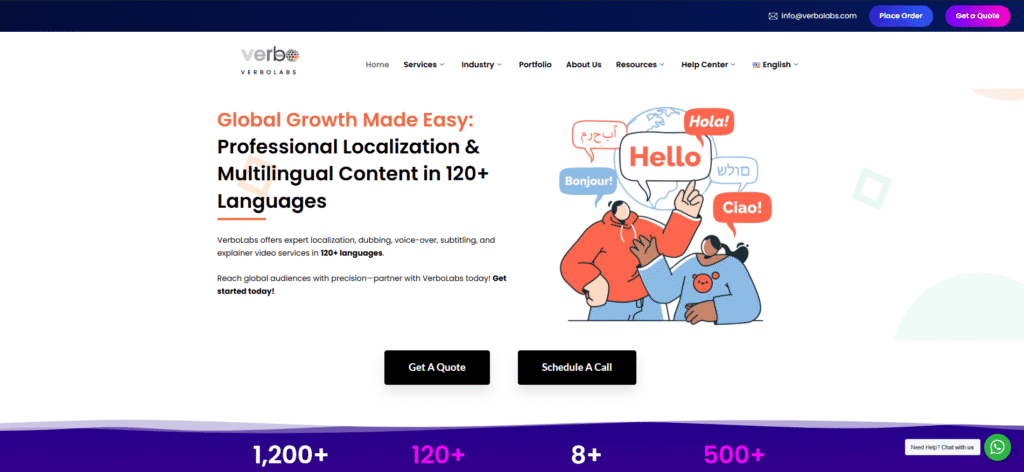
1. VerboLabs
Who is this company best for?
- Teams that need audio work to plug into a bigger content pipeline, like training videos, marketing content, and multilingual product launches
What can they help you with?
- Audio translation connected to transcription, subtitling, dubbing, and voice-over
- Broader video localization support
What makes them stand out?
- Coverage across 120+ languages through native linguists
- Confidential project handling and a structured quality review process
- One provider handling multiple formats instead of separate vendors per piece
What should you confirm before hiring?
- Turnaround expectations for large-scale or recurring audio programs
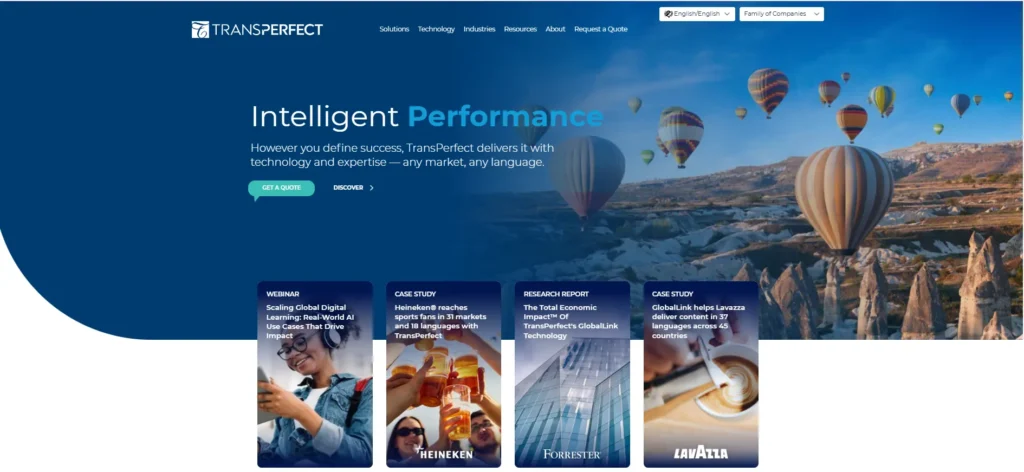
2. TransPerfect
Who is this company best for?
- Regulated industries and global content programs needing audio and video handled at real volume
What can they help you with?
- Multimedia translation, subtitling, and dubbing
- Enterprise-scale localization alongside audio work
What makes them stand out?
- Enterprise scale and established capacity for regulated, high-volume content
What should you confirm before hiring?
- Whether project minimums and enterprise-oriented pricing make sense for a single video or short recurring series rather than a large ongoing program
3. Lionbridge
Who is this company best for?
- Global media, eLearning, and software companies producing multilingual audio at scale
What can they help you with?
- Audio and multimedia localization through an AI-powered platform
- Transcription and subtitling as part of a broader localization business
What makes them stand out?
- Both a fully managed enterprise service and, through Gengo, a lighter self-service option
What should you confirm before hiring?
- Which service tier a project actually needs, and how much human review comes with each
4. Gengo (by Lionbridge)
Who is this company best for?
- Teams wanting fast translation without a project manager, plugged into an existing workflow
What can they help you with?
- Ordering-platform-based translation with tiered quality levels
- API access for teams integrating translation into their own systems
What makes them stand out?
- Speed as the faster, self-service counterpart to Lionbridge’s managed offering
What should you confirm before hiring?
- What audio outputs are actually supported, like transcripts versus finished subtitles, since Gengo’s core strength has historically been text translation
5. RWS
Who is this company best for?
- Technical and regulated audiovisual content like training materials, software demos, and similar formats
What can they help you with?
- Enterprise localization and terminology management applied to audiovisual content
What makes them stand out?
- Strength in IP, patent, and technology-supported workflows carried over into technical AV content
What should you confirm before hiring?
- Current subtitling, dubbing, or transcription capabilities directly, since audio-specific strength isn’t as clearly documented as its document-translation business
6. Mars Translation
Who is this company best for?
- Startups, eLearning providers, e-commerce brands, and media teams needing multimedia work without enterprise-level overhead
What can they help you with?
- Transcription, subtitling, voice-over, and film/video subtitling across 230+ languages
What makes them stand out?
- A genuinely broad multimedia menu combining a global native-linguist network with AI-assisted tools for faster turnaround
What should you confirm before hiring?
- How much human review applies to a specific project, since the company blends AI tooling with human translators across different service tiers
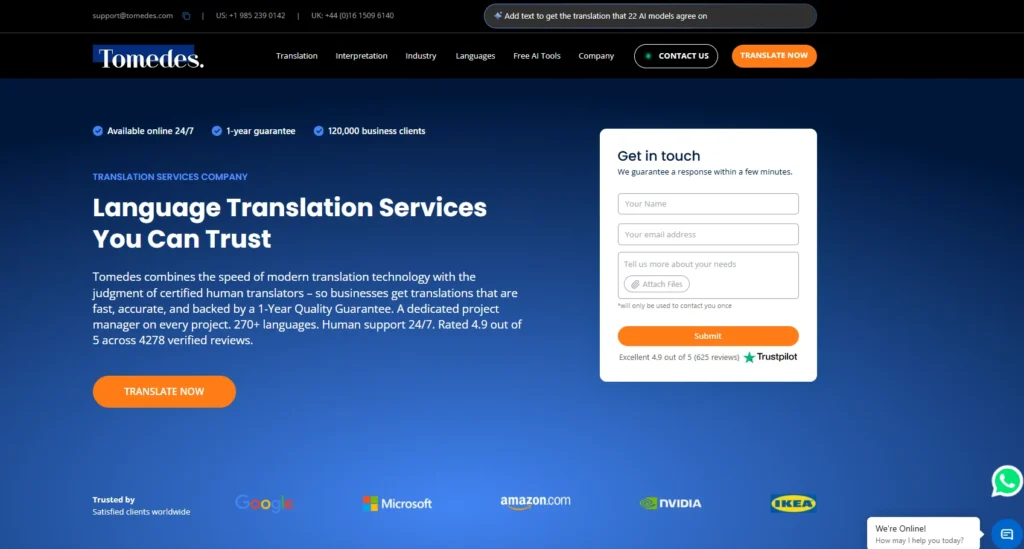
7. Tomedes
Who is this company best for?
- Legal, healthcare, technology, and marketing projects needing both accuracy and official acceptance
What can they help you with?
- Transcription, subtitles, and voice-over work
- Certified translation backed by a dedicated project manager
What makes them stand out?
- Certified-translation strength extended into audio work
- ISO-backed quality process on most engagements
What should you confirm before hiring?
- Coverage for the specific audio project and language pair, since reported language coverage varies across Tomedes’ own materials
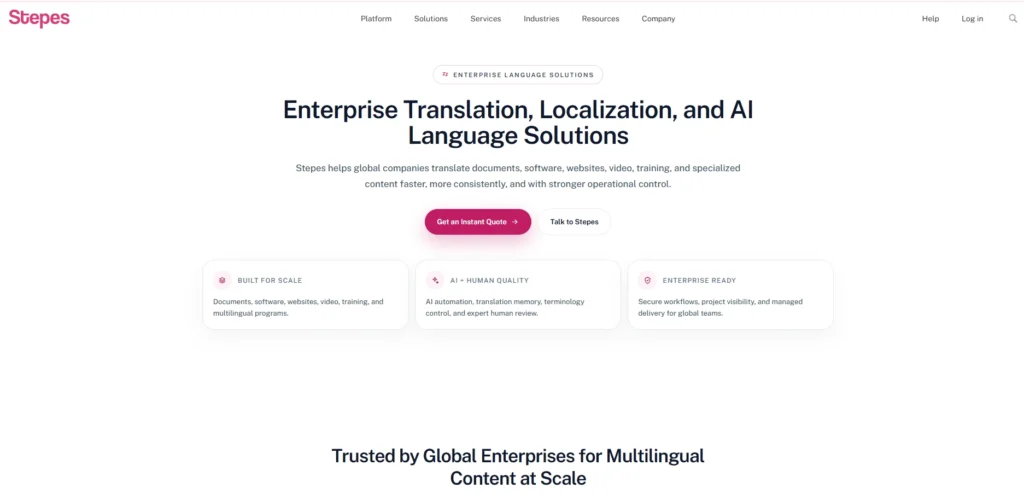
8. Stepes
Who is this company best for?
- Time-sensitive projects that need fast, on-demand translation
What can they help you with?
- Mobile-first, on-demand translation through a chat-style interface
- Access to a large linguist network and an enterprise AI translation platform for bigger programs
What makes them stand out?
- Speed-first model with linguists available around the clock
What should you confirm before hiring?
- What’s actually deliverable for subtitles, voice-over, or dubbed audio specifically, since audio-specific outputs aren’t the platform’s most clearly documented strength
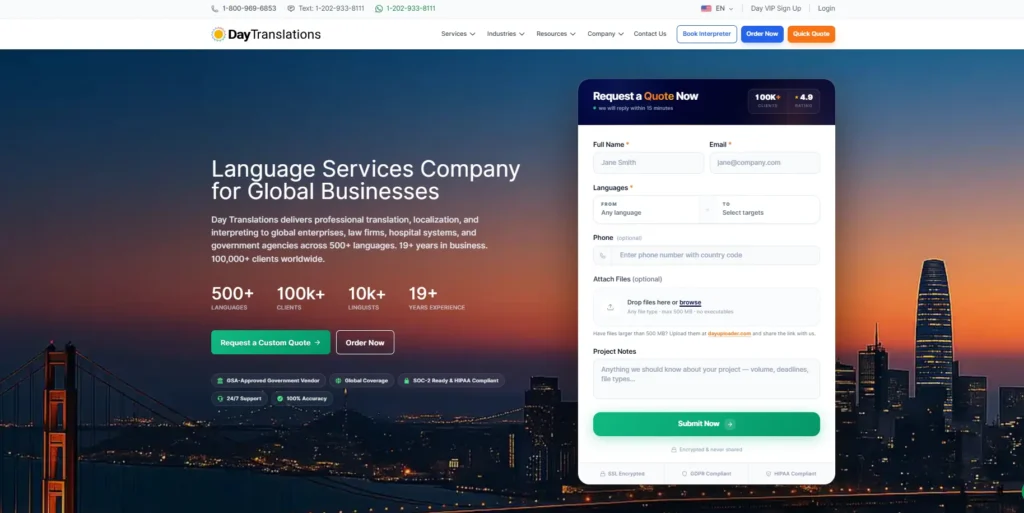
9. Day Translations
Who is this company best for?
- Healthcare, legal, education, and government projects where official acceptance and cultural sensitivity matter
What can they help you with?
- Translation, transcription, and interpretation
What makes them stand out?
- Broad human translation coverage positioned around official and public-facing use cases
What should you confirm before hiring?
- Confidentiality practices and industry expertise for the specific project, since claims about coverage are broad and audio-format capabilities aren’t always spelled out project by project
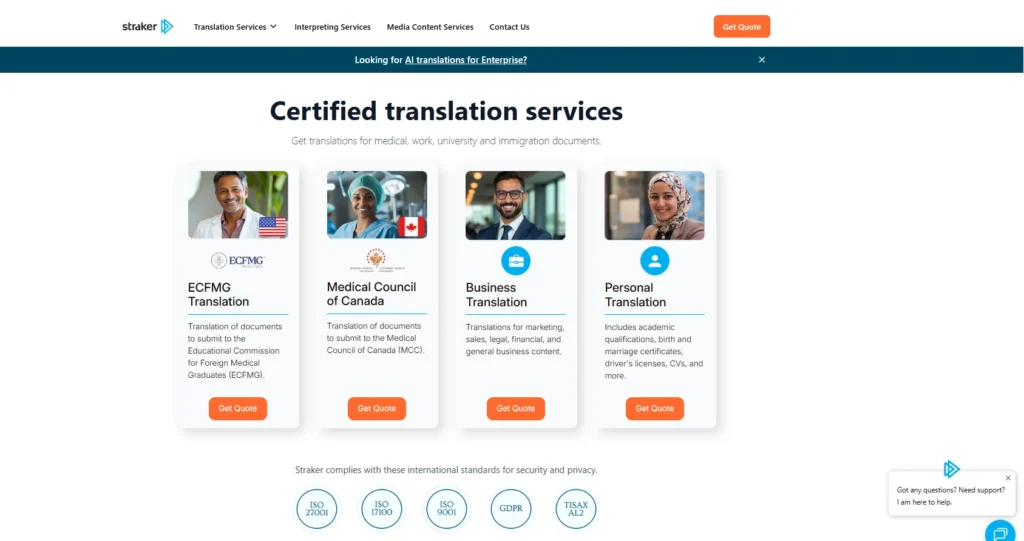
10. Straker Translations
Who is this company best for?
- Recurring, high-volume audio and media programs rather than a single one-off file
What can they help you with?
- AI-assisted translation with human review
- Media localization for e-commerce, publishing, and high-volume content producers
What makes them stand out?
- Workflow dashboards giving visibility into where a project stands at any given moment
What should you confirm before hiring?
- The depth of human review behind the automated output before committing to a larger project
How to Choose the Right Audio Translation Company
Working backward from the list above to an actual shortlist means weighing project type, required output, language pair, risk level, budget, and timeline together rather than picking whichever audio translation company shows up first in a search. An audio translation service built for fast, self-service text conversion isn’t the right fit for a courtroom recording, and a heavyweight enterprise platform isn’t necessarily worth the overhead for a single podcast episode.
Matching the provider’s actual strength, like technology-led speed, certified accuracy, enterprise scale, or multi-format consolidation, to what the project genuinely needs tends to matter more than any single feature on a comparison page.
Which Provider Fits Your Audio Project?
- Podcast translation: Needs natural-sounding language adaptation and reasonable turnaround; self-service or mid-market providers often fit well here.
- eLearning and corporate training: Needs subject-matter accuracy and consistent terminology across modules; providers with structured review processes, like RWS or VerboLabs, tend to fit.
- Legal audio: Needs certified accuracy, confidentiality, and a documented review trail; Tomedes and Day Translations both emphasize official-use credentials.
- Healthcare recordings: Need clinical terminology accuracy and confidential handling; verify HIPAA-relevant practices directly with any provider before committing.
- Customer interviews and research: Need fast, accurate transcription with flexible turnaround; platform-based providers can work well for lower-risk content.
- Marketing videos: Need cultural adaptation and voice-over quality, not just literal accuracy; VerboLabs and Mars Translation both cover this multimedia range.
- Webinars: Need reasonably fast subtitling or dubbing at moderate volume; mid-market and enterprise providers both fit depending on frequency.
- Large audio libraries: Need scalability and consistent terminology across volume; enterprise platforms like TransPerfect, Lionbridge, or RWS are built for this.
Why Teams Choose VerboLabs When Audio Needs to Work Across Languages
Audio content rarely stays in its own lane for long. A translated interview becomes a subtitled clip, then a dubbed version for a different market, then part of a training library that needs updating next quarter. Handling each step through a separate vendor tends to introduce exactly the kind of terminology drift and inconsistent quality that makes multilingual content feel disjointed.
VerboLabs connects audio translation with transcription, subtitling, dubbing, voice-over, and video localization under one workflow, which means fewer handoffs between vendors, terminology that stays consistent from the first translated document to the final dubbed video, and an easier path into new markets as content needs expand rather than a fresh vendor search each time.

Ready to expand your audio content globally?
Contact VerboLabs today for professional audio translation services in 120+ languages.
FAQs About Audio Translation Companies
It converts spoken content from one language into another, often producing transcripts, subtitles, dubbed audio, or voice-over as the final deliverable, depending on the project.
Transcription converts speech to text in the same language; audio translation goes a step further and converts that content into a different language, sometimes as text and sometimes as new spoken audio.
Accurate translation, appropriate review for the content’s risk level, correct timing/sync for subtitles or dubbing, and clear communication about which deliverable format is actually included.
Yes, most established providers accept common audio and video formats, though it’s worth confirming specific format support and any file-size limits directly with a provider.
Pricing varies by output type. A basic transcript translation costs less than fully synced subtitles or professional dubbing with voice talent, so cost depends heavily on the deliverable, not just the audio length.
Turnaround depends on length, language pair, and deliverable complexity. A short transcript translation might take a day, while dubbing with voice recording typically takes longer.
Accuracy depends heavily on whether human review is involved. AI-only output can work for casual, low-risk content, but professional or public-facing audio generally needs a human translator and reviewer in the loop.
It depends on the stakes, as AI-assisted workflows can handle simpler, lower-risk content reasonably well, while legal, medical, or brand-critical audio generally benefits from full human translation and review.
Look for confidential, access-controlled workflows, NDA availability, and providers with actual experience in that specific industry, rather than assuming general-purpose translation services are equipped for sensitive content.
Look past language count and price to what’s actually included. Review depth, output format, turnaround, confidentiality practices, and consider testing a couple of shortlisted providers with the same sample audio before committing to a larger project.