
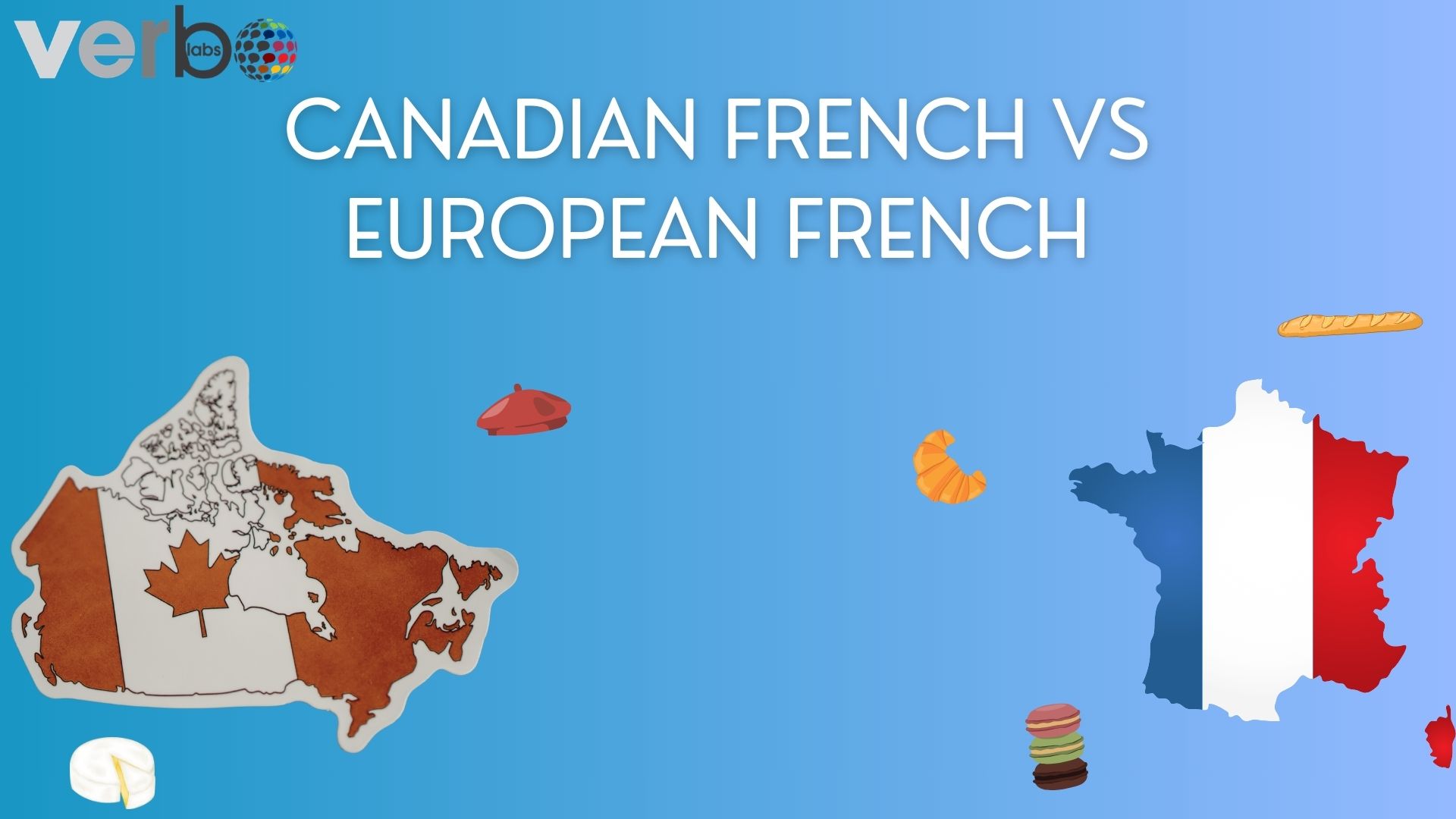
Canadian French vs European French are fundamentally the same language, but they differ noticeably in pronunciation, vocabulary, cultural usage, and localization norms. For learners, translators, and global businesses, understanding these differences helps avoid miscommunication and ensures that French content feels natural and regionally appropriate. French is spoken by over 300 million people worldwide, but it is far from uniform.
This blog explains the origins of the two varieties, their practical differences, and why these differences are particularly significant for professional translation and localization in French translation services.
For businesses expanding into French-speaking markets, working with professional translation services like VerboLabs ensures that content is adapted accurately for both Canadian and European audiences.
Why This Comparison Matters
French is an official language in dozens of countries, yet regional evolution has created distinct variants. The contrast between Canadian French and European French is among the most significant in the Francophone world.
For language learners, these differences can affect listening comprehension and confidence. For translators and businesses, choosing the wrong variant can make content sound awkward, foreign, or culturally out of place. Understanding differences between Canadian French and European French is therefore not optional—it is essential.
For this reason, professional translation services and localization services are essential to accurately reflect the correct terminology, tone, and cultural context for each audience. Working with experienced providers like VerboLabs helps businesses ensure their French content feels natural and culturally appropriate in both Canadian and European markets.
Origins and Historical Development
How Canadian French Evolved
Canadian French was formed by French-speaking settlers in North America during both the 17th and 18th centuries. Specifically, Canadian French originated in the areas now known as Quebec, which were settled by French speakers when the French first arrived. As contact between the settlers diminished due to growing distance from Europe, they continued to speak the same type of French but began to develop their own local dialects and terminology that differed from that spoken in Europe.
While English has influenced some aspects of Canadian French, extensive borrowing has been resisted in the Canadian French-speaking community through language planning and cultural preservation.
How European French Became Standardised
The French of Europe has grown and flourished throughout France; however, the French of Paris had the greatest influence in shaping modern European French, making the Parisian variety a common reference for both educational and governmental use throughout Europe and for communication with international organisations.
As time went on and influenced one another, the French dialects took very different paths to develop into the French dialects we hear and use today.
French Pronunciation Differences
Pronunciation is often the first difference learners notice.
Canadian French Pronunciation
- Stronger, more pronounced vowels
- Frequent use of diphthongs (single vowels that glide into another sound)
- Clearer articulation of consonants
- Distinct intonation patterns that may sound sharper to European ears
European French Pronunciation
- Flatter vowel sounds
- Softer consonants, especially at the end of words
- More uniform rhythm, often perceived as smoother
These French pronunciation differences mean that even fluent speakers may need time to adjust when listening to the other variety in casual conversation.
Also Read,
- Why Translation from English to French Is Essential for Business
- Why You Should Translate Your Website into French in 2026
Canadian French Vocabulary vs European French

Vocabulary is another major area of divergence.
| English | Canadian French | European French |
| Car | char | voiture |
| Weekend | fin de semaine | week-end |
| Shopping | magasinage | shopping |
| Cell phone | cellulaire | portable |
Canadian French often prefers French-based terms, while European French is more accepting of English loanwords. These French cultural language differences can significantly affect translation quality if ignored.
Grammar and Usage Distinctions
At a structural level, grammar rules remain largely the same. However, usage patterns differ.
- Canadian French uses tu more casually, even in semi-formal situations
- Some verb forms and contractions are more common in spoken Canadian French
- European French maintains clearer distinctions between formal and informal registers
For learners, this means understanding not just grammar, but social context. For translators, it highlights the importance of audience awareness.
Mutual Intelligibility: Can Speakers Understand Each Other?
In most cases, yes.
- Written French: Highly mutually intelligible
- Formal speech: Usually clear on both sides
- Informal speech and slang: May require adjustment
This is why French dialects are more than an academic topic—they have real-world implications for media, training, and customer communication.
Cultural Context and Expressions
Language reflects culture, and this is where misunderstandings often arise.
Canadian French includes idioms rooted in local history, climate, and social life. European French expressions often reference shared cultural experiences from France and neighbouring countries.
For example:
- Marketing slogans that work in France may sound strange in Canada
- Humour and idiomatic expressions often do not transfer directly
This makes language localization for French variants essential rather than optional.
Why These Differences Matter for Translation and Localization
The use of an incorrect variant may:
- Diminish a company’s level of trust and credibility.
- Confuse and/or alienate an audience.
- Causes misinterpretation in terms of a company’s products and services, or even a company’s liabilities.
For this reason, professional localization is necessary to accurately reflect the appropriate terminology, tone, and style of documents and other media for the intended market and audience. This will be most important for legal and regulatory compliance, as well as for any public-facing document or digital media.
Practical Tips for Learners and Professionals
If you want to learn Canadian French vs European French, consider the following:
- Choose your variety based on where you plan to live or work
- Expose yourself to both forms to build listening flexibility
- Use region-specific learning materials
- Work with native linguists for professional content
Understanding variation does not weaken your French—it strengthens it.
Conclusion
Canadian French vs European French are not competing languages but complementary expressions of a shared linguistic heritage. The differences in pronunciation, vocabulary, and usage reflect unique histories, cultures, and identities across French-speaking regions.
For learners, understanding Canadian French vs European French builds confidence in communication. For translators and businesses, recognising these distinctions is essential to ensure clarity, accuracy, and cultural respect when adapting content for different audiences.
In a globalised world, language diversity becomes a powerful advantage when managed correctly. This is where professional translation services and localization services play a critical role. VerboLabs helps businesses deliver culturally accurate multilingual content, ensuring that language differences are handled with expertise and sensitivity across global markets.

Get expert Canadian and European French localization with VerboLabs for accurate, culturally fluent global communication.
Frequently Asked Questions (FAQs)
Yes. They share the same grammatical foundation, but differ in pronunciation, vocabulary, and informal usage.
Generally, yes, especially in written and formal contexts, though slang and accents may require adjustment.
It depends on your goals. Canadian French suits life or work in Canada, while European French suits France and many international settings.
Historical separation and different cultural influences led to distinct pronunciation patterns over time.
Core grammar is the same, but everyday usage and formality levels differ.
Yes. Many everyday terms and idiomatic expressions vary between the two.
Absolutely. Localized content feels more natural and avoids revealing translation errors.
VerboLabs provides expert localization for both Canadian and European French, ensuring accuracy, cultural relevance, and professional impact.