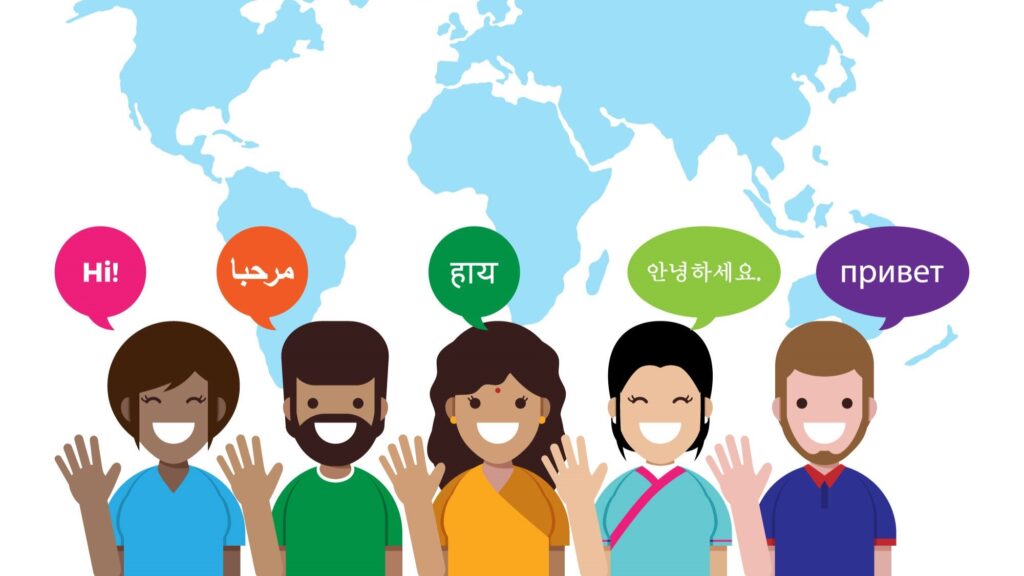

Businesses in the United States can now offer real-time customer support by utilizing multilingual AI chatbots rather than hiring and expanding their existing personal support teams.
By integrating the efficiency of AI technology with professional localization services, businesses can enhance their customer’s experience while simultaneously lowering their overall support costs and increasing the ability to grow internationally while maintaining an accurate brand message and consistency.
AI inspires many companies that operate in multi-linguistic environments to utilize an AI-powered chatbot as more than an automated customer service tool — they have become a daily communication tool.
This blog discusses how and why multilingual AI chatbots are important, as well as how translation and localization have been utilized to develop these innovative tools to support US businesses.
Why Multilingual AI Chatbots Are a Business Priority in the US?
The US market is multilingual by default. Millions of customers prefer interacting in languages other than English, while US-based companies increasingly serve global users.
Key drivers behind multilingual AI chatbots include:
- Growing linguistic diversity among US customers and international users
- 24/7 customer support expectations across time zones and regions
- Rising support volumes that human-only teams cannot scale efficiently
AI chatbots offer scalability, but without proper localization services, they create language barriers instead of removing them. For example, a US SaaS company may lose international leads simply because its chatbot responds only in English or uses translated machine replies awkwardly.
What Are Multilingual AI Chatbots?
Multilingual AI chatbots are AI-powered conversational systems designed to understand and respond in multiple languages.
Unlike monolingual bots, multilingual chatbots:
- Detect or allow language selection automatically
- Support multilingual intent recognition
- Deliver responses adapted to linguistic and cultural expectations
They rely on a mix of AI translation service capabilities, language models, and professionally localized content to ensure accuracy across customer interactions.
Why Language Accuracy Matters in AI Chatbot Conversations?
Businesses frequently utilise chatbots as their primary communication channel with clients, and poor translation will quickly erode any trust they have gained.
The following are common risks associated with inaccurate chatbot interpretation of clients’ language:
- Misunderstanding clients’ intent
- Providing clients with misleading or ambiguous responses
- Increased chance of the client dropping out
- Loss of brand credibility
Professional translators have the skill to ensure that all chatbot communication is clear and professional; their services are particularly important in sectors heavily regulated by law (e.g., healthcare, financial services, legal services) because an inaccurate chatbot response can lead to serious misunderstandings.
Translation vs Localization in AI Chatbots
Comprehending the difference between translation and localization is crucial for chatbot success.
- Translation service for business focuses on converting chatbot scripts from one language to another.
- Localization services adjust tone, phrasing, cultural references, formality levels, and customer intent.
Localization in marketing-driven chatbot flows like sales, onboarding, and promotions. For example, a US eCommerce chatbot may have different Spanish localizations for Hispanic customers living in the US than it would for Latin American markets.
Common Use Cases for Multilingual AI Chatbots
1. Customer Support
- Frequently asked questions, tracking orders, returns, and solving problems
- Decreases reliance on human support agents for assistance
- Provides instant multilingual assistance
2. Sales & Lead Qualification
- Have many multilingual conversations with potential customers around the world
- Communicating in local languages improves the level of engagement and increases conversion ratios
3. Internal Business Operations
- Human resources chatbots that provide employees with multilingual support
- Providing support for company policies, benefits, and various training materials
Language Challenges in AI Chatbot Deployment
Without the right language strategy, chatbot deployments face several challenges:
- Literal translations that distort meaning
- Inconsistent terminology across chatbot flows
- Over-reliance on raw machine translation service outputs
- Lack of localization testing across regions
For example, poorly translated complaint-handling intents can cause chatbots to misunderstand customer frustration, escalating rather than resolving issues.
How Translation Services Power Multilingual AI Chatbots?
Effective multilingual chatbot deployment follows a structured language workflow:
- Chatbot content audit and language scope definition
- Intent and entity mapping for each language
- Translation service for chatbot scripts
- Localization for tone, formality, and cultural context
- Continuous updates as chatbot knowledge evolves
A professional translation service ensures consistency, accuracy, and scalability as chatbot content grows.
Machine Translation vs AI Translation vs Professional Translation
US businesses often compare language approaches when scaling chatbots:
- Machine Translation Service: Fast and cost-efficient, but lacks context awareness
- AI Translation Service: More adaptive, still requires human review
- Professional Translation Service: Highest accuracy for customer-facing chatbot interactions
Leading translation service companies use hybrid AI + human workflows to balance speed, cost, and quality.
Localization for Chatbot UX and Website Integration
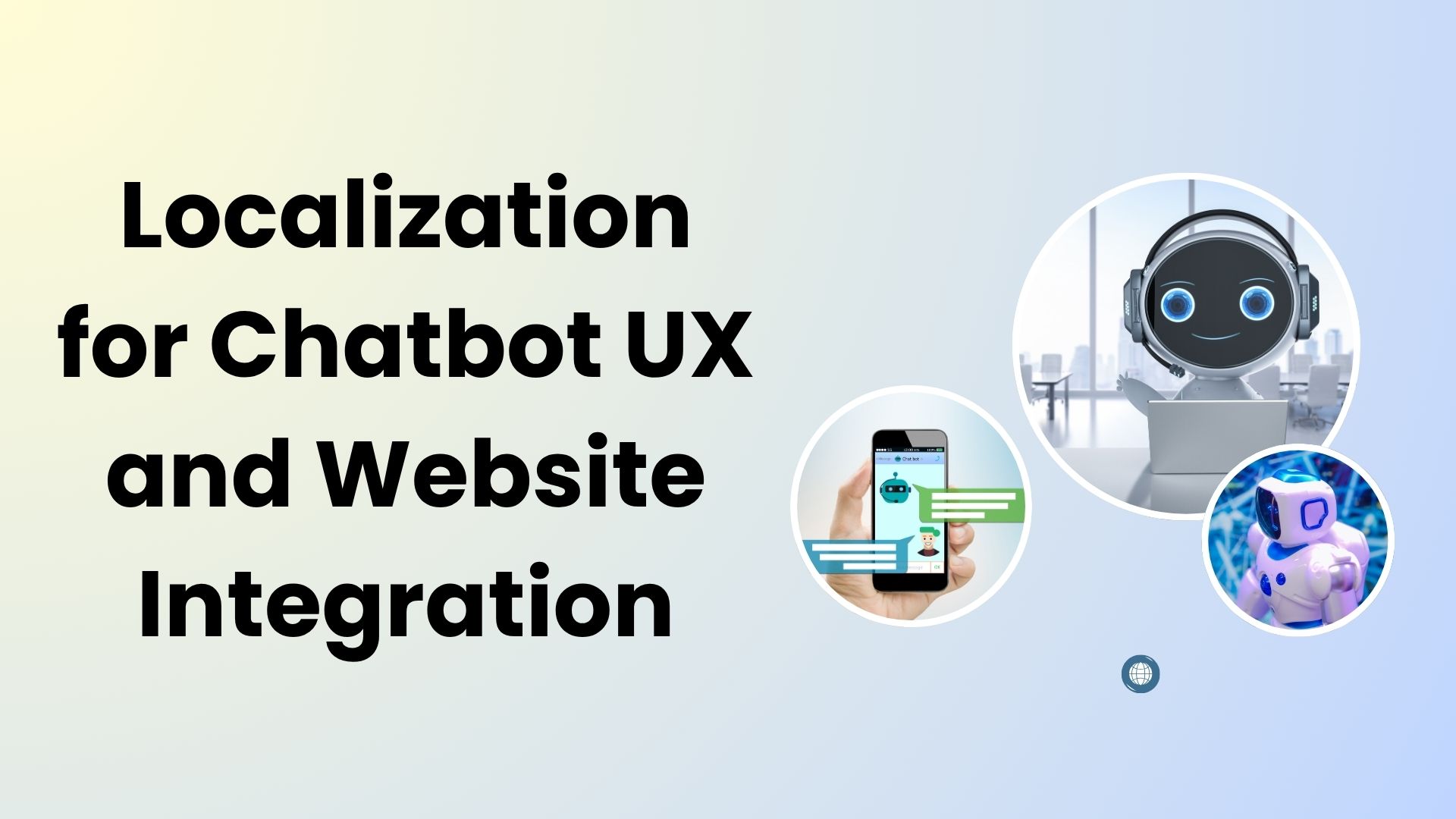
Chatbots do not operate in isolation. Localization website alignment is critical for a seamless user experience.
Considerations include:
- Consistency of chatbot terms with localised website content
- Multilingual Support for RTL and LTR text (as appropriate)
- A match between localised landing pages and chatbot answers
Example: Product details received from a chatbot should be consistent with both the language and the messaging on the localised web pages.
Translation Service Cost: What US Businesses Should Expect
The cost of chatbot localization is based on the following:
- Supported languages
- The complexity of the flows/intents within the chatbot
- Whether it is a one-time or ongoing update process
Although the initial expense of translation services may appear to be significant, once the chatbot is localized correctly, this will provide a lower total cost of supporting the chatbot with respect to escalations, as well as improving self-service success rates.
How to Choose the Right Language Partner for AI Chatbots?
When evaluating translation service companies, look for:
- Proven experience with AI and chatbot localization
- Industry-specific language expertise
- Scalable workflows for frequent content updates
- Strong QA, terminology management, and review processes
- Transparent pricing models
How VerboLabs Enables Multilingual AI Chatbots?
VerboLabs supports US businesses with end-to-end chatbot localization solutions:
- Translation service for business chatbot scripts
- Localization services for intents, entities, and responses
- AI translation service with human quality review
- Localization for websites, apps, and chatbot ecosystems
- Industry-ready solutions for SaaS, eCommerce, healthcare, and enterprise platforms
Why VerboLabs?
- Native linguists powered by AI workflows
- Scalable multilingual support
- Consistent brand voice across languages
Conclusion
AI-powered multilingual chatbots serve as a means for companies to interact with customers and communicate their brand. Factors that influence customer satisfaction and revenue include how accurately the chatbot represents the user’s language, whether or not it is culturally appropriate, and maintaining consistency in message delivery.
With an effective localization strategy and a high-quality translation service, US companies can build scalable AI-enabled customer service. As such, VerboLabs provides companies with access to multilingual AI chatbots that help them expand internationally at a steady pace.

Build multilingual AI chatbots your global customers trust—with VerboLabs.
Frequently Asked Questions (FAQs)
AI chatbots designed to communicate with users in multiple languages.
Yes, especially for customer-facing and business-critical interactions.
Machine translation speeds delivery, but professional review ensures accuracy and intent.
It depends on your customer demographics and expansion strategy.
Costs vary by language count, content volume, and update frequency.
Yes, VerboLabs provides integrated localization services for chatbots and digital platforms.