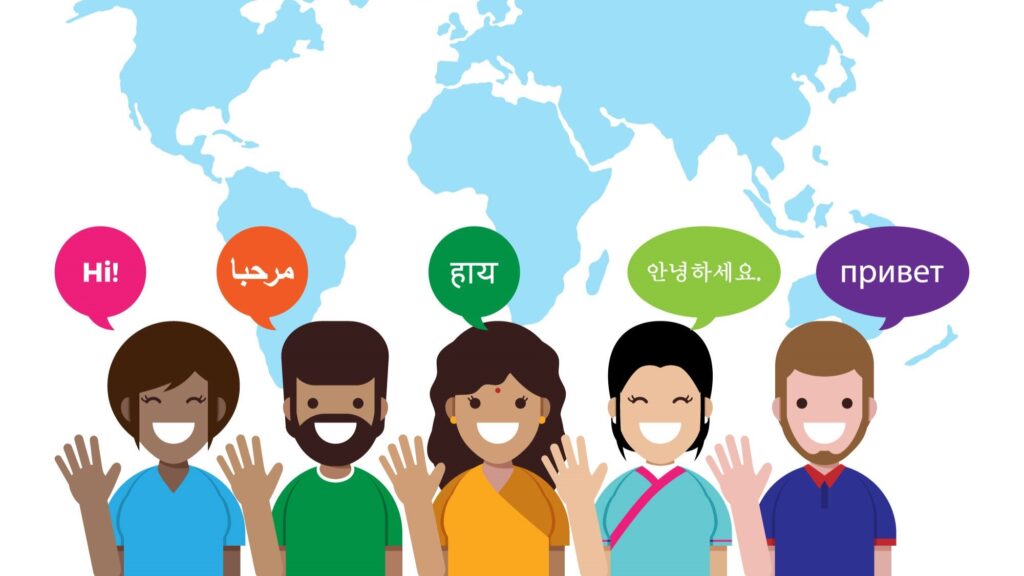

The discussion around Person-First Language vs Identity-First Language has become increasingly important in 2026, especially in content creation, education, and translation services. Language is not just about words; it reflects attitudes, values, and respect for people. For middle-class Indian readers who consume global content, understanding this difference helps in better communication at work, in education, and in society.
In translation and localization, choosing the wrong term can change the meaning or even offend readers. This is why professional translation services, such as those offered by VerboLabs, focus on inclusive, culturally sensitive language. This guide explains the meaning of person-first language, the identity-first language definition, and how to use inclusive language correctly in global communication.
What Is Person-First Language?
The meaning of person-first language is simple: it puts the person before any condition, disability, or identity. For example, instead of saying “disabled person,” person-first language says “person with a disability.” In the debate of Person-First Language vs Identity-First Language, this approach highlights that a person is more than a label.
Person-first language is widely used in healthcare, education, and formal writing because it helps reduce stigma and negative assumptions.
Origins And Background
Person-first language developed as a response to discriminatory labels. Professionals realised that language shapes thinking. By changing how we speak, we can change attitudes. This approach is supported by global style guides and institutions such as health and education bodies.
Examples Of Person-First Language
Some common examples that explain the meaning of person-first language include:
- Person with autism
- Person with visual impairment
- Person with learning difficulties
These examples show how person-first language keeps the focus on the individual.
Also Read,
- Enhancing Global Learning Accessibility Through Multilingual Translation Services
- Boost Your Conversions with Professional Copywriting & Content Creation
When Person-First Language Is Most Appropriate
In the Person-First Language vs Identity-First Language discussion, person-first language is most suitable when:
- Writing for a general or unknown audience
- Creating formal documents or academic content
- Translating content where preferences are unclear
What Is Identity-First Language?
Identity-First Language Definition
The identity-first language definition refers to placing the identity or condition before the person, such as “autistic person” or “deaf person.” Supporters of this approach believe that their identity is an important and positive part of who they are.
In Person-First Language vs Identity-First Language, identity-first language is often chosen by communities that see their identity as something to be embraced, not separated.
Cultural And Social Significance
Identity-first language emerged from self-advocacy movements. Many individuals feel that separating the person from their identity suggests that the identity is something negative. For them, identity-first language promotes pride and a sense of belonging.
Examples Of Identity-First Language
Clear examples of the identity-first language definition include:
- Autistic person
- Deaf person
- Blind person
These terms are often preferred within specific communities.
When Identity-First Language Is Preferred
In the Person-First Language vs Identity-First Language comparison, identity-first language is preferred:
- When individuals clearly state their choice
- In community-specific or advocacy content
- Where identity is central to shared experience
Key Differences: Person-First Language vs Identity-First Language
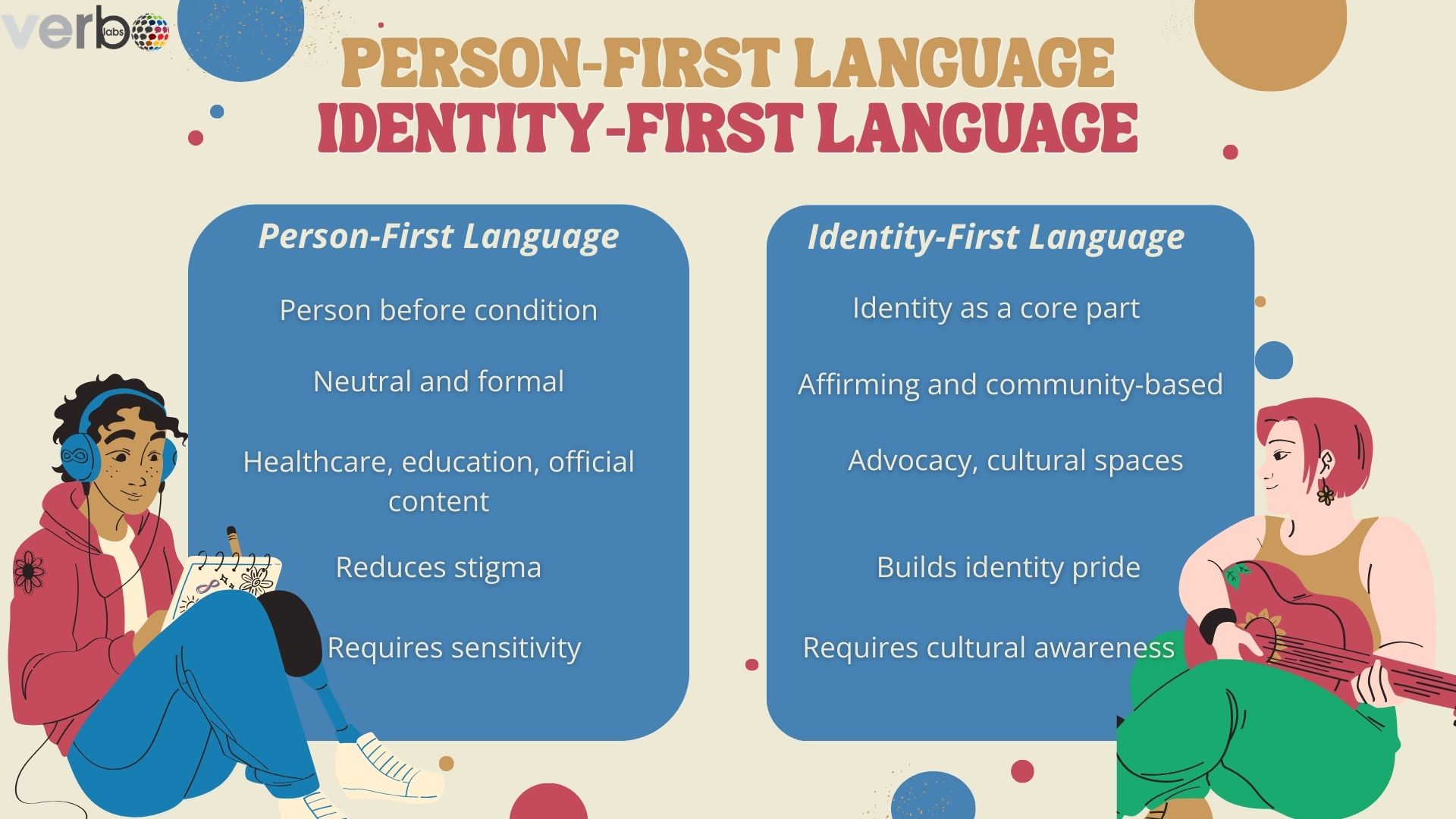
Understanding Person-First Language vs Identity-First Language becomes easier when we compare them directly.
| Feature | Person-First Language | Identity-First Language |
| Focus | Person before condition | Identity as a core part |
| Tone | Neutral and formal | Affirming and community-based |
| Typical Use | Healthcare, education, official content | Advocacy, cultural spaces |
| Impact | Reduces stigma | Builds identity pride |
| Translation Impact | Requires sensitivity | Requires cultural awareness |
This comparison shows that neither approach is wrong. The challenge in Person-First Language vs Identity-First Language is choosing the right one.
Why This Difference Matters in Translation And Localization
The difference between these language approaches is especially important in translation and localization, where word choice directly influences clarity, trust, and audience perception. Language preferences in translation and localization often vary across cultures, regions, and communities, meaning that a term considered respectful in one country may seem unsuitable or insensitive in another.
Errors in applying Person-First Language vs Identity-First Language can result in confusion or unintended offence. This is why professional translators go beyond word-for-word translation and carefully consider context, audience expectations, and communication intent. Organizations such as VerboLabs prioritise inclusive translation practices to ensure messages remain accurate, respectful, and culturally appropriate across all markets.
Best Practices For Choosing Inclusive Language
Follow Individual Preference
The most important rule in Person-First Language vs Identity-First Language is to respect personal choice. If someone expresses how they want to be described, that preference should be followed.
Consider Context And Audience
Formal documents often use person-first language, while community platforms may prefer identity-first language. Knowing how to use inclusive language means adjusting tone based on purpose.
Think About localization
Language preferences in translation and localization differ across regions. Translators must adapt content to local cultural norms without losing respect or meaning.
How Professional Translation Services Handle Inclusive Language
Professional translation services play a vital role in ensuring respectful and inclusive communication across languages and cultures. They invest time in training linguists to develop a strong and practical understanding of Person-First Language vs Identity-First Language, recognising that word choice can influence how messages are received.
By following recognized global style guides, consulting both client requirements and audience preferences, and adapting language to suit cultural contexts, translators maintain accuracy and sensitivity. This careful and informed approach helps ensure that inclusive language is used correctly, consistently, and with respect in every piece of translated content.
Real-Life Examples In Communication
Real-life communication often shows how language choices change based on context and audience. When viewed through the lens of Person-First Language vs Identity-First Language, a formal report may state, “A person with autism may require support,” as this is appropriate for professional and neutral settings.
On the other hand, a community blog might say, “Autistic people share their experiences,” which reflects identity, pride, and shared understanding. Both expressions are appropriate in their respective settings, and maintaining this balance is essential for learning how to use inclusive language clearly, respectfully, and effectively.
Impact On SEO And Content Writing
From an SEO perspective, the thoughtful use of terms such as Person-First Language vs Identity-First Language, the meaning of person-first language, and identity-first language definition helps improve search visibility when they are included naturally within the content.
However, content writers must ensure that keyword usage does not affect clarity or readability, as the primary goal is to inform and engage readers. In addition, using inclusive and respectful language strengthens a brand’s credibility and builds user trust. These factors encourage longer engagement and positive user behaviour, both of which are important signals for better search engine rankings.
Conclusion
The debate around Person-First Language vs Identity-First Language is not about strict rules but about respect. Both approaches aim to protect dignity and promote inclusion. The right choice depends on context, audience, and preference.
For translation and localization, understanding language preferences in translation and localization is essential. Professional services ensure that inclusive language is applied thoughtfully, helping brands communicate respectfully across cultures.

Work with VerboLabs to create respectful, inclusive, and culturally aware multilingual content.
Frequently Asked Questions (FAQs)
The difference in Person-First Language vs Identity-First Language lies in word order and focus. Person-first highlights the individual, while identity-first highlights the identity.
Businesses usually prefer person-first language for formal content, but localization may require identity-first language based on audience preference.
No. Preferences vary. Some prefer person-first language; others, identity-first language. Respecting choice is key.
Correct use of Person-First Language vs Identity-First Language improves clarity, trust, and inclusivity in translated content.
There is no single rule. Best practice means understanding context and respecting individual or community choice.
Inclusive language reflects social awareness and professionalism. It helps create respectful communication in a global world.