
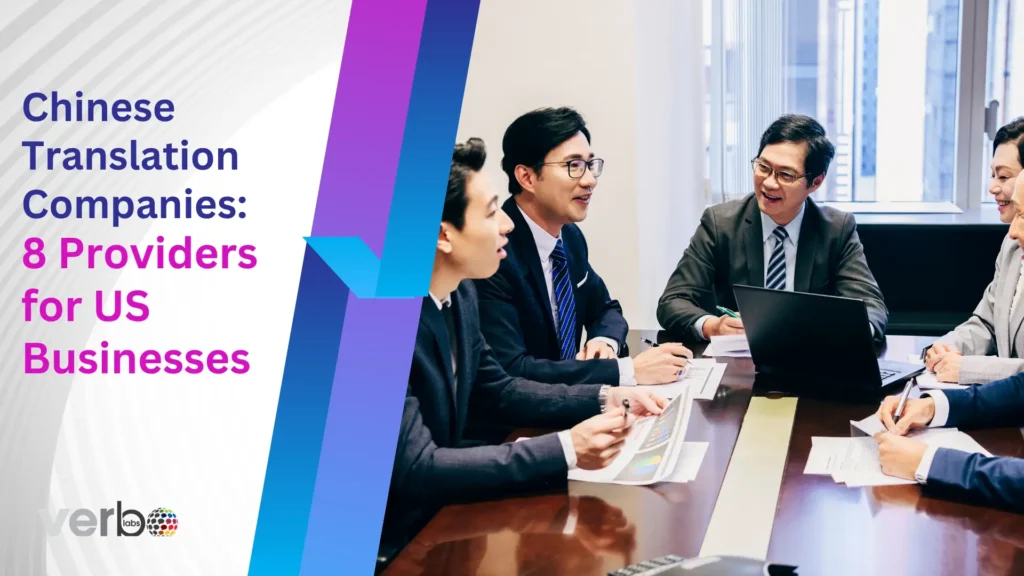
When choosing a company for Chinese translation, keep in mind that it is not enough to translate from English into Chinese. First, you need to identify if your target audience uses Simplified or Traditional Chinese and if your target market is located in Mainland China, Taiwan, Hong Kong, Singapore, or some other region with Chinese speakers.
Another essential aspect is the content type. For instance, a business contract would require a certain translation approach as opposed to the translation of a product web page, a software app, marketing messages, or a training video.
TL;DR: Which Type of Provider Do You Need?
Choosing the best English-to-Chinese translation service provider to suit your requirements is important. For example, if the need is for website or marketing localization, a service provider that possesses experience in preparing marketing materials is most likely to be chosen. For legal, medical, or technical documents, one has to look for expertise in the specific field.
If interpreting services are needed for a meeting or event, the chosen company must provide professional interpreting. For large projects involving multiple languages, the company with project management capabilities should be selected.
How We Evaluated These Chinese Translation Companies
We have assessed Chinese translation firms according to their language skills, services offered, quality of translations, and whether they are a good fit for US companies. We have explored whether each company works with Simplified and Traditional Chinese and provides services such as document translation, web localization or interpretation.
Other traits we assessed include quality-control processes, project management, and flexibility in meeting various business requirements. The main purpose of this evaluation is to enable companies to compare the different providers and make a right choice based on their content, target audience, budget, and project volume. The agency or independent translator comparison helps buyers compare provider coverage and expertise for translation.
8 Chinese Translation Companies at a Glance
| Provider | Chinese Variant | Best-Fit Use Case | Human QA & Review | Scope |
| VerboLabs | Confirm variant | Growing global brands | Human and AI check | Documents, web, media |
| Tomedes | Both variants | General business & certified docs | Native linguist second-review | Documents, web, software |
| TransPerfect | Confirm variant | Large enterprise documents | Professional review | Documents, web, software |
| LanguageLine Solutions | Confirm variant | Healthcare and business files | Professional review | Documents |
| Day Translations | Confirm variant | Business documents and filings | Human review | Documents, web, media |
| GTS Translation Services | Confirm variant | Professional business text | Human review | Documents |
| RWS | Confirm variant | Enterprise regulatory programs | Enterprise review | Documents, digital content |
| Lionbridge | Confirm variant | High-volume corporate content | Vetted human and AI | Documents, web, software |
1. VerboLabs
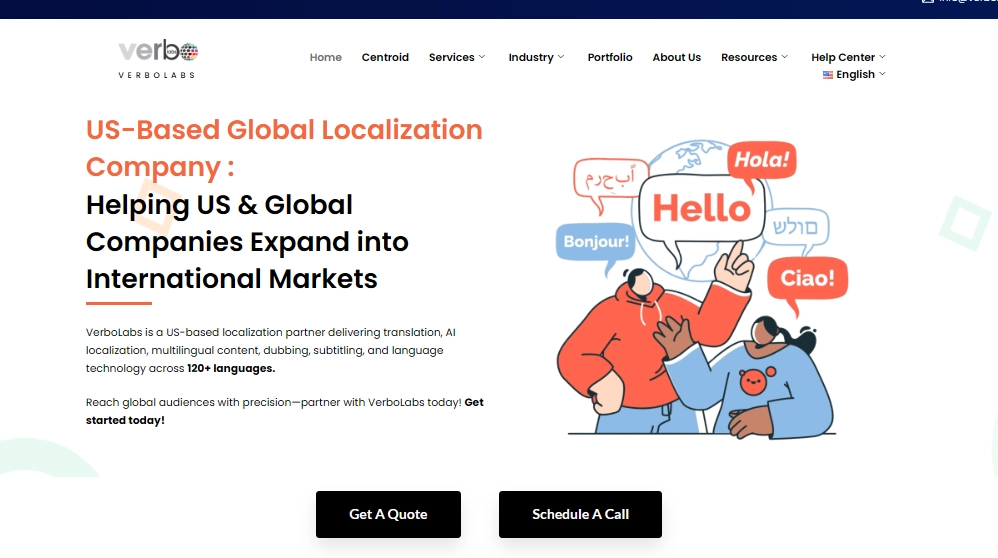
VerboLabs is a translation and localization company that serves businesses that need multilingual services. Its website states that it offers a service to translate Chinese content into English. The content localization service options helps buyers compare provider coverage and expertise for content localization.
Which Chinese content needs should be scoped first?
The first step is determining whether the translation is from Chinese into English or vice versa. One must also identify the target market and type of content to be translated, such as texts related to a business, information from a web page, or video files. Finally, it should be established whether Simplified or Traditional Chinese is going to be used in the project.
How should terminology and review be described?
VerboLabs considers transcribing, revising, proofreading, and quality assurance stages as very important. When dealing with technical materials, one needs to verify the expertise of the translator, whether or not any special materials were designed, and how many versions of the text will exist. The compare manufacturing translation services helps buyers compare provider coverage and expertise for manufacturing translation.
What should buyers confirm before commissioning a project?
The buyer must determine the following aspects of its project: the type of Chinese to be translated, whether human correction is required, etc.
2. Tomedes
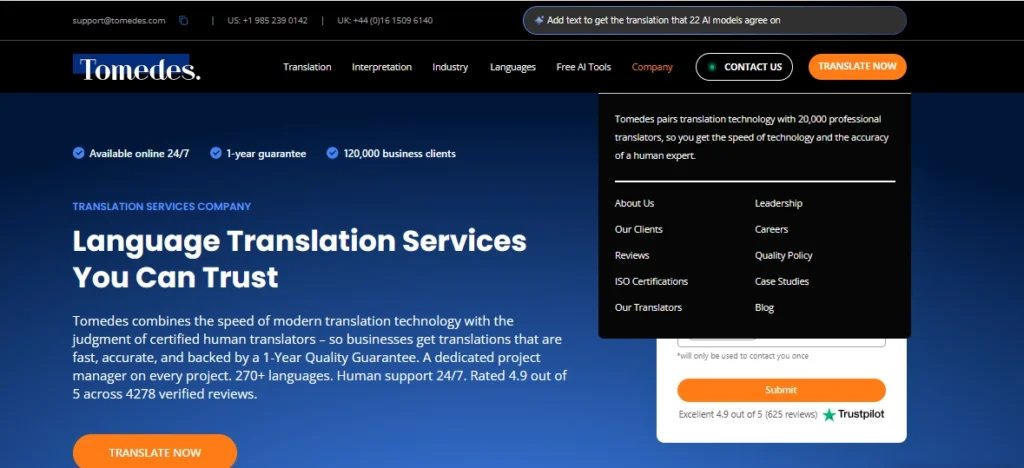
How does it distinguish Simplified, and Traditional Chinese?
The company states that Simplified Chinese is primarily used in mainland China and Singapore, while Traditional Chinese is used in Taiwan, Hong Kong and Macau.
What types of Chinese projects does it list?
Among the services offered by Tomedes are personal and business document translations, websites and audiovisual productions.
How are specialist reviews and pricing presented?
According to Tomedes, all translations are checked for accuracy by an independent linguist. The Chinese services page mentions their rates starting at $0.06 per character for translation services; however, rates are subject to change based on other translation specifics. Contact the company for an exact quote before having an estimate made for the total cost.
3. TransPerfect
Which business content types fit its documented translation scope?
TransPerfect provides translation services for a variety of business needs (legal, financial, marketing, corporate etc). If you’re looking at Chinese translation then you’ll need to check that they can do your particular type of content and language before you go any further.
What workflow capabilities may matter to larger teams?
GlobalLink’s platform by TransPerfect helps companies to manage all the language-related content on one platform. It can be beneficial when different teams are involved in common tasks like document translation, web content editing, and performing localization. Thus, managing everything from a single platform can facilitate the organization and consistency of the content across multiple languages.
What should a buyer clarify for a Chinese project?
To begin, you should clarify if you will be using Simplified or Traditional Chinese, in addition to identifying the target audience. Discuss the review and approval processes relating to the translation. In the case of ongoing projects, inquire how to handle terminology, document versions, and project cost to prevent complications later on.
4. LanguageLine Solutions
When does its organizational language-service model fit?
For companies that require multilingual interactions, it can be beneficial to evaluate LanguageLine. This can involve different types of companies like service providers and organizations that deal with documents in various languages on a day-to-day basis or interact with people communicating in different languages.
How should buyers separate translation from interpreting?
Written translation pertains to the documents, web pages, and other forms of text. Interpreting pertains to oral communication, for example, phone calls, meetings, or video calls.
What review and sensitive-data questions should be asked?
Clarify how quality checks are carried out and how files are processed. Confirm details surrounding access safeguards, retention periods, confidentiality requirements, and the provision of the relevant Chinese language services that you need.
5. Day Translations
Which US-based buyer needs may fit its service model?
The company offers services that would appeal to businesses and individuals looking for translations of Chinese-language documents or oral assistance.
What should be verified for certified or official documents?
If you are interested in certified translations, ensure you check the authenticity certificate, find out whether the document has a signature or is printed, and properly verify the requirements of the receiving organization. A provider’s certification service does not guarantee acceptance of its documents across all governments, agencies, or institutions.
How should urgency and price be handled?
Make sure to obtain a written quotation describing the language variant, size of the project, level of revision involved in the translation, and amount of charges for urgency. Make sure that the summary includes information concerning the cost of the translation as well as the final delivery format and formatting.
6. GTS Translation Services
What Chinese-specific evidence is published?
Verify with GTS their ability to convert English into Chinese and vice versa, as well as the translation of simplified and traditional forms of the Chinese language into the desired language form.
What quality controls apply to the required content?
For any technical or commercial materials, ask about the human aspect of translation and check in detail on proofreading, terminology checks, and qualified review, if any, regarding translation projects, and what file formats might be used for submission.
When should this provider remain a conditional candidate?
If GTS provides the required confirmation of the translation options and other aspects of your project, then it can be kept on the list of potential translation companies for your project.
7. RWS
When might an enterprise workflow be relevant?
Businesses with a lot of multilingual content or recurring localization projects may want to look into using RWS. Confirm that the services currently offered fulfill the requirement for Chinese translation regarding what you are trying to translate.
How can terminology consistency be evaluated?
Find out whether the project is eligible for a glossary, translation memory, style guide, and version control. These items will ensure a consistent translation regarding the company name and terminology.
What should a small-project buyer verify?
If you need just one document translated, inquire about the minimum cost and delivery time.
8. Lionbridge
Which channels and content types should be confirmed?
Inquire if Lionbridge is competent and capable of working on content types like business writing, web pages, apps, or promotional materials.
What regional adaptation questions matter?
The audience could be in Mainland China, Taiwan, Hong Kong, Singapore, or any other place where Chinese is used. Therefore, it is best to check regarding local language variations and acceptable date units. There are cultural subtleties and writing specifics that guarantee that the recipient will clearly understand the translated version.
What should the scope of review include?
It is crucial to conduct the necessary verification of human review, subject-matter knowledge, terminology management, etc.
Why Choose VerboLabs for Chinese Translation Services?
VerboLabs provides a wide range of translation and localization services to companies. Its home page lists translations between Chinese and English and provides support for documents, web content, technical content, and multimedia. More extensive service pages detail editing, proofreading, and quality checks. The multimedia localization services helps buyers compare provider coverage and expertise for multimedia localization.
To get the work rolling for Chinese language translation, provide your source language, target language, intended audience, and content type. Confirm if simplified or traditional Chinese is relevant for your specific project and ask questions on the review process and delivery format, confidentiality stipulations, and timelines.
For a translation on the website or a business document, log on to VerboLabs translation services and set forth a discussion on the project and request quotations. The compare document translation companies helps buyers compare provider coverage and expertise for document translation.
Conclusion
Selecting among Chinese language translation services begins with a thorough evaluation of the target audience. The two types of language are meant for different audiences, and that can guide you to your decision.
Another factor that must be taken into account is the given translation project. The nature of the project will determine the translation workflow, as language providers may follow different procedures for business documents and videos. Always find out about their expertise, experience with documents, quality checks, data security measures, and the prices.

Expand your global reach with VerboLabs! Get accurate, culturally adapted localization services to connect with new markets. Contact us today for expert solutions!
Frequently Asked Questions
In terms of how the written language is used, the clear winner in mainland China and Singapore is Simplified Chinese. In Taiwan and Hong Kong, on the other hand, Traditional Chinese prevails. Therefore, you should opt for the version which matches the requirements of your audience.
In terms of spoken Chinese, the term Mandarin is used in Taiwan and mainland China. In translation, however, the term usually stands for the written language.
Translation cost includes the specific Chinese version involved, the nature and worth of content being translated, degree of depth, specific reviews needed, and timing of the delivery work.
To clarify what translation is, it refers to the delivery of words into a definite language, while localization represents the more comprehensive process of adapting the materials. Localization involves adaptations of expressions, cultural factors, and specifics related to dates.
You should ask who will translate and review the content, whether the provider has experience in your industry, etc. For important projects, request a sample or agree on a review process before translating the full content.