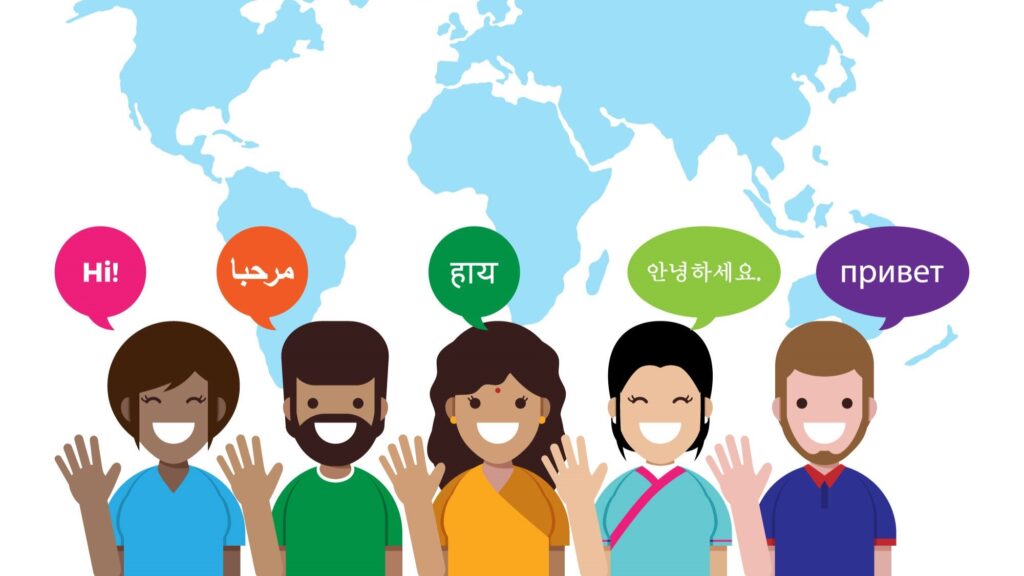

People often think translation is mostly a language exercise. Replace English words with Spanish, Hindi, French, or German ones and the job is done.
If only it worked that way.
Real translation work gets strange pretty quickly. A sentence can be grammatically perfect and still sound completely wrong to native readers. Sometimes it feels too formal. Sometimes weirdly aggressive. Sometimes unintentionally funny.
You see this a lot in subtitles, actually. A joke lands perfectly in one language and dies instantly in another. Not because the translator is bad. The joke simply depends on culture, timing, or wordplay that doesn’t exist elsewhere.
That’s why translators use different techniques depending on the situation. A legal document needs one approach. A dubbed Netflix series needs another. Marketing campaigns are a completely different headache.
Some translations stay very close to the original wording. Others drift pretty far away from it. The goal is usually the same though: make the reader feel like the content was written naturally in their own language.
Here are some of the translation techniques professionals use most often while handling multilingual content.
Borrowing
Borrowing is probably the easiest technique to spot because people already use it every day without noticing.
The translator keeps the original word instead of translating it.
Words like “pizza,” “karaoke,” “software,” or “café” travel across languages almost untouched. Trying to replace them sometimes sounds more awkward than leaving them alone.
In India, for example, office conversations regularly mix English with Hindi:
- “Deadline”
- “Presentation”
- “Startup”
Nobody pauses to translate those anymore.
Borrowing usually happens when the audience already understands the original term or when the translated version feels stiff and unnatural.
Tech companies do this constantly. Fashion brands too. Food marketing as well.
Honestly, once you start noticing borrowed words, you see them everywhere.
Calque (Loan Translation)
Calque is close to borrowing, but not exactly the same thing.
Instead of keeping the original term, the translator rebuilds it piece by piece in the target language.
The French version of “skyscraper” is a famous example:
- gratte-ciel
Literally, something like “scrape-sky.”
It sounds normal now, but at one point it was essentially a translated construction.
Some calques settle naturally into everyday speech. Others don’t. And when they don’t, the sentence starts feeling oddly mechanical.
You’ve probably read translations like that online before. Technically understandable, but something feels off the entire time.
That usually happens when translators follow the source structure too closely.
Literal Translation (Word-for-Word)
Literal translation gets mocked a lot, but translators still use it all the time.
Not every sentence needs creativity.
If a manual says: “Switch off the machine before cleaning.”
There’s usually no reason to reinvent it.
Instruction labels, forms, technical documents, and warranty papers — most of these rely heavily on literal translation because precision matters more than style.
Problems start when emotion or culture enters the sentence.
Take “spill the beans.” Translate that word-for-word into another language and readers may end up wondering why beans suddenly became important.
Restaurant menus are famous for this, by the way. Bad literal translations have created some unintentionally hilarious menu descriptions over the years.
Transposition
Languages don’t build sentences the same way.
English often leans heavily on verbs. Other languages prefer noun-heavy phrasing. Some languages stretch sentences. Others compress everything.
Transposition adjusts the grammar while keeping the meaning intact.
For example: “After he arrived,” might become “After his arrival.”
Same idea. Different structure.
Good translators do this constantly, usually without readers noticing.
And honestly, that’s the point. The translation shouldn’t feel like a translation.
Without transposition, multilingual content starts sounding stiff very quickly. Customer support emails are a good example. Direct translations sometimes sound unintentionally rude simply because sentence structures don’t transfer smoothly.
Modulation
Sometimes a sentence technically works after translation but still sounds unnatural.
That’s where modulation comes in.
The translator changes the perspective slightly while keeping the meaning intact.
Example:
“It’s not impossible” may become: “It’s possible.”
Same message. Smoother phrasing.
This happens a lot in advertising and subtitles because people don’t naturally speak in perfectly literal structures.
What is modulation in translation?
Modulation is basically when translators rephrase something because the direct version sounds awkward. The meaning stays intact, but the wording changes so native readers don’t feel like they’re reading translated content.
You see this constantly in:
- Dubbed films
- Subtitles
- Localization projects
- Conversational marketing copy
Without modulation, translations can sound emotionally flat even when the grammar is correct.
Equivalence (Idiomatic Translation)
Idioms are where direct translation usually collapses.
Phrases like:
- “Break the ice.”
- “Once in a blue moon.”
- “Hit the sack.”
They rarely survive word-for-word translation.
Equivalence fixes this by replacing the original phrase with another local expression that creates roughly the same reaction.
The exact wording often disappears completely.
What matters is the feeling.
Comedy writers and subtitle translators deal with this constantly. Some jokes simply don’t travel well between cultures. A translator may end up replacing the joke entirely just to preserve the humor.
That’s still considered a successful translation.
Adaptation (Cultural Substitution)
Adaptation goes even further.
Instead of adjusting only the wording, translators change the cultural reference itself.
Imagine an American sports advertisement filled with baseball references. In countries where baseball barely exists, those examples won’t connect emotionally at all.
So the translator may switch them to cricket or football instead.
Food references change too. School references. Holiday references. Even gestures sometimes.
This happens heavily in:
- OTT subtitles
- Dubbed shows
- Gaming
- Children’s entertainment
- Global advertising campaigns
Most viewers never notice adaptation when it’s done properly. They just assume the content was created locally.
Compensation
Not everything survives translation in the same place.
A rhyme may disappear. A pun may stop working. Sarcasm may lose impact halfway through a sentence.
Compensation helps recover that effect somewhere else.
A translator may move the humor later into the dialogue. Or strengthen emotional wording nearby to preserve the overall tone.
Poetry translators deal with this constantly. So do subtitle writers working under tight timing limits.
This is also one area where machine translation still struggles badly. AI tools can translate meaning reasonably well now, but subtle emotional recovery? That’s harder.
Human translators still outperform machines by a wide margin.
When to Use Each Translation Technique
Different content types need completely different translation decisions.
A legal contract and a Netflix subtitle obviously cannot be translated the same way.
Literary and Creative Content
Creative projects usually allow more freedom.
Novels, comics, films, scripts, and storytelling-heavy content often rely on modulation, equivalence, adaptation, and compensation.
The translator focuses less on sentence accuracy and more on rhythm, emotional flow, readability, and character voice.
Sometimes entire lines get rewritten because preserving the emotional effect matters more than preserving exact wording.
Readers rarely notice this unless they compare both versions side by side.
Legal and Technical Documents
Technical translation is stricter.
Precision matters more than creativity here.
Contracts, medical files, engineering reports, compliance documents — these usually stay closer to the original structure because even small wording changes can create confusion later.
Literal translation, borrowing, and transposition appear much more often in technical content.
Legal translators especially tend to avoid unnecessary creativity. One misplaced word can completely change the interpretation.
Marketing and Brand Communication
Marketing is messy in translation.
A slogan that sounds sharp in English can sound flat somewhere else even when translated correctly.
Which translation technique is most commonly used in marketing content?
Adaptation and equivalence are heavily used in marketing because campaigns need emotional connection, not just language accuracy.
Good marketing translation often feels closer to rewriting than translating.
You see this in global brand campaigns all the time. Taglines change country by country because humor, emotion, and cultural references behave differently across audiences.
Why Translation Techniques Matter for Businesses
Poor translation damages trust faster than companies expect.
Customers notice unnatural language almost immediately. Maybe not consciously, but they feel it.
A support email can sound rude accidentally. A product description can feel robotic. A translated ad may lose all personality halfway through the sentence.
Good translation helps businesses sound local instead of imported.
That difference matters more than people think, especially in multilingual markets where audiences switch between languages daily.
Machine Translation vs Human Translation Techniques
Machine translation has improved a lot. No question about that.
For quick understanding, tools like AI translation systems work surprisingly well now.
But nuance is still a problem.
Machines struggle with:
- Sarcasm
- Emotional tone
- Cultural references
- Conversational rhythm
- Humor that depends on timing
How do translation techniques differ when working with machine translation vs human translation?
Machine translation mostly predicts language patterns statistically. Human translators make judgment calls based on context, tone, audience expectations, and cultural behavior.
That’s why AI translations sometimes feel emotionally empty even when grammatically correct.
Humans interpret intention. Machines calculate probability.
There’s a difference.
How VerboLabs Ensures Accurate Translations
VerboLabs focuses heavily on localization, readability, and audience context instead of relying only on direct language conversion.
Different formats require completely different handling.
Subtitles need timing. Legal documents need precision. Marketing campaigns need emotional familiarity. Gaming content often needs cultural adaptation because jokes and references rarely transfer cleanly.
Native linguists and localization specialists help make sure the translated content sounds natural instead of machine-produced.
That flexibility becomes extremely important for businesses operating across multiple countries and languages.
Conclusion
Translation looks simple until you actually try carrying meaning across cultures.
Words move between languages fairly easily. Tone doesn’t. Humor doesn’t. Emotional rhythm definitely doesn’t.
That’s why professional translators switch between different techniques depending on the situation.
Some projects demand strict accuracy. Others need creativity and cultural rewriting. Most real-world translation work lands somewhere in between.
Usually, the best translation is the one nobody notices while reading.

Get precise translations with the right techniques—partner with VerboLabs today!
FAQs
Modulation is when translators slightly change the wording or perspective of a sentence because the direct version sounds unnatural. The meaning stays the same, but the sentence feels smoother to native readers.
Yes, constantly. A single document may use literal translation in one paragraph and adaptation in the next depending on what the sentence needs.
Machine translation mainly predicts patterns based on language data. Human translators adjust wording using context, emotion, cultural understanding, and tone.
A translation method is the overall approach used across the full document. Translation techniques are smaller decisions applied sentence by sentence.