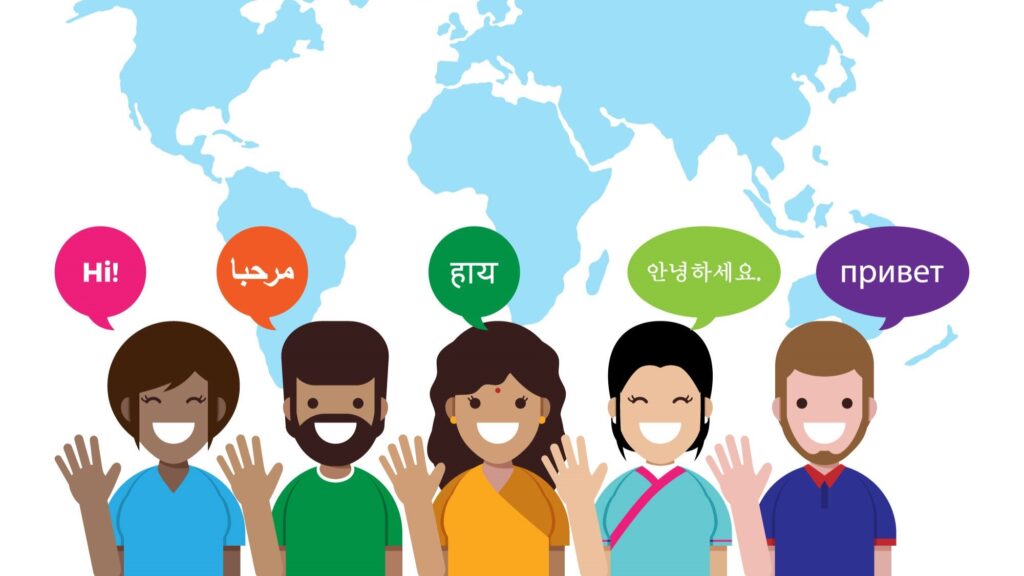

Machine translation (MT) uses software to automatically translate text or speech from one language to another, combining artificial intelligence (AI), computational linguistics, and large-scale data processing. As businesses expand into new markets, MT has become a powerful tool to overcome language barriers, reduce translation costs, and respond faster to customers across multiple regions.
However, MT is not perfect. It can struggle with complex language, cultural nuance, and industry-specific terminology. This blog explains what machine translation is, how it works, the main types of MT, and the key pros and cons for your business. You’ll also learn when to use MT, when to rely on human translators, and how a hybrid approach can give you the best of both worlds.
For fast, affordable translations tailored to your business needs, VerboLabs offers both machine and human translation services to help you expand globally.
What Is Machine Translation?
Machine translation is the process of translating text or speech from one language to another using software tools instead of human translators.
An MT system:
- Takes text as input in a source language
- Analyzes its structure and meaning
- Uses algorithms and learned patterns
- Produces the translated output in a target language
Because MT is a technical, automated process, it often lacks the deep cultural and contextual understanding that human translators bring. That’s why MT works best for straightforward or repetitive content, and less so for creative, sensitive, or highly specialized material.
Also read,
- Translation Memory Tools vs Machine Translation: What’s Best for Your Business in 2025?
- Top 10 Machine Translation Services in the USA
- Translation Memory Tools vs Machine Translation: What’s for Business
- Benefits of using Human Translation over Machine Translation Service
Types of Machine Translation
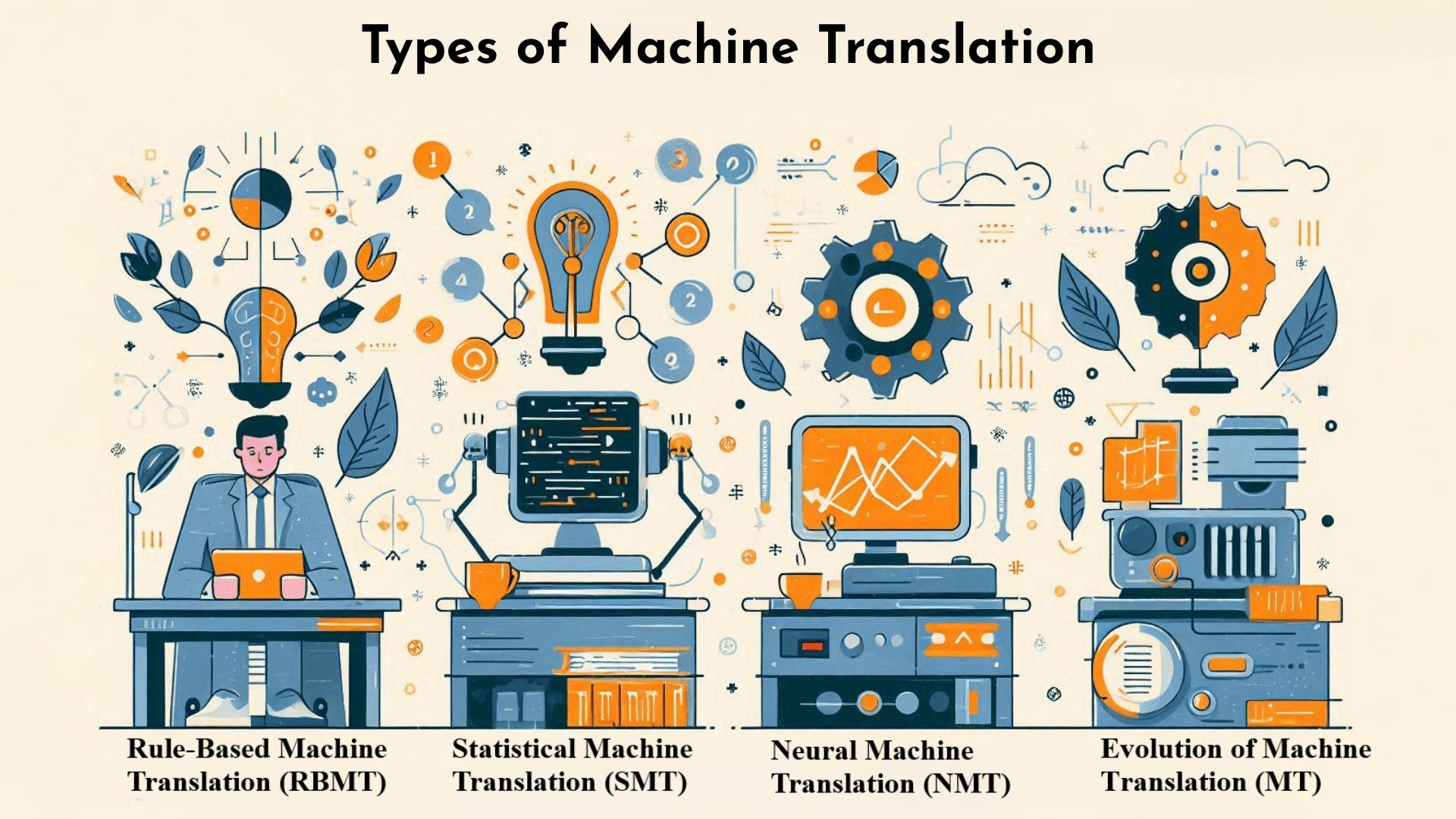
Over time, MT has evolved through several major approaches. Understanding them helps you see how the technology has improved — and where its limitations remain.
1. Rule-Based Machine Translation (RBMT)
Rule-Based MT relies on:
- Detailed grammar rules for each language
- Bilingual dictionaries
- Linguistic structures and syntactic patterns
Each sentence is translated using predefined rules that map words and phrases from the source language to the target language.
Strengths:
- Systematic and predictable
- Useful when strict control over terminology is needed
Limitations:
- Time-consuming to build and maintain
- Not flexible with idioms, slang, or complex sentences
- Often produces stilted, unnatural translations
2. Statistical Machine Translation (SMT)
Statistical MT was introduced to overcome some of RBMT’s rigidity.
Instead of relying on handcrafted rules, SMT:
- Learns from large collections of bilingual texts (parallel corpora)
- Uses statistical models to estimate the probability of different translations
- Chooses the most likely translation based on these probabilities
Strengths:
- More adaptable than RBMT
- Improves as more bilingual data is added
Limitations:
- Struggles with language pairs or domains where little training data is available
- May produce incorrect or awkward translations for rare words or phrases not seen in its data
3. Neural Machine Translation (NMT)
Neural Machine Translation is the most advanced and widely used MT approach today.
NMT systems:
- Use deep learning and neural networks
- Translate entire sentences (or even paragraphs) instead of word by word
- Consider broader context to capture meaning and tone
They are typically based on architectures such as recurrent neural networks (RNNs) and, more recently, transformer models, which are highly effective at understanding relationships between words in a sentence.
Strengths:
- More fluent and natural-sounding translations
- Better at handling context and word order
- Continuously improves as it is trained on more data
Limitations:
- Still imperfect with idioms, humor, and cultural references
- Can make confident but subtly incorrect translations
- Quality depends heavily on the quality and size of training data
4. Evolution of Machine Translation
Machine translation has come a long way:
- Early MT: Basic rule-based systems with small dictionaries and limited grammar handling. Translations were often literal and inaccurate.
- SMT era: Better fluency and more flexibility, but still heavily dependent on large parallel corpora.
- NMT today: AI-powered systems that generate more human-like, context-aware translations, making MT viable for a much wider range of business use cases.
How Does Machine Translation Work?
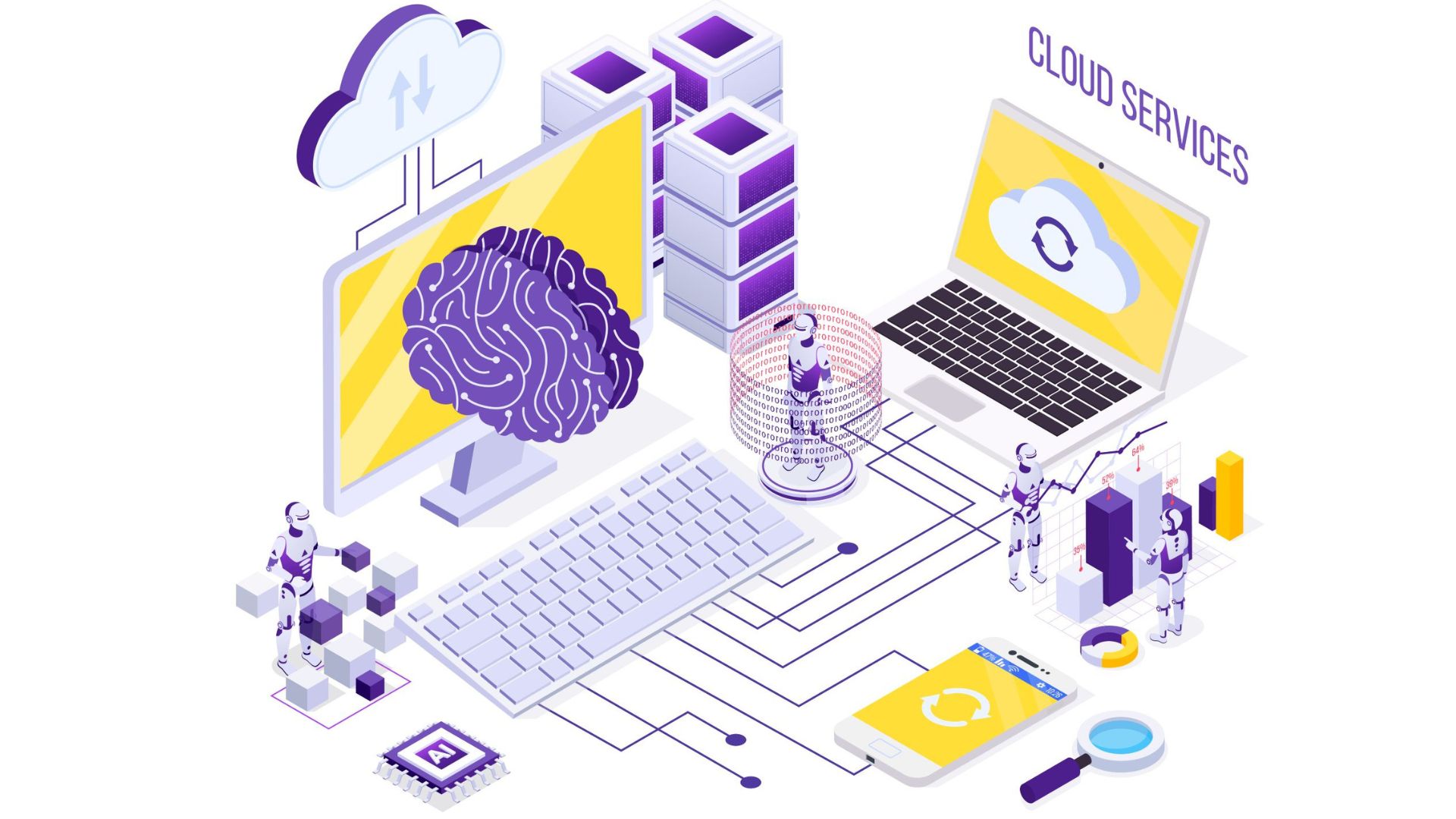
At a high level, MT uses algorithms, AI models, and large datasets to convert text from one language to another.
1. Underlying Technology
When you input text into an MT system, it typically:
- Parses the text – identifies words, phrases, and sentence structure
- Analyzes context – determines how words relate to each other
- Generates translation – uses trained models to output the target language
These models learn from patterns in massive amounts of multilingual data. Over time, the system “learns” preferred translations, common phrases, and grammar structures.
2. Neural Machine Translation in Detail
In NMT:
- The source sentence is encoded into a numerical representation (a vector) that captures its meaning.
- A decoder then generates the target sentence from this representation, word by word, while considering the context and previously generated words.
- Attention mechanisms or transformer layers help the model focus on the most relevant parts of the source sentence when translating each word.
NMT systems improve through deep learning: as they are trained on more examples, they get better at handling real-world language patterns and nuances. For many business applications, NMT can produce translations that are surprisingly close to human quality, especially for common language pairs and general content.
3. Machine Translation Models
Machine translation models are trained on massive datasets that help them understand patterns, idioms, and real-world language use. Their accuracy depends heavily on the type and diversity of the data they learn from.
For example, a model trained on technical documentation performs best with engineering or medical content, while a model trained on general language is more suitable for everyday communication. This is why choosing the right MT engine for your industry matters.
Pros and Cons of Machine Translation for Businesses:
- Pros: Faster output, cost-effective for large volumes, and easy to scale.
- Cons: May struggle with cultural context, domain-specific terminology, and brand tone without human post-editing.
Pros of Machine Translation for Businesses
Machine translation offers several clear benefits, particularly for organizations dealing with large volumes of multilingual content.
1. Speed and Efficiency
MT can translate thousands of words in seconds. This is crucial when:
- Launching global marketing campaigns
- Updating product listings across regions
- Handling high volumes of customer messages
You can integrate MT directly into workflows, such as support tickets, chat systems, or content management systems, to ensure fast turnaround.
2. Cost-Effectiveness
Relying solely on human translators for large-scale or frequent translations can be expensive.
MT significantly reduces costs for:
- Bulk or repetitive content
- Internal documentation
- Low-priority or low-risk texts
This is especially valuable for SMEs or businesses entering new markets with limited budgets.
3. Instant Translation for Real-Time Communication
Machine translation enables real-time multilingual interactions, such as:
- Live chat support
- Helpdesk responses
- In-app messaging
Customers get instant replies in their own language, improving satisfaction and reducing friction in global customer journeys.
4. Expanding Global Reach
By rapidly translating:
- Product descriptions
- Reviews
- FAQs
- Knowledge base articles
Businesses can make their content accessible to a much wider audience. When customers can browse and buy in their preferred language, they’re more likely to trust the brand and complete a purchase.
Cons of Machine Translation for Business
Despite its strengths, MT has important limitations that you need to manage.
1. Accuracy Issues and Language Nuance
MT systems often struggle with:
- Idioms and expressions
- Sarcasm or humor
- Double meanings or ambiguity
As a result, translations may be technically correct but contextually wrong, or they may fail to convey the intended tone and nuance. This can confuse or alienate your audience.
2. Cultural Sensitivity and Localization
Machine translation does not fully understand:
- Cultural references
- Local customs
- Sensitive topics
For marketing, brand messaging, or public communication, this can be risky. A poorly localized slogan or phrase can damage your brand image or even cause offense in certain markets.
3. Limited Industry-Specific Terminology
Sectors like:
- Healthcare
- Law
- Engineering
- Finance
Use highly specialized terminology. If MT hasn’t been trained on domain-specific data, it may misinterpret critical terms, leading to:
- Miscommunication
- Legal exposure
- Safety risks
In these domains, raw MT is rarely sufficient.
4. Need for Post-Editing
In most business contexts, MT output needs to be reviewed and refined by a human translator — a process known as post-editing.
Post-editing:
- Corrects grammar and style
- Ensures accurate meaning
- Aligns with brand tone and terminology
While this adds time and cost, it still tends to be more efficient than full human translation from scratch for many types of content.

When Machine Translation Can Be Beneficial for Your Business
MT is not “all or nothing.” It’s powerful when used strategically for the right types of content.
Best Use Cases
1. Internal Communications for Multilingual Teams
Emails, memos, newsletters, and internal knowledge bases can be machine-translated to keep global teams in sync, even if the language isn’t perfect.
2. Product Descriptions for E-Commerce
Translating thousands of product listings manually is slow and expensive. MT can handle this at scale, especially when paired with light post-editing for top-performing products or priority markets.
3. Customer Support Chatbots and FAQs
For simple, repetitive queries, MT allows your chatbot or support system to assist customers in multiple languages, offering quick responses and deflecting basic tickets.
4. Large Volumes of General Content
Blog posts, user reviews, or general informational content can often be translated using MT, especially if the goal is accessibility rather than perfectly polished prose.
When Not to Use Machine Translation
There are situations where human translation is strongly recommended.
1. Sensitive Documents
Avoid relying solely on MT for:
- Legal contracts and agreements
- Medical reports or prescriptions
- Safety instructions
- Compliance documents
Here, accuracy is non-negotiable, and any error can have serious consequences.
2. Marketing and Creative Content
Campaigns, slogans, taglines, and branding content need:
- Cultural understanding
- Emotional impact
- Creative adaptation
Human translators (often working as transcreators) are better suited to ensure your message resonates with local audiences.
Machine Translation and Human Translation: Finding the Right Balance

The relationship between MT and human translation is not competitive — it’s complementary.
1. Speed vs. Quality
- Machine Translation: Extremely fast, ideal for high-volume or time-sensitive tasks.
- Human Translation: Slower but superior in accuracy, nuance, and cultural relevance.
2. Hybrid Approach (MT + Post-Editing)
Many businesses find the best results with a hybrid model:
- Use MT to produce a first draft.
- Have a professional translator post-edit and refine the output.
This approach works particularly well when you need:
- Faster turnaround than pure human translation
- Higher quality than raw MT
- Consistency across large projects
3. When Human Translation Is Essential
Human translation should always be the default for:
- Healthcare and legal sectors
- High-stakes technical content
- Brand-critical messaging
- Localized campaigns targeting specific cultures or regions
Popular Machine Translation Tools for Business
Several MT tools are widely used in business environments:
1. Google Translate
Google Translate is a widely used online translation tool ideal for quick, everyday language conversions.
- Easy to use, widely accessible
- Supports many language pairs
- Best suited for casual or internal use rather than critical business content
Pros: Supports hundreds of languages, and delivers quick results—great for internal communication or informal tasks.
Cons: Limited control, no domain customization, and not reliable for technical, sensitive, or brand-heavy content.
2. DeepL
DeepL is a premium MT tool known for highly accurate, natural translations, especially for European languages.
- Known for high-quality, natural-sounding translations, especially for European languages
- Popular among businesses and professionals
Pros: Offers options for tone and handles complex wording better than most MT tools.
Cons: Supports fewer languages and requires a paid plan for large-volume or professional use.
3. Microsoft Translator
Microsoft Translator is an enterprise-friendly translation solution integrated into Microsoft 365 and Azure tools.
- Integrates with Microsoft Office, Teams, and other tools
- Convenient for organizations already using the Microsoft ecosystem
Pros: Integrates smoothly with Microsoft and Azure tools, making it ideal for enterprise workflows. Supports text, speech, and document translation.
Cons: Quality varies across languages and may not fully capture cultural or contextual details.
4. Amazon Translate
Amazon Translate is a scalable, AI-driven MT service designed for bulk, automated translations within AWS environments.
- Built for large-scale, programmatic translation
- Integrates well with other AWS services for enterprise workflows
Pros: Built for bulk, high-speed translation and integrates seamlessly with AWS for automation and large-scale localization workflows.
Cons: Requires technical setup and isn’t as user-friendly for small teams or one-off translation needs.
Conclusion
Machine translation has become a key enabler for global business communication. It offers:
- Speed for handling large volumes of content
- Cost savings compared to full human translation
- Scalability for multilingual support and expansion
However, MT is not a complete replacement for human translators. It struggles with nuance, culture, and specialized domains. The most effective strategy is to use MT where it excels — large-scale, time-sensitive, and lower-risk content — and combine it with human translation or post-editing for high-importance, sensitive, or creative work.
When used strategically, machine translation can be a powerful pillar in your localization strategy, helping you overcome language barriers and connect with customers worldwide.
Partner With VerboLabs for Smarter Translation
For reliable translation solutions tailored to your business needs, trust VerboLabs.
Whether you need:
- Fast, scalable machine translation
- High-accuracy human translation
- Or a hybrid MT + post-editing model
Our expert team can help you choose the right approach for each type of content and market.
Contact VerboLabs today to streamline your translation processes, enhance quality, and expand your global reach with confidence.

Ready to scale your content globally? Partner with VerboLabs for fast, accurate machine and human translation solutions tailored to your business needs.
FAQs
Machine translation is the process of automatically converting text or speech from one language to another using AI-powered software. It helps businesses translate large volumes of content quickly and cost-effectively.
Popular examples of machine translators include tools like Google Translate, DeepL, Microsoft Translator, and Amazon Translate, which instantly convert text or speech between multiple languages.
In NLP (Natural Language Processing), machine translation refers to using algorithms and linguistic models to understand a source language and generate an accurate translation in the target language. It relies on context, grammar, and learned patterns.
Machine translation in natural language processing focuses on teaching computers how to interpret human language and translate it meaningfully. NLP helps MT systems analyze structure, intent, and context for more accurate results.
The four main types of machine translation are:
Rule-Based Machine Translation (RBMT)
Statistical Machine Translation (SMT)
Neural Machine Translation (NMT)
Hybrid Machine Translation (a mix of rule-based and neural approaches)
Machine translation in AI uses deep learning and neural networks to generate human-like translations. AI models learn from massive multilingual datasets, allowing them to understand context, tone, and sentence structure more accurately than traditional systems.