How VerboLabs Enabled Higher Engagement, Course Completion, and Regional Enrollment Through Learning Content Localization
Client Overview
The client is a fast-growing online education platform delivering professional, technical, and vocational training through a video-first Learning Management System (LMS) comparable to Moodle and Canvas.
Its learner base includes:
- Early-career professionals
- Skill-upgrading working adults
- Students from urban, semi-urban, and Tier 2–3 regions
While the platform’s English-language courses were strong in structure and content quality, user analytics showed that a large segment of learners struggled to complete courses or stay engaged—particularly those from non-English-first backgrounds.
The client recognized that language was not just an accessibility issue but a learning performance issue.
To address these challenges, the client partnered with VerboLabs, a language solutions provider specializing in education, training, and LMS-ready multilingual content for global learning platforms.
Business Challenge
Despite steady demand for online education, the platform faced multiple adoption and scalability problems:
1. Low Completion Rates in Non-English Cohorts
Learners enrolling from regional markets showed:
- Early drop-offs after the first few modules
- Lower quiz and assessment scores
- Reduced interaction with assignments and practice exercises
2. Video Engagement Gaps
Data revealed:
- Shorter average watch time for English-only videos
- Repeated pauses and rewinds, indicating comprehension difficulty
- Lower engagement on mobile devices, where subtitles and clarity matter most
3. Limited Regional Market Penetration
Marketing campaigns drove traffic from regional areas, but:
- Conversions remained low
- Many learners abandoned onboarding or trial lessons
- English-only UI elements created friction during navigation
4. Cultural Disconnect in Learning Examples
Course visuals and case studies were:
- Urban- or Western-centric
- Less relatable for regional learners
- Difficult to contextualize for vocational and applied learning
5. Scalability Constraints
The client needed to expand courses across languages without rebuilding content from scratch or disrupting LMS workflows.
Project Objectives
The engagement was designed around measurable learning and business outcomes, not just content translation:
- Expand priority courses into regional and bilingual formats
- Improve learner engagement, comprehension, and completion
- Increase enrollments from non-English-speaking regions
- Deliver LMS-ready localized content with zero platform disruption
- Maintain instructional consistency across languages and batches
VerboLabs Solution Approach

VerboLabs implemented a holistic eLearning localization strategy—addressing language, learning behavior, visuals, audio, and LMS technology together.
1. eLearning Content & LMS UI Localization
Rather than relying on direct translation, the client adopted a structured localization approach—combining language, user experience, and cultural context—supported by professional localization services designed specifically for digital learning environments.
Instead of focusing only on course scripts, VerboLabs localized the entire learning experience.
What Was Localized
- Video scripts and lesson content
- Quizzes, assessments, instructions, and feedback messages
- UI elements: buttons, menus, tooltips, notifications, error messages
- Onboarding flows and learner guidance text
Practical Implementation
- Maintained terminology consistency across lessons to avoid learner confusion
- Designed bilingual display logic where learners could switch between English and regional language
- Ensured localized UI fit within existing LMS layouts without breaking design
Real-World Impact: Learners could navigate the platform confidently in their preferred language, reducing friction during onboarding and lesson progression.
2. Voice-Over & Subtitling for Learning Videos
Recognizing that learners consume content differently, VerboLabs implemented a dual audio + subtitle strategy.
The use of native instructional narration demonstrated how professional voice-over services help reduce cognitive load, improve clarity, and keep learners engaged throughout longer technical modules.
Execution Details
- Native voice-over artists trained in instructional delivery, not entertainment tone
- Neutral, regionally understandable accents for wider reach
- Professionally timed subtitles synced with visuals and animations
- Subtitle formatting optimized for mobile screens and low-bandwidth usage
Why This Worked
- Learners could listen, read, or combine both
- Reduced cognitive strain during complex explanations
- Improved retention during technical and vocational modules
For mobile-first learners, well-structured subtitling services played a crucial role in enhancing comprehension, particularly in low-bandwidth environments where audio clarity can be inconsistent.
Real-World Impact: Average video watch duration increased, and learners were more likely to complete full modules without skipping.
3. Cultural Adaptation of Visuals & Learning Examples
To make learning practical and relatable, VerboLabs adapted context, not just language.
Adaptation Scope
- Replaced abstract or foreign examples with region-relevant scenarios
- Updated visuals, icons, and illustrations to match local expectations
- Adjusted case studies to reflect local industries, tools, and workflows
Instructional Benefit
Learners could immediately relate concepts to real-life applications, especially in vocational and skill-based courses.
Real-World Impact: Higher participation in quizzes and assignments, with fewer clarification queries from learners.
Ensuring that localized visuals, layouts, and instructional materials remained clear and consistent across languages required careful formatting and design alignment—an area where professional desktop publishing services play a critical role in maintaining readability and instructional flow.
4. LMS-Compatible Delivery & Quality Assurance
Localization was delivered with technical precision, ensuring smooth deployment.
Technical & QA Measures
- SCORM-compliant packaging for seamless LMS integration
- Audio–subtitle–slide synchronization validation
- Multi-level QA covering linguistic accuracy, instructional clarity, and functional behavior
- Device testing across desktop, tablet, and mobile
Real-World Impact: Multilingual courses went live without delays, rework, or learner-facing issues.
Results & Measurable Impact
Improved Learning Outcomes
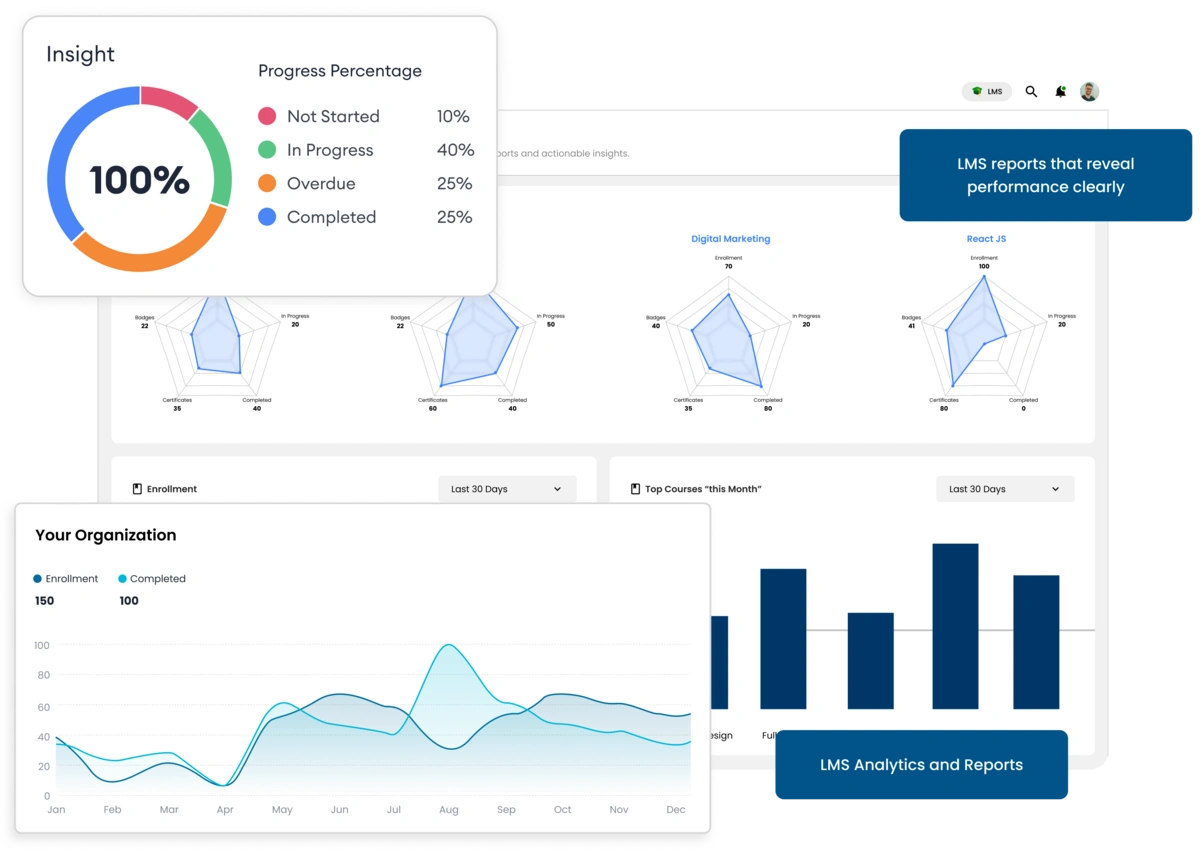
- 32% increase in course completion rates for localized courses
- Noticeable reduction in mid-course drop-offs
- Higher assessment scores among regional-language learners
Learner Satisfaction
- Improved course ratings and post-course feedback
- Learners reported better clarity and confidence
- Strong preference for bilingual learning options
Enrollment & Growth
- 41% increase in enrollments from non-English-speaking regions
- Higher adoption in Tier 2 and semi-urban markets
- Increased repeat enrollments for advanced and follow-up courses
Business Value Delivered
By localizing both content and learning experience, the client achieved:
- Higher ROI on existing course content
- Faster regional expansion without rebuilding programs
- Stronger learner trust and brand credibility
- A scalable multilingual education model
This engagement highlights how a thoughtful combination of localization, audio, and accessibility—when executed correctly—can transform digital education outcomes at scale.
Why This Case Study Is Different
This project demonstrates that language accessibility directly influences learning performance, not just reach. VerboLabs showed its ability to:
- Align linguistic accuracy with instructional effectiveness
- Balance cultural adaptation with LMS technical requirements
- Deliver measurable improvements in engagement, retention, and revenue
Services Highlighted
- eLearning Localization (Content + LMS UI)
- Educational Voice-Over & Subtitling
- Cultural Adaptation of Visual Learning Assets
- LMS-Compatible Content Packaging
- Multilingual QA & Testing
For education platforms looking to expand into regional and multilingual markets, this case demonstrates that investing in learner-first localization is not just a growth strategy—it is a performance strategy.
Conclusion
Through practical, learner-first localization, VerboLabs helped the client transform an English-centric platform into an inclusive, high-performing education ecosystem. The result was not only wider access, but better learning outcomes, stronger engagement, and sustainable platform growth.

Want to improve learner engagement and regional enrollments? Explore how VerboLabs can localize your education platform for real results.