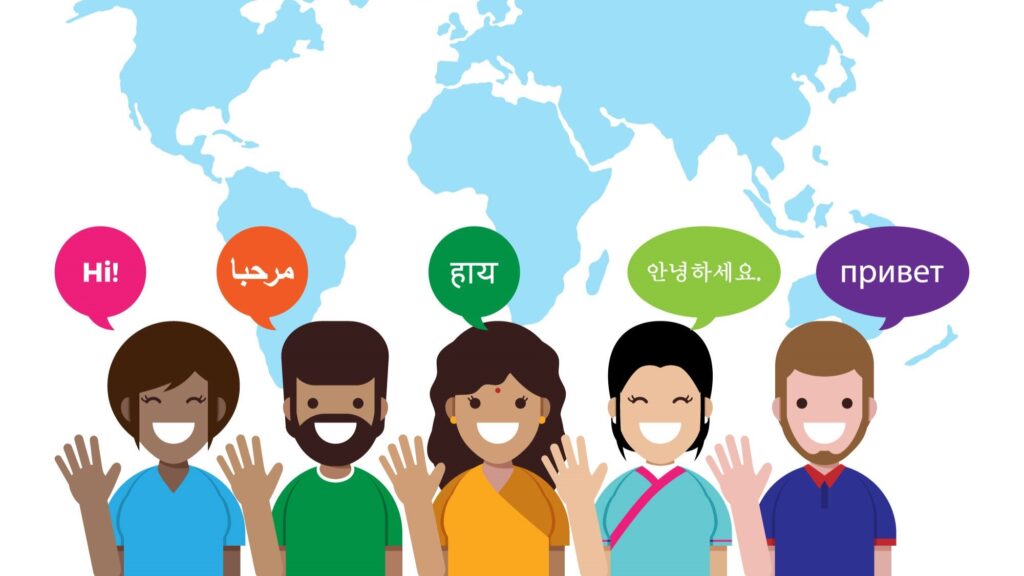
Did you know that poor app localization can cost businesses up to 13% of potential users? With the global mobile app market projected to exceed $935 billion, app localization in 2026 is no longer optional — it is a growth strategy. Users expect apps to feel native, intuitive, and culturally relevant in their own language. When localization is poorly executed, it can lead to user confusion, negative reviews, reduced retention, and lost revenue.
App localization goes beyond translation. It includes adapting language, UI design, visuals, currency formats, compliance requirements, and cultural nuances to match a specific region. Businesses that invest in professional localization services gain higher app store visibility, stronger engagement, and improved global expansion outcomes.
In this guide, we explore common app localization mistakes and explain how partnering with VerboLabs ensures accurate, culturally fluent, and performance-driven localization in 2026.
Translation vs. Localization: What’s the Difference?
Let’s define localization before diving in.
- Translation is the process of converting text from one language to another.
- Localization goes a step further — it adapts the content (language, visuals, design, UI, culture, and format) to a specific locale or target audience.
In the context of apps, translation alone isn’t enough. You need full app localization to deliver an intuitive, culturally relevant user experience that feels native to the target user.
Where Is Localization Most Impactful?
- E-commerce Apps: Currency, date/time, product descriptions, payment preferences
- Gaming Apps: Language, humor, color symbolism, cultural sensitivity
- Healthcare Apps: Compliance with local regulations, terminology, and units
- Finance & Fintech: Numeric formats, legal terms, UX design
Stat: According to CSA Research, 76% of consumers prefer buying products with information in their native language, and 40% won’t buy if it’s not localized.
How VerboLabs helps in Localization
VerboLabs serves global businesses in App Localization services by:
- Expand mobile apps into new markets
- Enhance user retention through culturally relevant UX
- Reduce churn caused by poor localization
- Ensure consistent global branding across languages and platforms
We work with:
- SaaS companies scaling internationally
- Mobile game developers targeting multilingual users
- Fintech and healthcare startups
- E-commerce apps with global logistics
9 Common App Localization Mistakes to Avoid
1. Unrealistic Launch Timelines
Localization isn’t just a quick translation task. Rushing the process without allowing for region-specific testing, design adaptation, and QA can lead to launch delays or user rejection. Pro Tip: Plan region-specific release dates.
2. Design That Doesn’t Support Multilingual Layouts
Languages like Arabic (right-to-left) and Chinese (top-to-bottom) require adaptive UI design. Failing to design flexible interfaces causes content overflow, broken layouts, and poor UX.
VerboLabs works with your developers to ensure UI/UX compatibility across all languages.
3. Ignoring Cultural Context
Words, phrases, colors, and gestures can mean very different things across cultures. For example, red symbolizes luck in China but mourning in South Africa.
VerboLabs’ native linguists ensure culturally sensitive adaptation — not just linguistic accuracy.
4. Assuming One Language Fits All
Languages have regional variations. Spanish used in Spain differs from Latin American Spanish. Failing to localize for dialect and locale alienates users.
Solution: Target each locale (e.g., German-Germany vs. German-Switzerland) separately.
5. Incorrect Date, Time & Number Formats
A U.S. app might use MM/DD/YYYY, while Germany uses DD.MM.YYYY. Time zones, currency, and numeric separators all vary.
Missing these leads to user confusion or data entry errors.
6. Hardcoded Strings & Code Concatenation
Embedding text directly in code or using concatenated phrases can cause broken grammar or incorrect translation structure in localized versions.
At VerboLabs, we use translation memory tools and developer-friendly processes to avoid these pitfalls.
7. Not Leaving Enough UI Space for Other Languages
Some languages expand by 30–50% in length (e.g., German vs. English). Failing to allow extra script space breaks app visuals.
Design with localization-ready layouts that allow for text expansion.
8. Not Adapting Color Schemes
As mentioned earlier, colors hold cultural significance. Pink may represent masculinity in Japan, but femininity in India. Your brand visuals must align with regional interpretations.
9. Skipping Quality Assurance (QA)
Skipping linguistic QA or functional testing in localized versions results in:
- Broken links
- Mistranslations
- Inconsistencies across app screens
VerboLabs includes comprehensive QA testing in all localization projects to ensure a seamless global experience.
Why Choose VerboLabs for App Localization?

At VerboLabs, we offer end-to-end translation and localization services that go beyond just converting text. We ensure:
- Native-level translation by domain experts
- Cultural adaptation of app content and UI
- Support for RTL (Right-to-Left) and complex scripts
- Integration with development pipelines
- Linguistic and functional QA
With clients across fintech, gaming, healthcare, and SaaS, we’re one of the best translation companies offering customized localization-translation services to ensure your app thrives across regions.
Want to know what localization is and how it directly impacts app store performance? VerboLabs helps optimize your app store metadata in local languages to increase downloads and conversions.
Final Thoughts
In 2026’s competitive app economy, localization is not just a technical task — it is a strategic advantage. Avoiding common localization mistakes protects your brand reputation, improves user retention, and increases global download potential. Apps that feel culturally aligned and technically seamless consistently outperform generic, one-size-fits-all versions.
Choosing the right localization partner ensures more than accurate translation. It guarantees UX compatibility, regulatory alignment, multilingual SEO optimisation, and rigorous quality assurance.
VerboLabs delivers end-to-end app localization services designed to help startups and enterprises expand confidently into global markets. If you’re preparing for an international launch or scaling into new regions, invest in expert localization that drives measurable growth and long-term success.

Ready to take your app global the right way?
Avoid costly localization errors with expert support from VerboLabs.