


Suppose a B2B distribution company is in the process of updating product specifications using several dimensional aspects of the product. The webpage presenting the product is revised. On the other hand, the translations remaining unavailable for many languages still use old measurements. In addition, the checkout interface changes back to the primary language used for the checkout mode.
This is not only a translation problem anymore. It has turned into an issue of content management that affects the purchasing process.
- CENTROID by VerboLabs – The best localized catalog in terms of product localization that employs AI and quality assurance checks.
- Weglot – The best solution for multilingual ecommerce website creation.
- Smartling – It is one of the best e-commerce content solutions for bigger enterprises.
- Phrase TMS – The best localization tool for retail localization.
- Crowdin – The best service for creating a connected product and content localization workflow.
- Smartcat – The best tool that provides AI-powered product descriptions.
- Lokalise – The best tool for product localization.
- Transifex – The best content management system.
- Localize – The most adequate website localization service.
- MotionPoint – The best provider of localized online store services.
Compare the 10 Options by Buying Requirement
| Platform | Main Category | Pricing Approach | Key Buyer Check |
| CENTROID | AI localization platform | Contact sales | Confirm PIM and store connectors |
| Weglot | Website localization | Plan-based | Test dynamic products and checkout |
| Smartling | Enterprise TMS and delivery | Contact sales | Verify commerce integrations |
| Phrase TMS | Translation management | Plan and capacity-based | Confirm retail workflow requirements |
| Crowdin | Content localization platform | Plan-based | Check catalog publishing steps |
| Smartcat | AI translation platform | Plan-based or custom | Confirm service and connector costs |
| Lokalise | Localization management | Plan-based | Verify PIM and store connections |
| Transifex | Continuous localization | Usage-based | Test product update synchronization |
| Localize | Website localization | Confirm current plan | Check storefront script compatibility |
| MotionPoint | Managed localization service | Contact sales | Clarify service scope and ownership |
What Should Commerce Teams Look for in Ecommerce Localization Software?
1. Catalog, PIM and Storefront Connectivity
Most of the information about a product comes from various systems, including the product information management system, content management system, and the online store itself. Check various systems to see which one can work for your company. Also, make sure that this system works well with information such as the product name, description, category, features, variants, and SKUs.
2. Product Terminology and Buyer Meaning
The description must be simple to understand, and there must be nothing wrong with the technical side of the information. Measurements, materials, model, and specifications have to be correct in every language version. Even a minor language defect can mistakenly lead to a purchase or some problems with the products featured by the company.
Look for tools that provide the ability to manage terminology; try to find a glossary and the possibility to review the workflow system. These can be useful for teams when it comes to complying with the terms approved for the description of a certain product.
3. Storefront SEO and Conversion Paths
Localized product pages must be made searchable and easy to use. Verify that the platform allows language-specific URLs, translated metadata, and crawlable pages. When doing so, ask about language annotation management and indexing. Test everything beyond just the product page – e.g., the search functionality, filters, the shopping cart functionality, the checkout step, and transactional emails. The website may seem translated, but some parts of the purchasing process may still be in the original language.
4. Market Operations and Scope Boundaries
Translation software does not allow for complete functionality across international ecommerce channels. Currency conversion, local taxes, shipping policies, payment options, and product availability may still have to be accomplished by the ecommerce platform or other systems in place.
Understand exactly what localization service firms are capable of and what your ecommerce platform can deliver in order to avoid misuse of translation tools.
5. Approval, Scale and Total Cost
Look at more than the price of the subscription. Take into account how many languages are supported, how many translated words are included, and how many products, users, and integrations there are. Also, check whether human review, extra AI usage, implementation, and advanced workflows incur extra costs. For important product features and specifications, always provide a human check.
How Did We Evaluate the Shortlist?
The comparison is based on desk research and comes from the official product information as well as its relevance for e-commerce localization jobs. No practical testing of the product has been carried out.
The comparison looks at the connected catalogs, terminology management, localization of storefronts, market work, and review processes. Teams must check the updated prices, integrations, and customer feedback.
The 10 Best Localization Software Platforms for Ecommerce Teams
1. CENTROID by VerboLabs – AI-Led Catalog Localization with Review Oversight
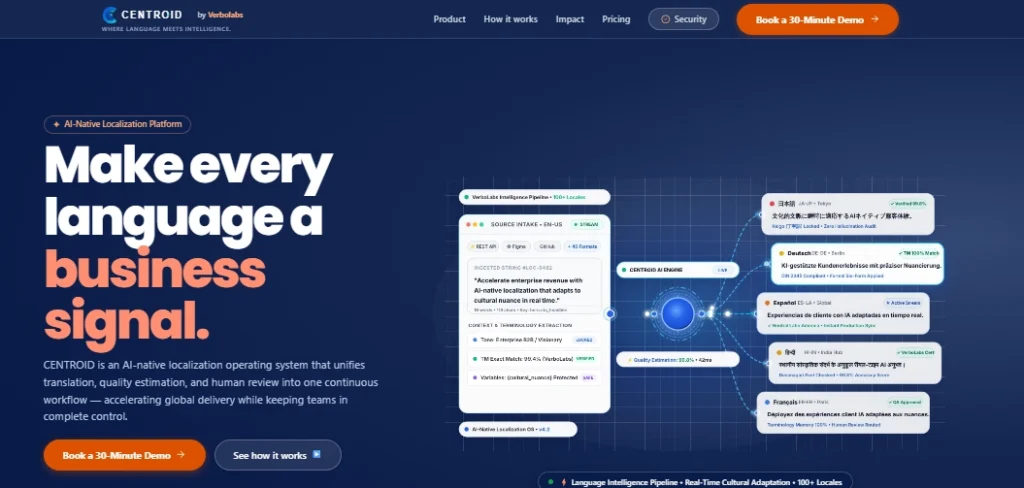
VerboLabs has developed the CENTROID localization platform that uses artificial intelligence technology to effectively handle translation, quality checking, and human review tasks in an interconnected process. This solution is beneficial if your team has chosen localization for eCommerce product data.
Why CENTROID by VerboLabs Fits Ecommerce Brands
Businesses dealing with a considerable amount of product and marketing data will benefit from CENTROID. It uses context-oriented localization, terminology handling, automation of quality checking, and human review for the project.
CENTROID by VerboLabs: Features, AI and Quality
According to the official information from the platform, CENTROID utilizes an artificial intelligence system for localization, translation memories, terminology management, automated quality assessment, and collaboration tools that are also available on the platform.
CENTROID by VerboLabs: Pricing and Customer Feedback
Those who want to receive any additional information may ask the sales team for more details regarding the solutions offered or support available from the platform.
CENTROID by VerboLabs: Limitations and Buyer Checks
The main point to verify is how CENTROID connects with your actual product data systems. Request a demonstration using sample SKUs, product variants and a revised specification. Confirm how changes are detected, reviewed and delivered to the storefront.
2. Weglot – Multilingual Storefront Delivery
Why Weglot Fits Ecommerce Brands
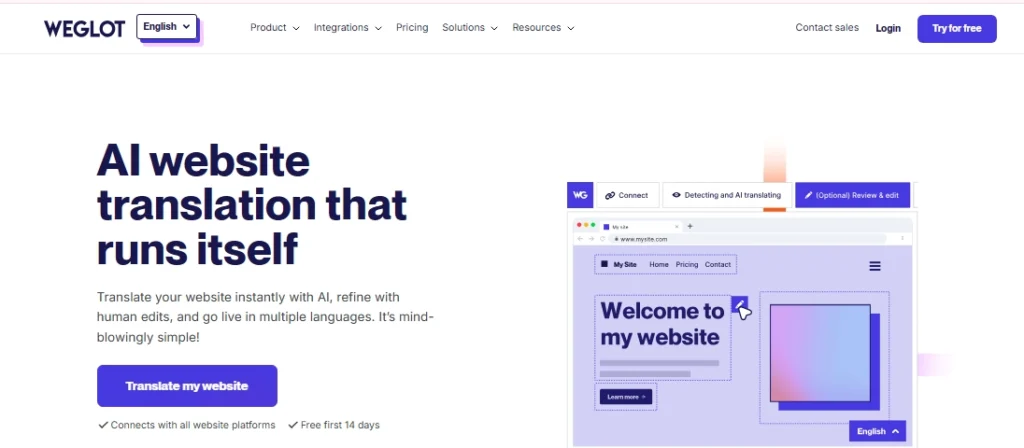
Weglot has to be taken into account when the main aim is to have a multilingual website. Its methodology makes it possible to turn the business idea into action by providing website translation opportunities from a single platform.
Weglot: Features, AI and Quality
Weglot provides AI translation and glossary functions. Companies should be sure to study their specific terminology and check how the program deals with dynamic content, product variations, and changing information in the storefront.
Weglot: Pricing and Customer Feedback
Weglot has published its pricing plan based on the specific plan selected by the user, including the free option with limits and the paid plans. The amount of money spent is defined by the plan chosen and the way it will be used.
Weglot: Limitations and Buyer Checks
Before buying, be sure to test the e-commerce platform. Study the filters closely, and check the dynamic elements of the product, cart, and checkout sections as well.
3. Smartling – Enterprise Commerce Content Operations
Why Smartling Fits Ecommerce Brands
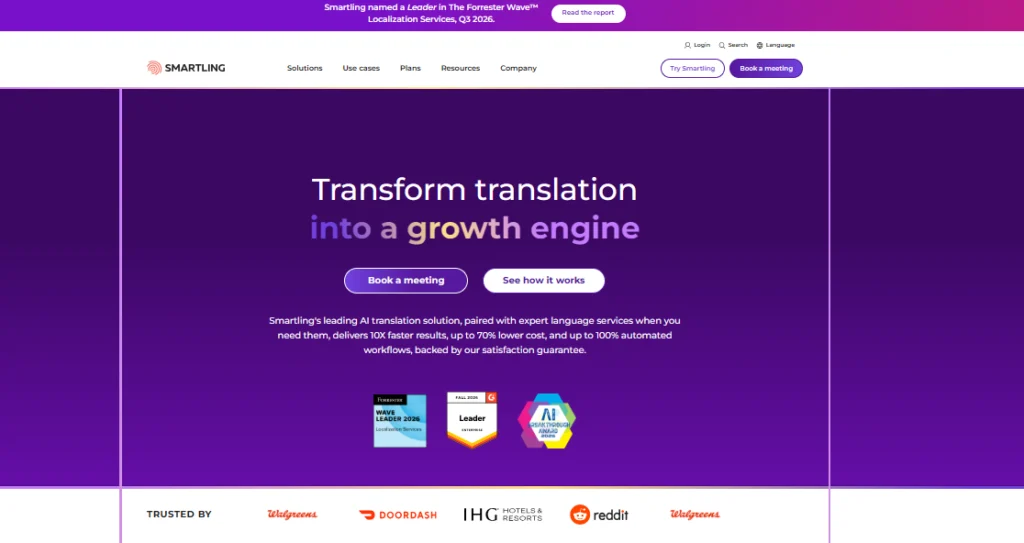
Smartling is a significant player when content needs to be localized at an enterprise level. Consequently, teams can understand what is available on the platform and how to connect it to the system that is already in place.
Smartling: Features, AI and Quality
Smartling’s system provides the necessary tools for translation and integration for websites, applications, and files. Moreover, Smartling has its own Global Delivery Network that employs all possible approaches to localize websites or web-based applications and provides for translations of dynamic content.
Smartling: Pricing and Customer Feedback
The prices should be checked with the sales department since the quotation will depend upon the number of languages, volume of content, type of integration, and other services.
Smartling: Limitations and Buyer Checks
A company should never presume that every CMS and PIM connection is going to be included. It is important to check the details of the integration to be clear about the implementation process and the responsibility for content updates.
4. Phrase TMS – Cross-Channel Retail Localization

Why Phrase TMS Fits Ecommerce Brands
Phrase could assist retailers with product data, website content, advertising, and other resources in many languages. It has a universal platform to help implement a centralized translation system.
Phrase TMS: Features, AI and Quality
Phrase allows its users to manage the translation process, including the use of translation memories, glossaries, machine translation, and other capabilities. The platform also makes it possible to choose a plan according to the amount of content to be processed by the system, which is essential for establishing the volume of content to be achieved in the future.
Phrase TMS: Pricing and Customer Feedback
Phrase has several plans, with the prices for the business and enterprise plans provided by sales. The pricing page describes the possible volume of words to be translated and the number of machine translation requests, etc.
Phrase TMS: Limitations and Buyer Checks
Phrase TMS is exclusively a translation management system without e-commerce market operations. You need to check other software or services needed by your business.
5. Crowdin – Connected Product-Content Workflows
Why Crowdin Fits Ecommerce Brands
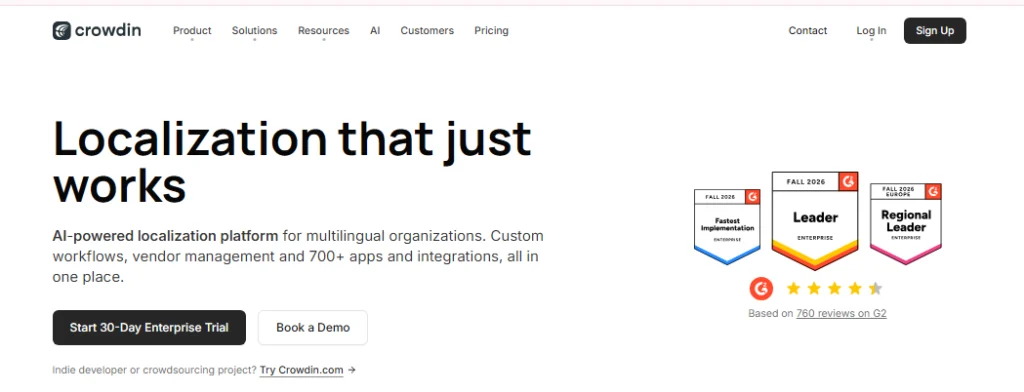
Crowdin can be suitable for companies wanting to keep their translation and content needs in one tool. It can help them, depending on how they use their catalogs to hold and distribute information.
Crowdin: Features, AI and Quality
Crowdin focuses on localization projects, integrations, and collaborative translation processes. Potential customers must carefully analyze the translation assistance options, terminology control tools, and quality control solutions before choosing the product.
Crowdin: Pricing and Customer Feedback
Get Crowdin pricing information directly from the vendor. Compare the project limits, users, usage, and integration allowances of different plans before choosing the right one.
Crowdin: Limitations and Buyer Checks
Localization projects are different from catalog hosting solutions. Make sure to ask about how the catalog integration and publishing work and how variations and updates are incorporated into the catalog information.
6. Smartcat – AI-Assisted Commerce Marketing Content
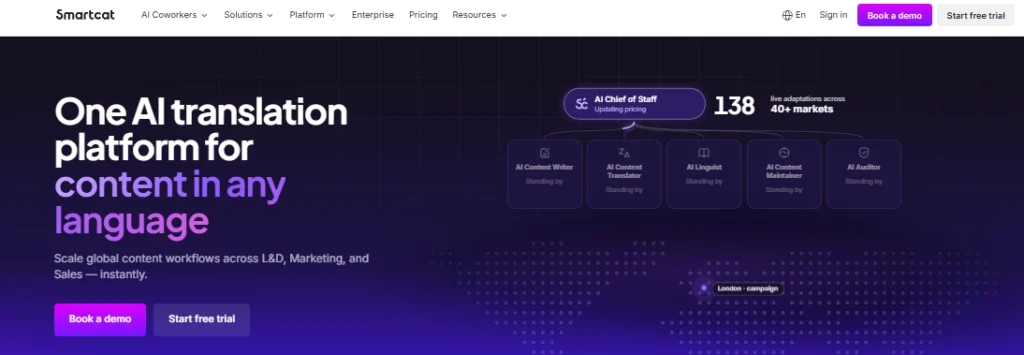
Why Smartcat Fits Ecommerce Brands
Companies that produce vast amounts of marketing content should look into the Smartcat platform to manage their translation and editing operations. The tool is good to use if internal teams need to work closely with freelance translators.
Smartcat: Features, AI and Quality
See how its AI-powered translation process is organized, the nature of the editing tool, and the possibilities of human revision. For product content, make sure you check if the vocabulary is the same on the product pages, in categories, and in campaigns.
Smartcat: Pricing and Customer Feedback
Check if the present package works for your needs. The final price must correspond to the chosen services and processes.
Smartcat: Limitations and Buyer Checks
Check how e-commerce integrations work in this solution and do not assume that it will directly connect to your website or PIM. Moreover, make sure you know if expert revision is available for an extra fee.
7. Lokalise – Product and Commerce Content Collaboration

Why Lokalise Fits Ecommerce Brands
Lokalise is worth considering for teams seeking structured collaboration among content creators, translators, and reviewers. A consideration in case of regular modifications to the content is whether an official approval workflow is present in the software.
Lokalise: Features, AI and Quality
Being equipped with features for management of translations, glossaries, and memories, Lokalise offers the most up-to-date options in its subscription plans.
Lokalise: Pricing and Customer Feedback
Lokalise follows a plan-oriented pricing policy. In the pricing section of the website, one can find various plans like Explorer, Growth, and Advanced, while enterprise solutions are sold by the sales department.
Lokalise: Limitations and Buyer Checks
Define the PIM or e-commerce integrations that should be used in your catalog, as well as check whether the reviewers can approve any changes and how the approved content will be transferred to the final online store.
8. Transifex – Continuous Catalog and Storefront Updates
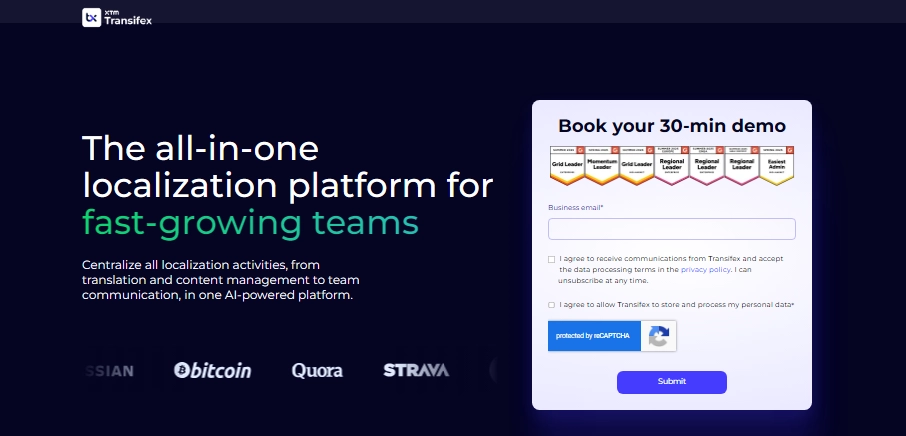
Why Transifex Fits Ecommerce Brands
Its ongoing localization strategy is pertinent for firms involved in frequently changing product and site content. Teams can ascertain whether its connectors and APIs suit their current publishing routine.
Transifex: Features, AI and Quality
Transifex talks about AI translation, translation memory support, glossary support, automatic quality scoring and certification, and human review processes. Its website localization service provides publishing facilities for translated website materials.
Transifex: Pricing and Customer Feedback
The existing pricing system relies on the AI-processed word count, as prescribed in its price list. Verify the anticipated charge for your target language and product range.
Transifex: Limitations and Buyer Checks
Test both the file-based and real-time localization paths. Use lessons from a multilingual storefront localization case study to test whether localized product content stays consistent from catalog to storefront.
9. Localize – Script-Based Storefront Localization
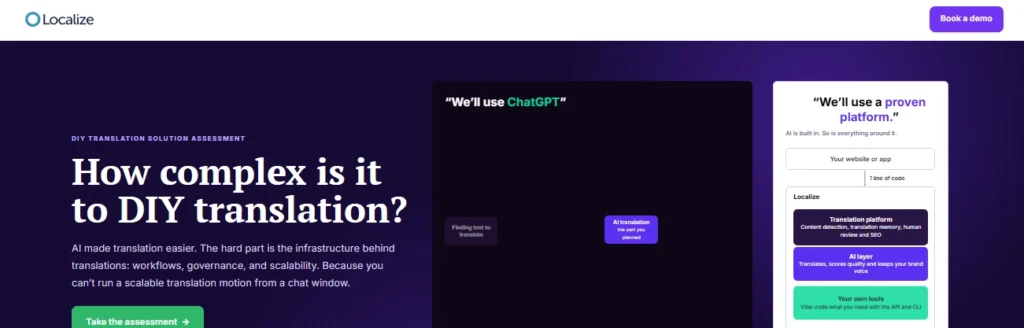
Why Localize Fits Ecommerce Brands
In the case of a script-based method, it can be suitable for a team that intends to introduce language support to an already running website. Its feasibility depends on the technology of the storefront and the material that has to be processed.
Localize: Features, AI and Quality
Assess the translation process of the website and platform, content detection, and management options. See how dynamic components and regularly changing product details are treated.
Localize: Pricing and Customer Feedback
Make sure to check the prices with the Localize service. Ask how subscription fees are calculated and if the total price depends on the number of languages, the amount of use, or the website size.
Localize: Limitations and Buyer Checks
Check the functionality of variants, filters, cart, and checkout on a normal store. Also check the compatibility of the translated pages with search engines.
10. MotionPoint – Managed Multilingual Commerce Sites
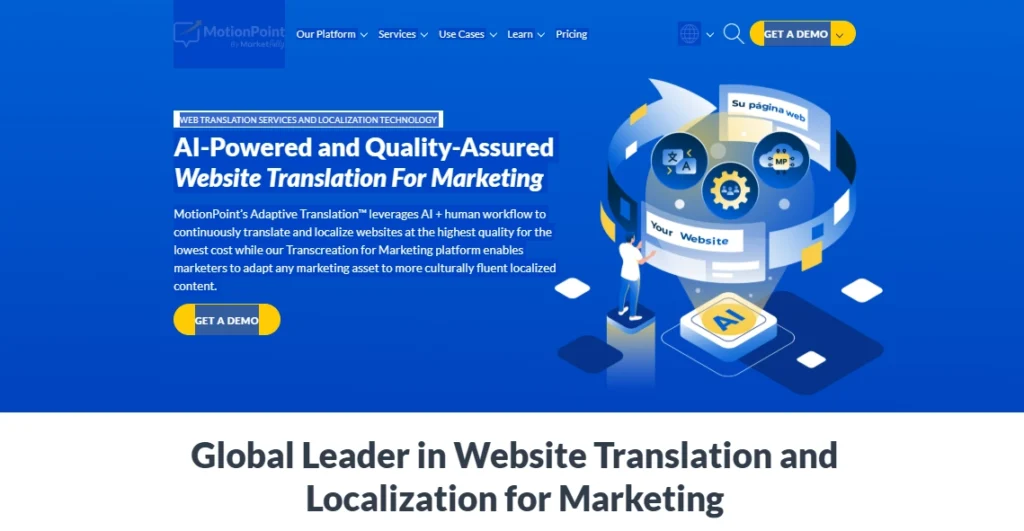
Why MotionPoint Fits Ecommerce Brands
MotionPoint is an option for organizations seeking assistance running websites in different languages. The service is suited for larger companies with complicated websites and continuous localization needs.
MotionPoint: Features, AI and Quality
Ask about how MotionPoint manages essential processes like making updates to content, managing translation processes, quality control, and publishing. It is important to know how these processes deal with the ever-changing information about products and eCommerce features.
MotionPoint: Pricing and Customer Feedback
Contact MotionPoint for its pricing, which is based on the number of languages to be used, the amount of content, and the types of services required. Get an explanation of all costs incurred in the process of using the services provided.
MotionPoint: Limitations and Buyer Checks
Make sure that you clarify who owns the localized content and the whole process of integration and publishing. Learn all about the necessary operations, responsibilities, and exit terms before signing the contract.
Which Shortlist Fits Your Ecommerce Requirements?
| If your priority is… | Consider | Verify first |
| AI-led catalog localization | CENTROID | PIM/store connectivity and update behavior |
| Multilingual storefront delivery | Weglot | Dynamic content and checkout |
| Enterprise content operations | Smartling | Required integrations and implementation |
| Cross-channel retail localization | Phrase TMS | Products and capacity needed |
| Connected product-content workflows | Crowdin | Catalog publishing process |
| AI-assisted marketing content | Smartcat | Commerce connectors and service costs |
| Product-content collaboration | Lokalise | Catalog connection and reviewer handoff |
| Continuous content updates | Transifex | SKU identity and selective review |
| Script-based website localization | Localize | Storefront compatibility |
| Managed multilingual websites | MotionPoint | Service ownership and migration terms |
What Should Your Vendor Pilot Prove?
Conduct a preliminary test with 20 representative products with different versions before deciding on a platform. Create a campaign page and add the filters customers use to find goods. Include that work in your website translation cost estimate so that the platform quote accounts for rollout and updates.
Then change the product specifications and confirm that the platform detects the change, updates the needed languages, and sends the related content for review.
Your test should check:
- Stale product specifications: are the old specifications visible?
- Variant and unit errors: are sizes and product variations correct?
- Untranslated buying-path messages: do search, cart, and checkout messages look the same?
- Indexability of the local pages: are search engines able to look through translated pages?
Ask all vendors the same question: “When a certain specification changes, how many variants and local pages are updated and go through the review and verification process?”
Start documenting the baseline, the results of the tests, the person who reviews, and unresolved problems.
Final Recommendation
If you want managed linguistic support alongside software, start by comparing ecommerce website translation providers. What you need to do is decide according to the number of products, your company’s size, the tools you have in place, and the level of translation control that you need.
When delivery through the store is your concern, do try Weglot and Localize. If your localization is done on a larger scale, try Smartling and Phrase TMS. Crowdin, Smartcat, Lokalise and Transifex are good options for automating content collaboration and updates. You may turn to MotionPoint if the management of multilingual website operations is important to you.
For companies wanting AI-based localization with quality checks and human review, VerboLabs’ CENTROID is the best solution. Before making the final decision, ask for a demo using typical SKUs, product attributes, and the workflow of your e-commerce.

Expand your global reach with VerboLabs! Get accurate, culturally adapted localization services to connect with new markets. Contact us today for expert solutions!
Frequently Asked Questions
Website translation is specifically concerned with translating website materials. In contrast, e-commerce localization is more comprehensive and addresses product features, classifications, filters, search, order fulfillment, and ordering processes.
Some systems support integrations and automated workflows, but they work differently according to the product and offer. See if the tool integrates with your PIM or store, detects source changes, and can perform selective reviews. Try it out with real products to verify its quality.
Generally speaking, such functions are completed by ecommerce systems, payment service providers, and market operation systems. A translation tool can translate related texts but does not necessarily conduct tax calculations, payment processing, and shipping. Check which system does what.
Evaluate product pages, variants, filters, search results, cart, checkout, transactional emails, and SEO elements. Also, check how a language switching works and whether translated pages remain unchanged after updating the original product information.