


Let us say your firm is utilizing AI to convert a product manual into multiple languages. Consider that the translation scores high on the established system, but this leads to one sentence in the text losing the word “not,” which changes the meaning of the text altogether.
This guide outlines 10 alternatives for enterprises on the lookout for improved mechanisms for tracking quality in the sphere of translation.
- CENTROID by VerboLabs: The applicant for an AI-based quality estimation workflow.
- Phrase Quality Evaluation: Quality checking at the Localization platform.
- ApSIC Xbench: Independent bilingual-file quality evaluation.
- Verifika: Customizable automated translation quality assurance.
- lexiQA: Linguistic QA with integration capability.
- ContentQuo: Structured human linguistic quality evaluation.
- Smartling: LQA in the process of enterprise localization.
- ModelFront: Predictive translation risk evaluation.
- Intento: Evaluation of translation quality by means of AI and MT providers.
- memoQ TMS: Quality assessment in the translation process.
Compare the 10 Options by Buying Requirement
| Tool | Evaluation Approach | Pricing Basis | Main Buyer Check |
| CENTROID | AI quality estimation and localization QA | Contact sales | Critical-error detection and human review |
| Phrase Quality Evaluation | Automated evaluation within a TMS | Subscription or quote | Scoring calibration and plan access |
| ApSIC Xbench | Rule-based bilingual QA | License | Supported files and QA configuration |
| Verifika | Configurable rule-based QA | License or quote | Language coverage and false positives |
| lexiQA | Automated linguistic QA | Contact sales | API, language and error coverage |
| ContentQuo | Structured human LQA | Contact sales | Reviewer calibration and reporting |
| Smartling | Enterprise QA and LQA | Quote-based | Review workflows and permissions |
| ModelFront | Predictive quality estimation | Contact sales | Critical-error recall and risk thresholds |
| Intento | Multi-provider AI/MT evaluation | Contact sales | Comparable testing and evaluation costs |
| memoQ TMS | In-editor QA and review | Subscription or license | Edition-specific QA and reporting |
What Should Buyers Look for in Translation Quality Evaluation Tools?
Quality Estimation, Rule-Based QA and Human LQA
There are three main ways to value translation quality.
- Quality estimation, which uses predictive models to assess the reliability of the translation without having a reference translation sometimes.
- Quality assurance, which detects recognized problems like missing digits, inconsistent terminology and punctuation, and broken tags.
- Human linguistic quality assessment is when the evaluators check precision and fluency as measures of language quality.
Error Taxonomy and Business Risk
Not all the translation errors have the same consequences. An insignificant mistake in punctuation can be tolerable in an internal document. But if a medical prescription is missing a negation or an insignificant financial statement is incorrectly exposed, there can be serious negative consequences. Look for solutions that contribute to categories such as accuracy, terminology, fluency, localization, and formatting.
Language and Domain Coverage
A tool that yields good results with general marketing materials may not give the same outcome with other types of content such as legal, technical, or healthcare translation. Make sure to check all relevant language pairs and types of content, using your own examples. Record any significant mistakes, false alarms, and confirmations of reviewers in the form of agreement.
Integration and Reviewer Actionability
A tool for evaluation must be compatible with your current translation process. Check if it can be used with bilingual files, application programming interfaces, CAT tools, and if it can generate reports and implement corrections.
Cost, Reproducibility and Limitations
It is important to consider aspects other than the subscription price. These aspects include API usage, licensing, setup, reviewers’ time, and the price paid for fixing failures. It is also important to register the version of the tool used, the setup of the model used, and the date of evaluation for the results to be repeated.
How Did We Evaluate the Shortlist?
The data used for the comparison of the two products are based on their characteristics, the information about them, and their relevance to translation processes within a company. No hands-on tests were carried out for this article.
Current independent customer ratings and review counts were not consistently verified across all ten products. Buyers should check current review platforms and pricing before publication or purchase.
The 10 Best Tools for Translation Quality Evaluation and QA
1. CENTROID by VerboLabs – AI Quality-Estimation Workflow Candidate
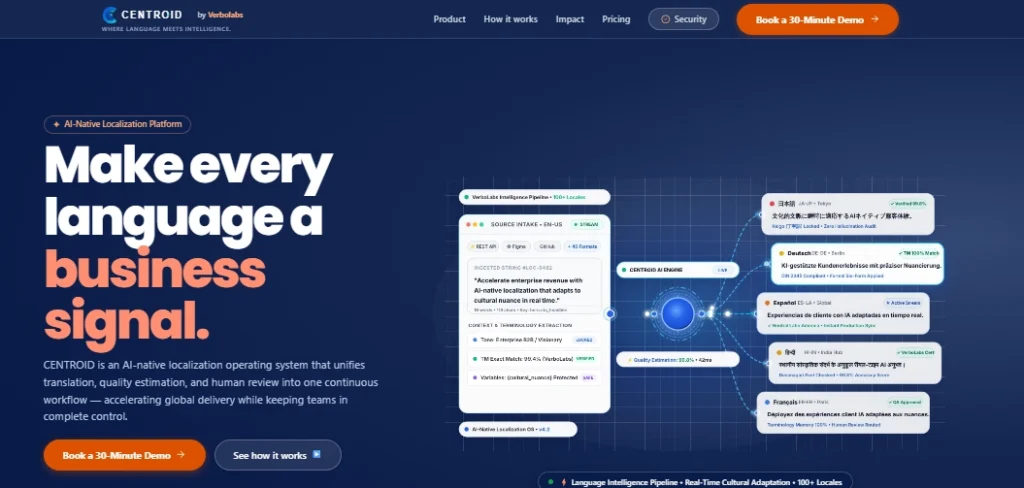
Using the power of AI technology, VerboLabs offers CENTROID, a localization platform that integrates translation with quality-related processes in a broader workflow. It’s particularly beneficial for companies that intend to unify AI translation and human review instead of treating them as different processes.
Why CENTROID by VerboLabs Fits LQA Teams
CENTROID works best for localization teams that seek to control the process of bringing more quality into translation. It’s positioned as AI-driven localization focusing on efficiency improvement through providing quality control.
CENTROID by VerboLabs: Features, AI and Quality
The positioning of the platform includes AI translation as well as a quality-focused workflow. For evaluation purposes, buyers need to ask for a demo that shows how it is able to flag bad translations, support the terminology, and help with human review.
CENTROID by VerboLabs: Pricing and Customer Feedback
Contact VerboLabs to find out the pricing and implementation. Customer rating and number of reviews are not verified for the sake of this comparison.
CENTROID by VerboLabs: Limitations and Buyer Checks
Ask CENTROID to evaluate translations that have introduced intentional meaning mistakes, missing negation terms, and wrong terminology. See how it performs compared to expert evaluation and the possibility of reviewers identifying and correcting problems in the flagged translations.
2. Phrase Quality Evaluation – Platform-Based Quality Evaluation
Why Phrase Quality Evaluation Fits LQA Teams
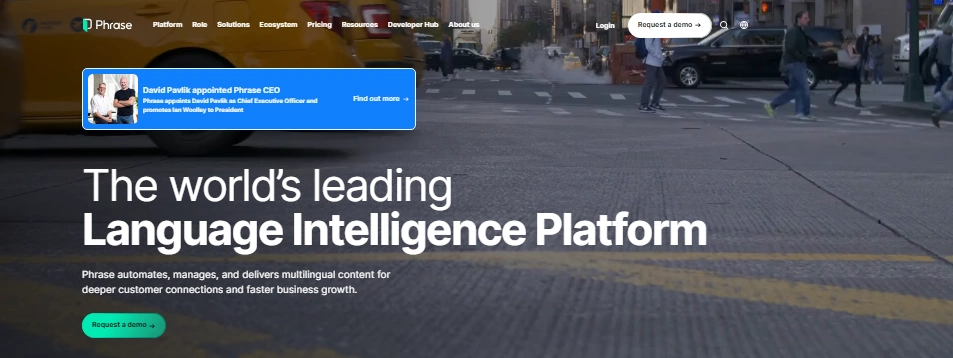
The primary benefit is that evaluation might be connected with translation management. It allows teams to carry out the quality assessment within a predetermined localization workflow, thus eliminating the need to take the translations into a separate evaluation environment.
Phrase Quality Evaluation: Features, AI and Quality
Phrase has a variety of automated quality estimation and assessment possibilities based on its products and configurations. It is important for customers to differentiate between predictive assessments and assessments made by humans.
Phrase Quality Evaluation: Pricing and Customer Feedback
Phrase has different subscription-based products with varying degrees of sophistication. Before you decide on a plan, you should check if the features that you need for quality evaluation are available.
Phrase Quality Evaluation: Limitations and Buyer Checks
One single threshold of quality might yield different results depending on whether the content being assessed is marketing materials, technical texts, or regulated texts. Make sure you get the information on language-specific calibration during the presentation.
3. ApSIC Xbench – Independent Bilingual-File QA
Why ApSIC Xbench Fits LQA Teams
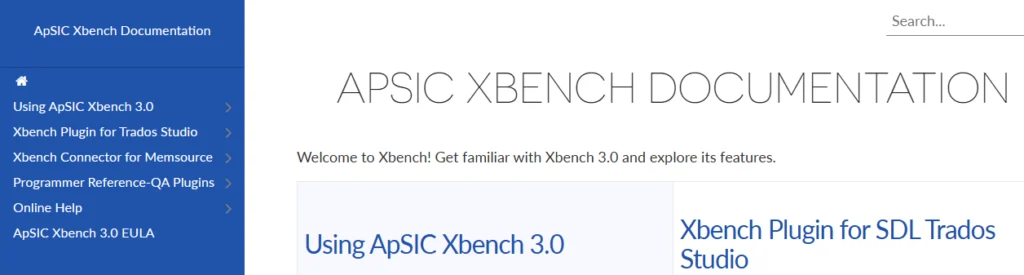
Xbench can function independently from a translation management system as a quality assurance layer.
ApSIC Xbench: Features, AI and Quality
The tool may perform various quality assurance checks, for example, for numbers, terminology, consistency, and any other customizable checks, allowing teams to check texts for errors prior to delivery.
ApSIC Xbench: Pricing and Customer Feedback
The software can be obtained via a commercial license. For detailed info regarding the current version of the software, licensing and pricing, you can consult the manufacturer’s website.
ApSIC Xbench: Limitations and Buyer Checks
Rule-based verification cannot effectively guarantee that every sentence is a word-for-word translation. Before using the program, test the formats accepted by it and configure the rules accordingly to decrease the number of false alerts.
4. Verifika – Configurable Translation QA
Why Verifika Fits LQA Teams
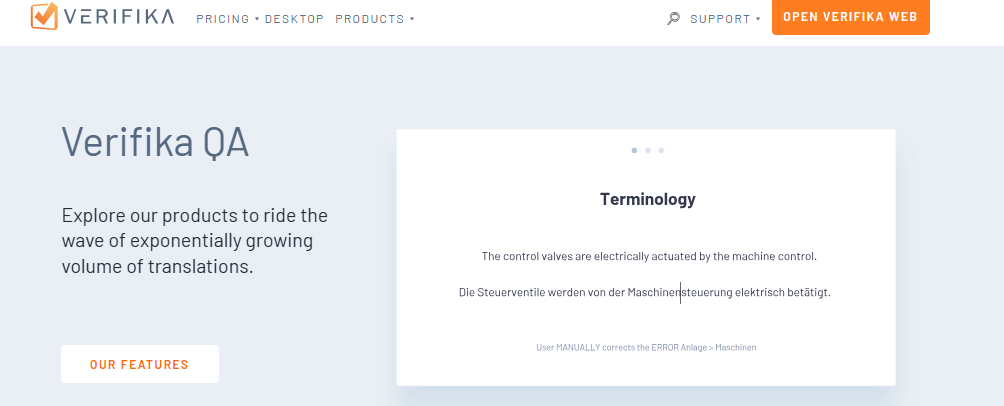
Verifika assists teams in identifying formatting, consistency, and terminological problems without going through each piece one by one in search of these issues.
Verifika: Features, AI and Quality
The QA method of Verifika is based on adjustable checks. Clients should test differences in numbers, punctuation, word repetitions, terminology violations, and other issues that are relevant for their own projects.
Verifika: Pricing and Customer Feedback
For pricing information, contact the service provider or look at its official licensing information.
Verifika: Limitations and Buyer Checks
The automated checks might generate false positives as they depend upon the specifics of language regulations or formatting conventions. Moreover, run a sample with obvious errors and review the results before using the tool on a wider scale.
5. lexiQA – API-Integrated Linguistic QA
Why lexiQA Fits LQA Teams
Its intended implementation is machine language verification, particularly in instances when the group requires QA to be integrated into its usual operational process.
lexiQA: Features, AI and Quality
Ask the vendor to provide a demonstration of the types of errors, languages supported, and ways of integration offered. The assessment should determine if the reviewers understand the warnings received and how the tool discriminates against false errors.
lexiQA: Pricing and Customer Feedback
No up-to-date pricing and independent customer evaluation data were obtained for this comparison. Ask for a price estimate based on language used, number of users, and types of integration needed.
lexiQA: Limitations and Buyer Checks
Check the exact API or in-editor feature included in the existing offering. Test the tool with bilingual documents and verify what errors it can identify effectively.
6. ContentQuo – Structured Human LQA and Evaluator Calibration
Why ContentQuo Fits LQA Teams
ContentQuo is truly valuable when businesses work with more than a few reviewers or language suppliers. The use of a structured evaluation process will allow different teams to compare their assessments and settle any controversies in evaluations.
ContentQuo: Features, AI and Quality
Its proposed purpose is to support the execution of linguistic assessment and error classification along with quality reporting. To see how it works, provide two reviewers with the same text for independent evaluation.
ContentQuo: Pricing and Customer Feedback
Get in touch with the provider to find out the cost and implementation process. Clarify reviewer access, their reporting specifications, and whether any integration option is available.
ContentQuo: Limitations and Buyer Checks
While this software allows organizing evaluations, it doesn’t guarantee that the evaluators will agree with each other. It’s still necessary to train reviewers and provide them with an exact definition of errors.
7. Smartling – LQA Inside an Enterprise Localization Workflow
Why Smartling Fits LQA Teams
Smartling is suitable for teams that oversee the management of extensive translation projects across many departments, content types, and service providers. With the unified architecture of Smartling, it is possible to eliminate the transfer of content from different repositories between production and review stages.
Smartling: Features, AI and Quality
Some features of Smartling include translation processes, automated inspections, and quality evaluation. Potential clients must verify which types of error measurement, types of reviewer access, and reporting options are provided in their solution.
Smartling: Pricing and Customer Feedback
Smartling usually requires a personalized discussion on price, which depends on the degree of localization, functionalities, and offered services. Ask for a price that includes coverage for quality checking and access for reviewers.
Smartling: Limitations and Buyer Checks
Distinguish automatic in-editor messages from the formal assessment of languages. Find out if the reviewers have the ability to rate the severity of mistakes, print out the reports, and perform comparisons of different vendors effectively.
8. ModelFront – Translation Risk Prediction for Review Triage
Why ModelFront Fits LQA Teams
The proposed value is review prioritization. Instead of treating all translated sections as equally risky, teams can use predictions to determine where expert attention should be most useful.
ModelFront: Features, AI and Quality
ModelFront’s approach is predictive evaluation. Clients should check its risk scores against expert-reviewed cases to understand how such scores determine review decisions.
ModelFront: Pricing and Customer Feedback
Reach out to ModelFront for the current commercial terms, usage limits, and integration specifics.
ModelFront: Limitations and Buyer Checks
Low-risk prediction does not mean the translation is accurate. The main test is whether the system will miss serious mistakes that can reach customers. The review criteria should be based on real outcomes, not assumptions.
9. Intento – Quality Evaluation Across MT and AI Providers

Why Intento Fits LQA Teams
The most important point about this matter is that it involves assessment by multiple suppliers. Organizations using several MTs or AI services will find advantages in comparing the results achieved in the aforementioned process.
Intento: Features, AI and Quality
Request that Intento examine a specified case with selected suppliers held under the same conditions. Be sure to include the target language, information field, evaluation method used, and potential automatic post-editing applications in the conclusions.
Intento: Pricing and Customer Feedback
Request a specific offer from Intento regarding pricing and usage. In the relevant comparison, make sure to include supplier fees, evaluation charges, and additional services if necessary.
Intento: Limitations and Buyer Checks
In general, it is possible to evaluate the providers only under the same circumstances. Make sure that the methods of assessment used are able to discover serious issues and not rely solely on average scores.
10. memoQ TMS – Quality Review Inside Translator Production
Why memoQ TMS Fits LQA Teams
Its key benefit is that quality assurance is performed as part of the translation process. This allows teams to resolve issues before delivery and to eliminate unnecessary switching between programs.
memoQ TMS: Features, AI and Quality
MemoQ incorporates mechanisms to provide quality assurance and translation checking. Users can set up checks for terminology and consistency as well as other aspects of quality assurance. Find out more about the process of documenting and reporting human reviews.
memoQ TMS: Pricing and Customer Feedback
MemoQ offers various types of licensing and subscriptions. Be sure to check on the prices and available QA capabilities.
memoQ TMS: Limitations and Buyer Checks
Built-in quality warnings do not equal full linguistic assessment done by a translator. Evaluate the scoring, workflow with reviewers, and reporting requirements before choosing the platform.
Which Shortlist Fits Your Translation Quality Requirements?
| If your priority is… | Consider | Verify first |
| AI quality-estimation workflow | CENTROID | Critical-error detection |
| Platform-based quality evaluation | Phrase | Scoring calibration |
| Independent bilingual-file QA | ApSIC Xbench | Formats and rules |
| Configurable automated QA | Verifika | False positives |
| Integrated linguistic QA | lexiQA | API and language coverage |
| Structured human LQA | ContentQuo | Reviewer calibration |
| Enterprise localization QA | Smartling | LQA reporting |
| Translation risk prediction | ModelFront | Missed critical errors |
| Multi-provider evaluation | Intento | Comparable test conditions |
| In-editor translation QA | memoQ TMS | Review and scoring features |
What Should Your Vendor Pilot Prove?
A vendor demonstration should have translations that reflect what your company has published.
A bilingual sample should be created that contains intentionally introduced errors, including missing negations, incorrect numbers, terminology mistakes, omissions, and broken tags.
Let sets of experienced reviewers assess quite independently the performance of each second tool.
Measure the following:
- Critical-error recall: How many critical errors were caught by the tool being tested?
- False-positive rate: What was the false alarm frequency?
- Rigorous agreement: How closely did the two sets of results agree with those reported by word reviewers?
- Review time: How many minutes were needed from the initiator?
- Evaluation cost: What cost was incurred with every accepted unit of translation?
Be sure to ask every vendor, “What critical errors does your system miss on our held-out sample, and what reviewer effort is needed to catch them?”
Final Recommendation
The proper tool for assessing the quality of translations depends on the translation errors that have to be avoided for successful business operations.
Clients already utilizing Phrase, Smartling, and memoQ might favor a solution that integrates into their systems without any problems.
However, businesses that want to explore translation quality evaluation using an AI-based solution can become interested in CENTROID from VerboLabs. But, in any case, it should be assessed according to expert-validated translations in order to avoid serious misinterpretations.

Expand your global reach with VerboLabs! Get accurate, culturally adapted localization services to connect with new markets. Contact us today for expert solutions!
Frequently asked questions
Translation QA highlights particular problems with specific characteristics based on certain rules, such as missing digits or inconsistent terms. Quality estimation assesses how reliable a translation is.
No. An automated system can predict possible errors and produce MQM-like scores, while human MQM assessment has to take into consideration mistakes detected and identified by reviewers.
It’s better to use some outside bilingual data already containing errors. Experts should annotate it and estimate each system’s performance using the same data as well as identical conditions.
Mistakes that can change the most important message should not be published until they are solved. These mistakes can include missing negation, incorrect safety instructions, critical terminology errors, wrong numbers, and broken variables.