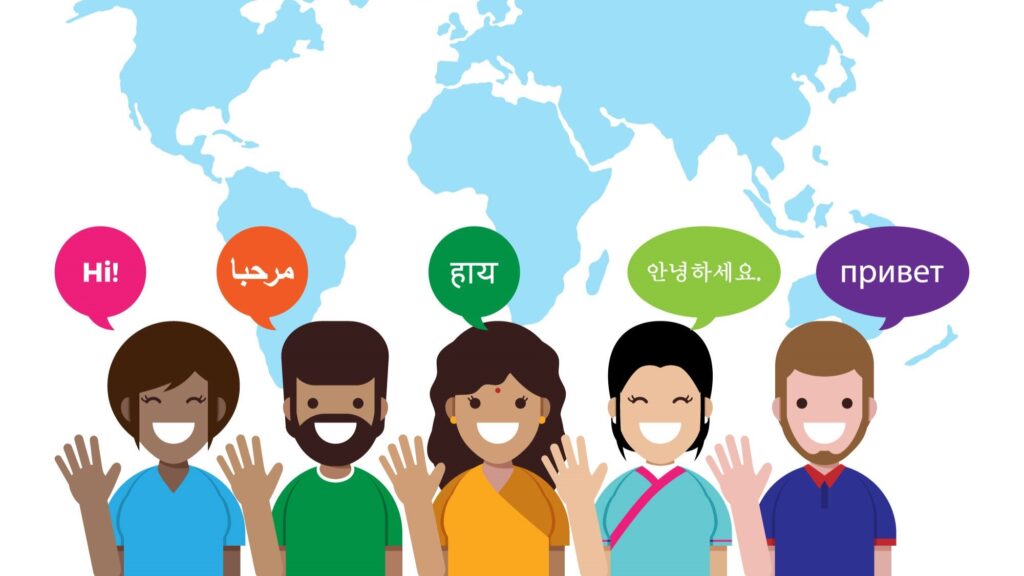

International demand does not always translate into international growth. A SaaS product may get visitors, trials, or sign-ups from another country, yet struggle with activation, conversion, or customer trust. SaaS localization goes beyond translating product text. It can involve the product interface, website, help content, marketing material, and the way the overall experience fits a local market.
This guide covers what to localize, how to plan the process, and what to check when choosing a localization partner.
When Does Your SaaS Business Need Localization?
Not every SaaS company needs to localize everything at once. Some signs that it may be time to start include:
- Growing website traffic from other countries
- Trial or sign-up activity from new markets
- Lower conversion or activation rates outside the home market
- Customer requests for local languages
- More support questions caused by language or cultural differences
- Plans to enter specific international market
What Should You Localize in a SaaS Product?
It is often a smart choice to begin with that segment of customer journey that has the higher impact. This can mean working on the interface, menus, onboarding flows, notifications, error messages, pricing displays, etc. After this, the business can focus on supporting content, which are the websites, landing pages, help pages, documentations, emails, and advertisements content.
Conversion-critical pages and product screens usually deserve attention before less frequently used content. This also makes it easier to test the response from a particular market before expanding the localization effort.
What Are the Best Practices for Content Localization in SaaS?
Good SaaS localization starts before translation begins.
Research the target market first. Look at how local customers search for products, describe their problems, and respond to different messages. Keep terminology consistent across the website, product, and support material. A key feature should not have three different names across different screens. Conversion pages also need special attention. A direct translation of a headline or CTA may be grammatically correct but still sound unnatural to local users.
For important content, review the copy in its actual context. This is especially useful for product interfaces, buttons, onboarding screens, and pages where limited space affects the wording. SEO should be localized as well. Search terms, page titles, descriptions, and content should reflect how people in the target market actually search. Finally, keep checking the results. Changes in traffic, sign-ups, conversions, and customer feedback can show which parts of the localization are working.
How Do You Choose Localization Services for SaaS Applications?
In order to start with SaaS localization services, one must first understand the following questions.
Do They Understand SaaS Products, Not Just Translation?
Discuss your current setup before starting. This may include Git, localization platforms, CMS tools, APIs, file formats, or other systems. The goal is to reduce unnecessary manual work and avoid creating extra tasks for developers every time content needs to be localized.
Can They Work With Your Existing Tools and Workflow?
Using automated translation can lead to brand misinterpretation. Work with expert content localization services to ensure your message is preserved with true tone, culturally relevant, accurate, and conversion-optimized.
Example: Airbnb localized its listings along with customer support, FAQs, a nd UX flow to increase engagement, which resulted in a higher retention rate and customer satisfaction.
How Do They Handle Quality and In-Context Review?
Quality checks should cover more than spelling and grammar. Ask about terminology review, linguistic QA, and checks within the actual product interface. A translation can be linguistically correct and still look wrong when a button is too long, a sentence is cut off, or the wording does not suit the surrounding screen.
Can They Scale as Your Languages and Releases Grow?
SaaS products change often. New features, updates, and fixes can create a steady stream of content. Ask how the provider manages recurring work, terminology, project timelines, and increasing language volumes. A repeatable process matters more than successfully handling one large project.
How Do They Protect Your Product Data and Content?
Ask how confidential files and product information are handled. Discuss access controls, confidentiality agreements, data storage, and the provider’s policies around machine translation or AI tools. This becomes especially relevant when localization involves unreleased features, customer information, or internal product documentation.
Advantages of SaaS Localization
1. Rapid Global Expansion
Localized SaaS products are easily adopted globally. It helps to reduce the tag of a newcomer or outsider and helps you to enter in new market and grow faster.
Example of a Software as a Service company that triumphed: Zoom. They succeeded by localizing their platform in over 10 languages and became the most desired choice among schools and businesses globally.
2. Higher Revenue and ROI
When content becomes connecting and engaging with users, they convert more. Recently, a study by CSA Research showed that enterprises that invest more in localization can accelerate their growth by 1.5x in their revenue.
3. Competitive Advantage
Many of the SaaS companies do not integrate localization. It creates less engagement and relatability among the new Market and their audience. Using localization services with Saas can help them master in under-tapped markets.
Example: Canva localized many of its features, design, and posters for India and Brazil in their early stages. Today, both countries are their fastest-growing markets.
What Should You Ask a SaaS Localization Provider Before You Hire Them?
Before making a decision, ask:
- How much SaaS or software localization experience do you have?
- Can you share relevant samples or project experience?
- Do you have linguists for our target markets?
- Which tools and file formats can you work with?
- What QA checks are included?
- What turnaround can we expect?
- Who will manage the project?
- How is our data protected?
- How are terminology and translation assets managed?
- What happens when revisions are needed?
- Can you support ongoing product releases?
- How is pricing calculated?
How Can You Tell If a SaaS Localization Partner Is the Right Fit?
A small pilot can tell you more than a sales presentation. Give shortlisted providers a real piece of product or website content, preferably with the context in which it will appear. Review the language, terminology, interface fit, communication, and turnaround. Also pay attention to how the provider handles corrections.
How could Verbolabs Be the Right Localization Partner for Your SaaS?
VerboLabs provides localization for software, websites, and apps across 120+ languages. Its app localization process includes understanding product goals, selecting language experts, adapting content, checking UI compatibility, and carrying out language testing. For SaaS teams, this can cover more than the words inside a product. VerboLabs also provides website localization and multilingual content services, allowing different parts of the customer journey to be handled as part of the same localization requirement.
VerboLabs also has a documented SaaS localization case study covering website, app, and marketing localization for a company entering international markets..
Conclusion
Any business that wants to start in a new market or customer journey often looks for best SaaS localization. This helps them prioritze their product and content, work on a strategic plan, and scale in new regions. Thus, it is very crucial to look for a partner that can businesses achieve this easily.
Ready to Localize Your SaaS Product? Contact VerboLabs today for scalable, high-quality localization services tailored to your business needs.

Expand your SaaS product globally—partner with VerboLabs for expert localization services that drive engagement, trust, and conversions.
FAQs:
When a business adapts their software and its content in a specific language, suitable for the market, and with the intentions of scaling their business, it is called SaaS localization.
SaaS translation is when only the text is changed into another language, whereas, localization is adapting everything as per the market’s local dialects, expectations, culture, and design interest.
General services include software and website localization, UI translation, technical documentations, advertisements content, and linguistic QA.
The price of a SaaS localization is dependent on the project, client requirements, and work strategy of the localization agency. It can also change based on the language, content length, and regulatory requirements.
It can be useful when a SaaS company has meaningful demand from a specific international market or is preparing to enter one. The business case should be assessed using factors such as traffic, conversion, customer demand, and expansion plans.
Check the provider’s SaaS experience, language coverage, workflow compatibility, QA process, security practices, turnaround, and ability to support recurring releases. A small pilot can help before making a long-term commitment.