One can visualize law practitioners involved in an international case. An immediate contract translation is too urgent for them to analyze its contents. This legal team will need a formally checked version later. In the process of translation, legal terminology definitions are likely to change, and it has to be determined whether the client’s documents can be translated with the help of an outside service.
Law firms, in-house legal departments and legal technology teams need to consider more than translation speed. They must understand how documents are processed, who reviews the output and whether the final deliverable meets the recipient’s requirements.
This guide is meant for the comparison of 10 translation services considering the specifics of legal document translation workflow, security, revision, and final considerations of purchasing.
- CENTROID by VerboLabs: AI-based legal content localization solution
- Pairaphrase: Legal document translation with involvement of several contributors
- DeepL Pro/Enterprise: Paid document translation with legal proofreading
- Smartling: Enterprise-level legal translation and language service
- Trados Studio: Control of access to translation for legal documents
- Phrase TMS: Management of the legal content
- XTM Cloud: Multivendor model of legal translation
- MemoQ TMS: Collaboration with legal translation specialists
- SYSTRAN: Enterprise machine translation with possible use
- Smartcat: AI-supported legal content translation with expert input
Compare the 10 Options by Buying Requirement
| Tool | Main Use | Pricing Approach | What Legal Teams Should Verify |
| CENTROID | AI-led legal localization workflow | Contact sales | Data handling and legal review |
| Pairaphrase | Team-based document translation | Contact sales | Workspace controls and file handling |
| DeepL Pro / Enterprise | Paid document translation | Subscription or enterprise quote | Data terms and document formatting |
| Smartling | Enterprise localization and services | Contact sales | Legal review and certification scope |
| Trados Studio | Professional translator workflow | License or subscription | Local deployment and terminology |
| Phrase TMS | Translation program management | Subscription or quote | Permissions and approvals |
| XTM Cloud | Multi-vendor translation operations | Contact sales | Matter separation and data terms |
| memoQ TMS | Specialist translator collaboration | License or subscription | Project-level terminology and review |
| SYSTRAN | Enterprise machine translation | Plan or enterprise quote | Hosting and deployment requirements |
| Smartcat | AI translation with expert handoff | Subscription or quote | Confidentiality and specialist review |
What Should Attorneys Look for in Translation Software?
Confidentiality and Procurement Evidence
Legal documents may include private and sensitive information that must be handled correctly. When uploading any documents, it is important that the firm knows how the service will deal with the confidential information. Ask about the features of data processing and storage, data retention and deletion, access regulations and limitations, and whether the submitted documents can be used for any other purposes.
Legal Document Structure and Fidelity
Legal documents often include clause numbers, definitions, tables, footnotes, references, and appendices. It is very important that the translation maintains the document clause numbers and definitions.
Check whether the software can be tested with the specific types of documents your company usually processes. If necessary, find out whether the OCR technology is available and how accurately it works.
Jurisdictional Terms and Approved Language
Legal terminology is associated with legal jurisdiction. Two different terms can sound familiar in common English but can have an entirely distinct meaning in a given legal setting. For instance, a term used in contract law in India may not have a perfect equivalent in terms of contract law in either the U.S. or U.K. In this case, the terms can even lead to confusion if one relies on the same words.
Review, Versioning and Responsibility
Working translations enable a team of legal professionals to comprehend the document. Edited translations can be necessary for purposes of negotiations, communications with a client, or internal decision-making processes. Filing-ready translations may have their own specifications. The software should enable teams to manage different documents, reviewer comments, as well as approvals. Ensure that the final reviewer has the possibility of comparing the version that has been translated with its actual source.
Deployment, Integrations and Total Cost
Evaluate how this platform meshes with your existing workflow in your document management, including matters of access, document management capabilities, user permissions, and the methods of sharing work files with translators outside the organization. Look at pricing structure, language limits, and number of users needed, as well as implementation costs for each platform’s usage and pricing structure.
How Did We Evaluate the Shortlist?
This comparison is based on official information about each product available through research, as well as real-world experience of using the products available.
The products selected for this purpose have demonstrated their ability to translate documents, process data, manage terminology effectively, and provide tools for collaboration and review by their users. At the same time, they are not advertised as legal certification products unless they are expressly stated in their specifications.
The 10 Best Translation Software Platforms for Law Firms and Legal Teams
1. CENTROID by VerboLabs – AI-Led Legal Content Workflow Candidate
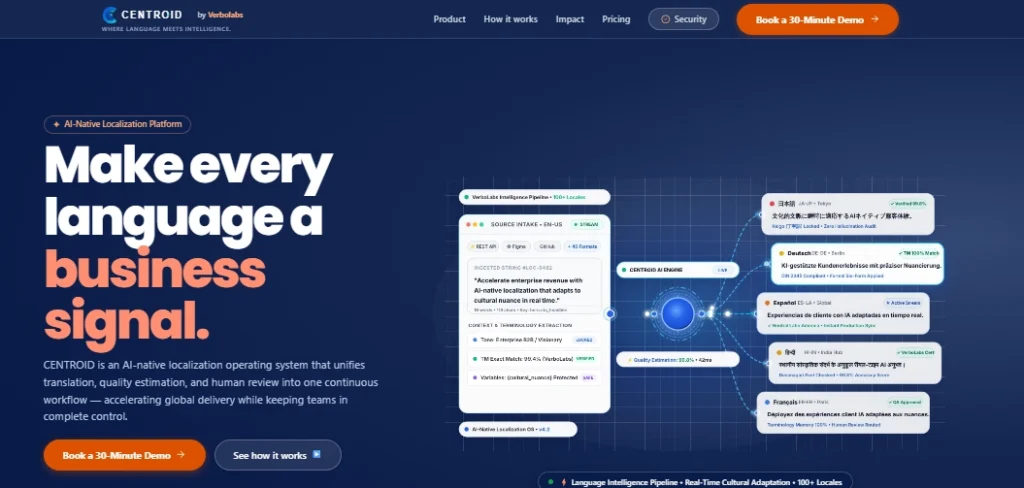
VerboLabs’ tool, CENTROID, is an AI powered Translation Management software designed specifically for companies working with multilingual content. This platform can be beneficial for legal professionals since it assists in dealing with translation, terminology, and expert-led language evaluation.
Why CENTROID by VerboLabs Fits Law Firms
CENTROID can be beneficial for legal organizations involved with multilingual processing in their localization endeavors.
CENTROID by VerboLabs: Features, AI and Quality
When it comes to legal tasks, important aspects include terminology management, quality checking of translations, and involvement of reviewers in the document handling process. Request a demo that uses a synthetic contract making use of specific definitions, numbered clauses, and references.
CENTROID by VerboLabs: Pricing and Customer Feedback
Contact VerboLabs for current prices and implementation options. Public review scores and customer reviews for the mentioned legal workflow were not available at the time of comparison.
CENTROID by VerboLabs: Limitations and Buyer Checks
Do not assume that a general localization process will work for confidentiality and certification at the same time for law firms. Request details related to applicable data processing terms and retention and removal practices, along with access control and human review processes.
2. Pairaphrase – Team-Based Legal Document Translation
Why Pairaphrase Fits Law Firms
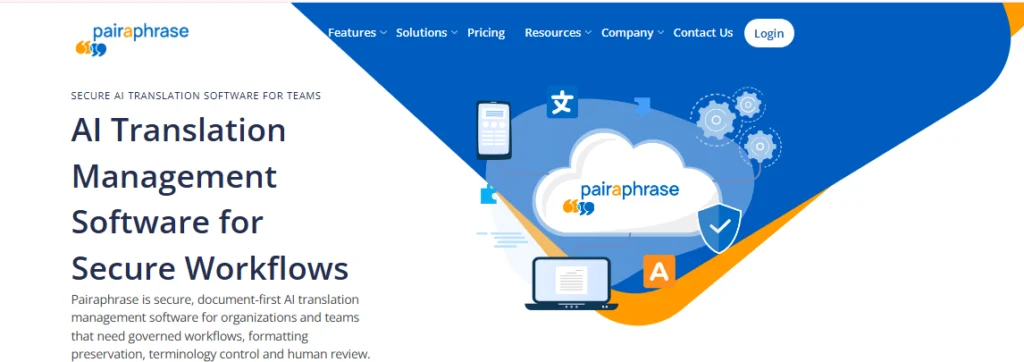
Pairaphrase provides legal translation services and manages translation workflows involving documents. It is ideal for organizations that handle contracts, agreements, and different business papers while coordinating translation efforts.
Pairaphrase: Features, AI and Quality
The approach involves translating documents and having the ability to deal with multiple file types and processes within the team. Prospective buyers should verify how the company manages document formatting, terminology, and reviewer access.
Pairaphrase: Pricing and Customer Feedback
Get in contact with Pairaphrase to find out their plans and pricing. Make certain that the offered number of users, volume of documents, and security features are included.
Pairaphrase: Limitations and Buyer Checks
Request a demo using a legal document. Check file movements, permissions in the workspace, document deletion, and the process of reviewing the final translated document.
3. DeepL Pro / Enterprise – Paid Document Translation With Legal Review
Why DeepL Pro / Enterprise Fits Law Firms
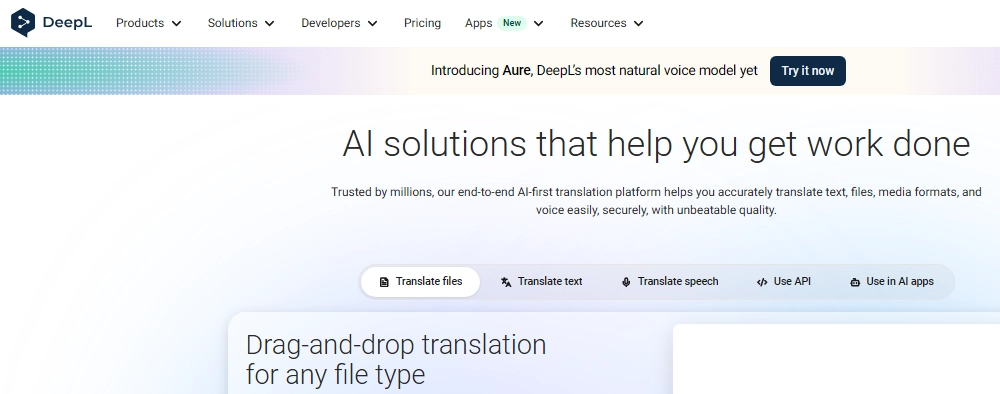
While DeepL can be helpful for firms that need document translation services, organizations looking for a convenient way to translate texts for internal understanding and preliminary purposes may consider the document translation feature of DeepL.
DeepL Pro / Enterprise: Features, AI and Quality
DeepL’s paid plans provide several additional features such as document translation and a glossary feature, along with features depending on the chosen plan levels. It is important for teams to examine the translated documents, including the layout, tables, and numbering.
DeepL Pro / Enterprise: Pricing and Customer Feedback
DeepL is introducing different paid plans such as Pro and Enterprise, and these plans provide different costs and features depending on the region and plan type. Make sure to check all aspects of the DeepL pricing page regarding this issue.
DeepL Pro / Enterprise: Limitations and Buyer Checks
When using the actual conditions of the paid plan, take into account the fact that any two DeepL products cannot have the same protection policies and practices. Always check the document retention policy, training processes, document limitations, and access policy mentioned in this case.
4. Smartling – Enterprise Legal Translation and Services
Why Smartling Fits Law Firms
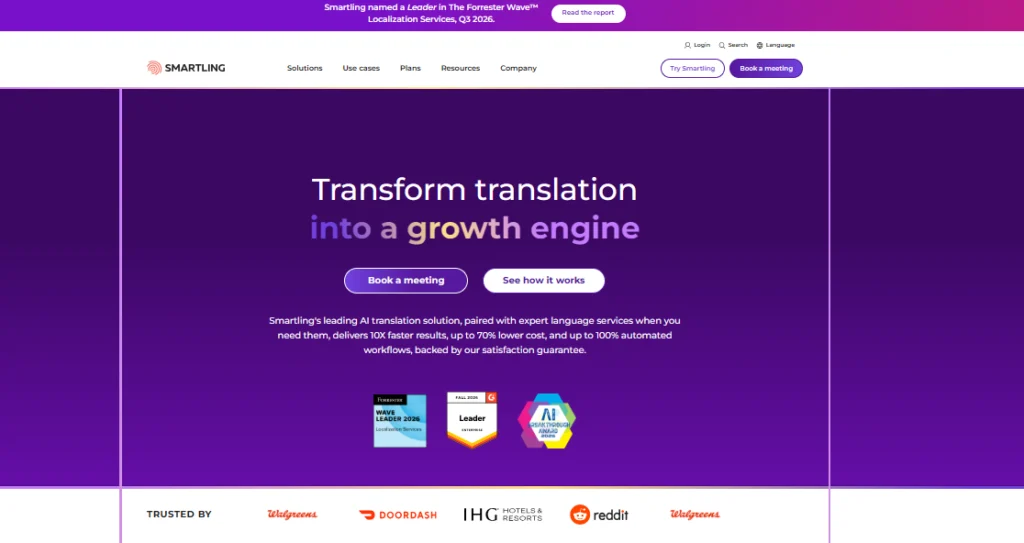
Smartling can facilitate structured translation processes and enhance cooperation between in-house teams and linguistic specialists. Its wider spectrum of services can be beneficial to firms with ongoing multilingual needs.
Smartling: Features, AI and Quality
Smartling’s solution boosts translation management services, terminology management services, and review processes. Legal purchasers should inquire about how various projects can be segmented, the way reviewers endorse modifications, and the possibility of having specialized legal translators.
Smartling: Pricing and Customer Feedback
Smartling offers a personalized pricing scheme for every business. A price quote should include the estimated costs of the platform’s usage, translations, implementation, and any possible proofreading services provided by experts.
Smartling: Limitations and Buyer Checks
A translation platform is not necessarily equivalent to a legal translation service, so make sure to clarify the level of necessary legal expertise and certification, as well as the party in charge of the final translated document.
5. Trados Studio – Translator-Controlled Legal Document Work
Why Trados Studio Fits Law Firms
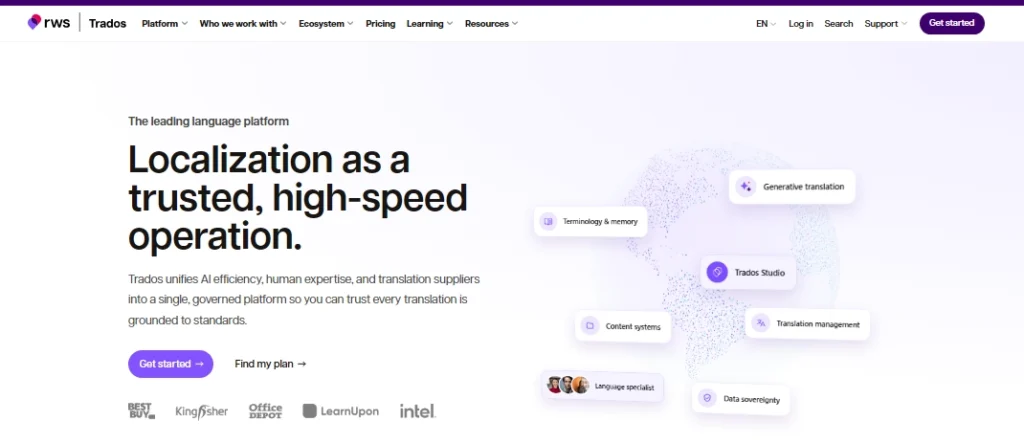
Trados Studio is a useful instrument for translation companies that utilize the services of translators dealing with legal words and terminology, as well as document coherence.
Trados Studio: Features, AI and Quality
It is equipped with translation memory, glossary management, and translation verification features. These functions assist translators in using verified words in the process of translation.
Trados Studio: Pricing and Customer Feedback
RWS provides several types of licenses for those willing to use Trados software. You may find out the pricing, conditions of use, and particular features via the official website.
Trados Studio: Limitations and Buyer Checks
Trados Studio is basically a translation tool and can not be used as a full-fledged document management software solution. Make sure to clarify how files are transferred, stored, and reviewed while working with external translators.
6. Phrase TMS – Legal Content Program Management
Why Phrase TMS Fits Law Firms
Phrase assists with managing projects, translation processes, and teamwork. This can be beneficial for legal firms that require translating consistent documents in multiple languages and departments.
Phrase TMS: Features, AI and Quality
The platform consists of capabilities such as translation memory, terminology, automation processes, and workflow quality. Groups can evaluate whether these features facilitate the use of standardized language in contracts and receiving approvals.
Phrase TMS: Pricing and Customer Feedback
Phrase provides subscription-based products, with features and functions that depend on the chosen plan. Request a quote based on the number of users, translation quantity, and necessary integration.
Phrase TMS: Limitations and Buyer Checks
Be assured in confirming project permissions, reviewer access, and security rules. Do not expect any standard translation process to guarantee matter-level segregation and confidentiality controls necessary for your firm.
7. XTM Cloud – Multi-Vendor Legal Translation Operations
Why XTM Cloud Fits Law Firms
This method of using project preferences helps to facilitate the process of organizing translation tasks, controlling foreign resources, and tracking the development of the task being accomplished. This is relevant for big law teams that have several offices or need languages on a regular basis.
XTM Cloud: Features, AI and Quality
The system of XTM Cloud allows managing translation flows, glossary usage, and translation memory principles. The buyer should agree on what the platform will do with the updated contracts, case-specific data, and the approval process for translators.
XTM Cloud: Pricing and Customer Feedback
The price strategy of XTM Cloud is based on enterprise-like pricing. Get in touch with your supplier to learn about the licensing terms, project volume, pricing, and broad spectrum of services provided.
XTM Cloud: Limitations and Buyer Checks
Confirm data processing, allow the external reviewers to access the project, and separate tasks. Also, learn how to make the reviewers approve only relevant translations of the contract and avoid outdated versions from being approved.
8. memoQ TMS – Specialist Legal Translator Collaboration
Why memoQ TMS Fits Law Firms
memoQ helps professional translation processes by allowing translators to control their terminology and past translations. This is a must when a company employs an outside language expert to translate a legal document.
memoQ TMS: Features, AI and Quality
Among its features are translation memories, project management, terminology management, and quality assurance controls. Teams may utilize these services to ensure that the same terms are used in all similar documents.
memoQ TMS: Pricing and Customer Feedback
memoQ offers various products and licensing options. Please refer to the official memoQ website for the prices and editions.
memoQ TMS: Limitations and Buyer Checks
While the platform allows carrying out translation, it is still up to legal departments to determine reviewer responsibilities and approval requirements. Find out how the terminology and translation memories relate to the legal case.
9. SYSTRAN – Enterprise Machine Translation With Deployment Requirements
Why SYSTRAN Fits Law Firms
The enterprise-oriented nature of this service makes it suitable for companies that are interested in exploring various deployment options rather than using just an ordinary online translation service.
SYSTRAN: Features, AI and Quality
SYSTRAN offers machine translation services with language and customization options depending on the type of product that one is using. Determine if the platform is able to support the required language pairs, terminology specific to the field, and chosen deployment approach.
SYSTRAN: Pricing and Customer Feedback
Pricing would depend on the product and the selected deployment approach. It is advisable to contact the company directly to understand the conditions of cooperation and to clarify any possible implementation, hosting, or infrastructure fees.
SYSTRAN: Limitations and Buyer Checks
Private deployment of this service doesn’t mean that the laws of the target market would necessarily be satisfied. It is crucial to check such questions as hosting, access, retention, configuration, and upkeep of the platform. It is also essential to involve a legal expert with relevant language background in the process of machine translation evaluation.
10. Smartcat – AI-Assisted Legal Content With Expert Handoff
Why Smartcat Fits Law Firms
Smartcat is useful for companies that are looking to manage AI-assisted translation in their connected workflow.
Smartcat: Features, AI and Quality
The platform has many features for AI translation, translation memory, terminology, and collaboration. Customers must make sure that they are aware of how their legal work goes through the translation and review processes.
Smartcat: Pricing and Customer Feedback
Smartcat has various plans and enterprise solutions. Contact them for pricing and current limits.
Smartcat: Limitations and Buyer Checks
Although the availability of human experts is a good sign, it does not guarantee that the required qualified expert or certified linguist has been included. Make sure that you verify the reviewer’s qualifications, language combination, experience, and responsibility for the finished document.
Which Shortlist Fits Your Legal Translation Requirements?
| If your priority is… | Consider | Verify first |
| AI-led legal localization | CENTROID | Data terms and human approval |
| Team-based document translation | Pairaphrase | Matter separation and access |
| Paid document translation | DeepL Pro / Enterprise | Plan-specific data terms |
| Enterprise translation services | Smartling | Specialist legal review |
| Professional translator control | Trados Studio | File handling and terminology |
| Legal content program management | Phrase TMS | Permissions and approvals |
| Multi-vendor operations | XTM Cloud | External access and data terms |
| Specialist translator collaboration | memoQ TMS | Matter-specific resources |
| Enterprise machine translation | SYSTRAN | Deployment and language coverage |
| AI translation with expert handoff | Smartcat | Reviewer qualifications |
What Should Your Vendor Pilot Prove?
For the first evaluation, never test legal translation software on actual confidential contracts from clients; instead, use synthetic documents the firm has expressly authorized for testing.
Create a sample contract that has defined terms, numbered paragraphs, references, and at least one revised paragraph. Check the following:
- Meaning-changing errors: Does the proposal keep the obligations, conditions, and exceptions?
- Consistency of legal terms: Are defined terms translated consistently throughout?
- Optical character recognition quality: Are the scanned pages scanned correctly?
- Formatting: Are clause numbers, tables, and references kept?
- Approval time: How long does the complete review process take?
- Evidence: Is the vendor able to provide the data and service information procurement needs?
Ask every vendor: “Which contract and deployment cover our matter data, and who is responsible for specialist review and any formal certification?”
Final Recommendation
There’s no one-size-fits-all translation solution for law firms. A team looking for fast translations is likely to consider applications like DeepL Pro or Pairaphrase. On the other hand, organizations that require the management of immense multilingual initiatives will find tools like Smartling, Phrase TMS, or XTM Cloud appealing.
Trados Studio and memoQ TMS are good options to test out if translations are to be supervised by professional translators. Also, SYSTRA may suit companies that have certain enterprise deployment needs. Moreover, Smartcat is able to offer an AI-powered service with experts available to provide assistance.
Finally, CENTROID from VerboLabs is also worth presenting to organizations interested in AI-based legal content localization. Before implementing it with client information, make sure to get a demonstration including a common contract template, a glossary common for the client matter, and the legal validation process followed by the firm.

Expand your global reach with VerboLabs! Get accurate, culturally adapted localization services to connect with new markets. Contact us today for expert solutions!
Frequently asked questions
Yes, but only via an approved process by the law firm. Make sure to look into data processing, model training use, retention, deletion, subprocessors, and access control before uploading the documents entitled to the clients.
No, the translation software does not guarantee the certification of the work obtained. Certification rules depend on the authority to which the document is submitted.
A good legal reviewer needs to check the translation against the approved source text. One should pay special attention to such legal elements as defined terms, obligations, exceptions, negation, clause references, and jurisdiction-specific meaning. The final reviewer should also double-check whether the document referred to is indeed the proper one during the approval process.
It is necessary to gain a complete understanding of data processing information, storage of documents, retention issues, deletion, subprocessors, model training, and access controls. All these issues should be reviewed by the representatives of the legal, IT, and procurement departments before providing the client’s information.