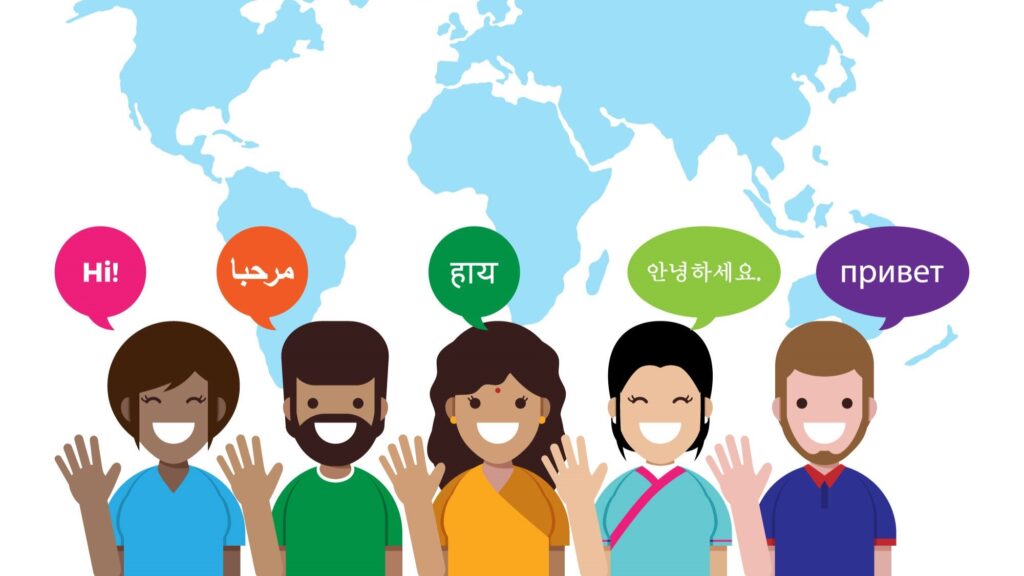

Breaking into global markets in 2026 requires more than translation—it demands authentic, localized viewer experiences. Dubbing services have become a critical growth lever for US businesses and content creators looking to expand reach, boost engagement, and maximize content ROI across multilingual audiences.
As streaming platforms, e-learning providers, and global brands double down on localization, professional dubbing is no longer optional—it’s a competitive necessity. Whether you’re a filmmaker, marketer, or SaaS brand, understanding why dubbing matters can directly impact your international success.
5 Reasons to Hire Dubbing Services

1. Expanding Global Reach
In the current world economy, the effectiveness of reaching out to the multilingual population is a major determinant of success. By 2026, companies and content providers must go beyond language and cultural barriers to gain a strong foothold in global markets. This is where dubbing services come in. Dubbing entails translating a soundtrack and replacing the original dialogue with new words corresponding to the video.
While translating merely conveys your message, professional dubbing aims to convey a specific meaning to a specific audience in their language. While subtitling makes viewers read a text, dubbing keeps them fully tuned into the film’s sight and sound. On the same note, this accessibility helps you reach an even larger audience, as everyone can easily understand what is being presented.
For example, global streaming leaders like Netflix continue to invest heavily in high-quality dubbing to drive international viewership and retention. Programs like Money Heist (La Casa de Papel) and Squid Game became famous worldwide not only because of the twists in the episodes but also because of the great dubbing that, in many instances, overcame language barriers. From this strategy, Netflix was able to appeal to diverse audiences across continents, becoming a benchmark.
Dubbed programs are not only entertainment programs. Brands can use dubbing services to adapt advertisements, educational materials, and corporate messages for specific audiences, ensuring their voice reaches every corner of the globe. When you invest in dubbing, you create an opportunity to penetrate markets that were previously out of bounds due to language barriers.
2. Enhancing Viewer Engagement
People understand content better when it is presented in a language they are familiar with—literally and metaphorically. Dubbing thus plays a central role in increasing consumer interest by creating an emotional bond between the audience and the material. In 2026, when people’s attention spans are shorter than ever, this link is incredibly useful.
Research shows that more people interact with and remember content in their native languages. Dubbing performs this function by providing a ‘clean screen’ where the final focus is the novelty, information, or call to action regarding the story, product, or event. This is especially important in aspects such as advertisements or in teaching through a video, because comprehension is key and evoking a particular feeling in the audience.
Picture a moving campaign ad with narration as the target audience speaks in their regional language. The aspects of tone, emotion, and culture are much more likely to be understood and, therefore, to make an impact. However, dubbed content reduces the cognitive steps required to follow foreign-language speakers. Thus, the audience does not get bored easily.
Localization and dubbing are not only means of translating the meaning of the text—they are tools for genuine communication. Due to its specificity, dubbing increases the content’s relevance by conforming to the language and culture of the target audience, which makes them trust and remain loyal to it.
3. Building a Stronger Brand Presence
Brand identity is not an issue of geographical location in the current world economy. For a business to be credible in international markets, it must be coherent and consistent in its communication across different languages. Dubbing services can, therefore, address these challenges.
Hire a professional dubbing service. This service accentuates the message your brand seeks to convey, tailored to the linguistic and cultural characteristics of the targeted market. This is important to establish credibility with audiences worldwide. The use of a website also enhances the organization’s coherence. When your content, whether marketing videos, tutorials, or corporate communications, sounds native to each audience, it improves their impression of your brand as familiar and trustworthy.
One good example is Coca-Cola’s international advertisements. By translating the brand message through professional dubbing services, the firm has effectively communicated to global markets. Besides familiarity, this approach also helps to develop an attachment between the brand and its customers.
To brands, dubbing is not just a means of communication but an investment in achieving a common brand image worldwide. It ensures that your message is always effective, no matter the language you use, and makes you the go-to expert in your field.
4. Boosting Content ROI
Another major benefit of dubbing is that it can help you maximize your investment (ROI) in your content. Unlike subtitling, which requires creating new material for a new region, dubbing helps you get around this by reusing old content for new markets.
Thus, in 2026, when companies are interested in entering various markets and managing their budgets, dubbing becomes a perfect option. It is possible to achieve significant improvements in sales by translating your current videos with professional diction at a significantly lower cost than creating new multilingual videos.
For example, an educational platform can translate its courses into several languages and immediately receive global learners. Likewise, a company launching a product can use dubbed promotional videos to reach as many people as possible since many people have different preferences.
It also helps improve video SEO. Keywords and metadata in dubbed videos are localized, which helps your content rank well in regional search engines and attracts more viewers. By reaching new markets and increasing audience retention, dubbing amplifies the value of your content and ensures incredible ROI.
5. Staying Ahead of Competitors
The need for localized content remains high, and other players will leave companies that do not meet it behind. Dubbing services help you stand out from competitors by marketing your brand as friendly, open to everyone, and universal.
Today’s globalization has made localization mandatory in the entertainment, e-learning, and commercial business sectors. Consumers follow brands and creators who consider their cultural and language identity, and dubbing interacts with this aspect.
Think about the recent growth of global streaming services. Those industries that invested in dubbing early now control the entertainment market, while others struggle to catch up. Other sectors follow this trend. Companies that give due consideration to dubbing in their localization model stand a better chance of penetrating developing markets than those that have not embraced dubbing.
Looking ahead, 2026 trends show rapid adoption of AI-assisted dubbing, voice cloning with consent safeguards, and hybrid human-AI workflows that improve speed while maintaining studio-grade quality. This means these trends must be adopted and professional dubbing services incorporated into today’s content plan.
How to Choose the Right Dubbing Service Provider?

Choosing the right dubbing service provider is the most important factor in determining the success of your content localization strategies. Here are some best practices to guide your decision:
- Prioritize Quality and Accuracy: Select dubbing companies that consistently deliver outstanding work that matches your required tone and value system.
- Evaluate Language Expertise: Select a vendor who partners with native voice actors because their local understandings help you translate ideas correctly.
- Check Experience: Select a provider who works in your industry, such as entertainment, education, or business speech.
- Assess Technological Capabilities: Companies integrating AI-powered dubbing tools deliver professional results faster.
- Request Samples: Check past work examples to determine whether the provider matches your desired output.
Working with a reputable dubbing service provider can effectively make your content reach global viewers.
Conclusion
In 2026, dubbing services are no longer just a localization add-on—they are a strategic growth driver for brands that want to compete globally and connect authentically with diverse audiences. From expanding reach and improving engagement to maximizing content ROI, professional dubbing helps businesses unlock the full value of their video content.
As AI-assisted workflows continue to evolve, the winning approach will combine advanced technology with skilled human voice talent to deliver culturally accurate, emotionally compelling experiences. Brands that invest in high-quality dubbing today will be best positioned to scale internationally and future-proof their content strategy.

Speak Your Audience’s Language
Enhance your content with professional dubbing! Get high-quality, localized audio to reach a global audience.
FAQs
1. What are dubbing services in simple terms?
Dubbing services replace the original audio of a video with professionally recorded voice-overs in another language. Unlike subtitles, dubbing lets viewers watch content without reading, creating a more immersive and accessible experience—especially important for global streaming, e-learning, and marketing content.
2. Is dubbing better than subtitles for US audiences?
It depends on the content type and audience preference. In the US, dubbing often performs better for entertainment, kids’ content, and ads because it improves immersion. Subtitles may work well for documentaries or niche audiences who prefer original audio with translated text.
3. How much do professional dubbing services cost in 2026?
Dubbing costs in 2026 vary based on language, video length, number of voice actors, and studio quality. Short marketing videos may cost a few hundred dollars, while full-length films or series can cost significantly more. AI-assisted workflows are helping reduce turnaround time and costs.
4. How long does the dubbing process usually take?
Most professional dubbing projects take anywhere from a few days to several weeks. Timelines depend on script translation, casting, recording, editing, and quality checks. Hybrid AI-human workflows in 2026 are helping many US companies speed up delivery without sacrificing quality.
5. What languages should US businesses prioritize for dubbing?
US businesses typically prioritize Spanish (especially Latin American Spanish), French, German, Portuguese, and Japanese based on target markets. The right language strategy should align with your audience data, expansion goals, and content performance analytics.
6. Can AI replace human voice actors in dubbing?
AI can assist and accelerate parts of the dubbing workflow, but human voice actors remain essential for emotional nuance, cultural authenticity, and brand voice consistency. In 2026, the most effective dubbing strategies use AI for efficiency and humans for performance quality.
7. When should a company invest in dubbing services?
Companies should invest in dubbing when expanding into new language markets, scaling video content globally, or seeing strong international traffic. If subtitles alone are limiting engagement or watch time, professional dubbing often delivers measurable improvements in retention and conversions.