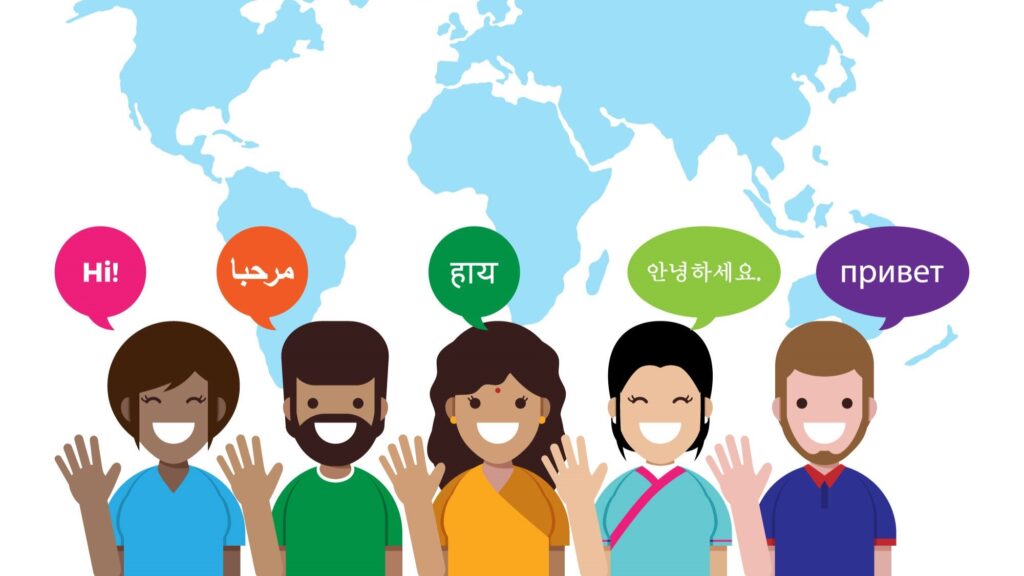
The gaming industry has evolved rapidly since the early 1990s, driven by globalization, internet accessibility, and technological innovation. What began as region-specific entertainment has transformed into a truly global ecosystem where players from different countries, cultures, and languages interact in real time.
Today, the global gaming market is valued at trillions of rupees, with India alone contributing significantly to this growth. Gaming has become one of the most preferred forms of entertainment, particularly among people aged 18–35. With mobile games, PC titles, and console releases launching simultaneously across multiple regions, developers can no longer afford to think locally.
As the industry expands across borders, language has emerged as one of the most critical success factors. From understanding game narratives to collaborating with teammates in multiplayer environments, language directly shapes player experience. This is where game localization and in-game communication play a decisive role.
Game localization allows video games to move beyond geographical boundaries and be accepted as cultural and entertainment products worldwide. Meanwhile, effective in-game communication ensures that players can connect, cooperate, and compete—regardless of their native language.
What Is Game Localization?
Game localization is the process of adapting a video game for a specific language, culture, and regional market. While translation is a core part of localization, the process goes far beyond converting words from one language to another.
Game localization ensures that:
- Players understand the game naturally in their native language
- Cultural references feel familiar rather than confusing
- Visuals, audio, and user interfaces align with local expectations
- Legal and regulatory requirements are met
In short, localization helps a game feel as if it was originally created for that market, not merely translated for it.
Game Localization vs. Simple Translation
Translation focuses on linguistic accuracy—changing text from Language A to Language B. Localization, on the other hand, focuses on player experience.
For example:
- A joke that works in English may fall flat in Japanese unless rewritten creatively
- A character name may need to be changed to avoid unintended meanings
- Certain symbols, gestures, or colors may require modification due to cultural sensitivities
This deeper adaptation is what makes localization essential for global success.
Video Game Localization Examples
To better understand what is game localization, consider how globally successful games adapt their content for different regions:
- The Witcher 3: Wild Hunt
The game’s dialogue, humor, and cultural references were carefully adapted for multiple European and Asian languages. Slavic folklore elements were preserved while dialogues were rewritten to sound natural in each target language. - Pokémon Series
Character names, item descriptions, and even food references are modified across regions to ensure cultural familiarity and accessibility for younger audiences. - League of Legends
Riot Games localizes not only in-game text but also champion voice lines, cultural references, and event-specific content for different regions, enhancing immersion for global players.
These video game localization examples show how localization goes far beyond game translation, focusing on cultural relevance and player immersion.
Core Elements of Game Localization
Effective game localization services typically involves multiple interconnected components:
1. Language Translation
Translation is the foundation of localization. It includes in-game dialogues, subtitles, menus, tutorials, quest descriptions, system messages, and help content. Accuracy is critical because even a small mistranslation can alter gameplay instructions or narrative meaning.
Professional game translators focus not only on linguistic accuracy but also on tone, character personality, and context to preserve the original intent of the game.
2. Cultural Adaptation
Cultural adaptation ensures that the game resonates with the target audience. This may involve modifying:
- Humor and idiomatic expressions
- Character names or story references
- Visual elements, symbols, or gestures
- Social norms represented in the storyline
For instance, mythology-based references, holidays, or historical allusions may need to be reworked so that players in different regions can relate to them without confusion or offence.
3. Audio Localization
Audio plays a major role in immersion. Audio localization can include:
- Voice-over recording in the target language
- Dubbing using native voice actors
- Adjusting lip-sync and timing
- Localizing sound cues or announcements
Well-localized audio makes characters feel authentic and emotionally engaging, especially in story-driven and role-playing games.
In-Game Communication Example
- Apex Legends uses an advanced ping system that allows players to communicate efficiently without voice or text, making it accessible across languages.
- Fortnite combines emotes, voice chat, and localized UI elements to support cross-cultural interaction.
These systems demonstrate how video game localization services support inclusive multiplayer experiences beyond basic translation.
Voice Localization Example
- God of War (2018) features region-specific voice acting where tone, emotion, and delivery were adapted to match cultural expectations, not just translated word-for-word.
- Assassin’s Creed Series uses native voice actors across regions to maintain authenticity and immersion.
High-quality audio adaptation is one of the most demanding aspects of game localization services, requiring linguistic expertise and technical precision.
4. User Interface and User Experience (UI/UX)
Different languages have different text lengths and reading directions. Localization often requires UI adjustments to:
- Prevent text overflow in menus
- Ensure readability across devices
- Adapt fonts and layouts
- Support right-to-left languages where required
A poorly localized UI can frustrate players even if the translation itself is accurate.
UI Localization Example
- Clash of Clans adjusts text expansion, font styles, and UI spacing across languages like German, Arabic, and Korean to maintain usability across devices.
- Final Fantasy XIV redesigned menu layouts to accommodate longer text strings in European languages.
Such adjustments highlight why experienced game localization companies play a crucial role in maintaining usability across regions.
5. Legal and Regulatory Compliance
Every region has its own laws, age-rating systems, and content regulations. Localization ensures that the game complies with:
- Local censorship rules
- Data privacy regulations
- Rating board requirements
Ignoring legal compliance can result in delayed launches, bans, or financial penalties.
6. Localization Quality Assurance (LQA)
Before release, localized builds must undergo thorough testing to identify:
- Linguistic errors
- Contextual mismatches
- Functional issues caused by text expansion
- Cultural inaccuracies
Quality assurance ensures that the localized version delivers the same smooth experience as the original game.
Example of Cultural Adaptation in Games
- Animal Crossing: New Horizons adjusts seasonal events, holidays, and festivals based on the player’s region, ensuring the game aligns with local calendars and traditions.
- Persona Series modifies school systems, honorifics, and social interactions to suit Western audiences while maintaining Japanese cultural authenticity.
This level of adaptation is a core part of professional video game localization services, where cultural context is treated as seriously as linguistic accuracy.
Localization Strategy: One Size Does Not Fit All
There is no universal approach to game localization. Each game requires a strategy tailored to its genre, audience, and creative vision.
Some developers opt for light localization, where core elements remain unchanged while only text and menus are translated. This approach is common for games with a strong original identity.
Others choose deep localization, where storylines, characters, humor, and visuals are extensively adapted to suit local preferences. This approach is often used for mass-market games targeting culturally diverse audiences.
The right strategy depends on:
- Target market expectations
- Budget and timeline
- Game genre and narrative depth
- Long-term expansion plans
A well-planned localization strategy ensures consistency while maximizing player engagement across regions.
Localization Strategy in Practice
- Genshin Impact applies deep localization, adapting character personalities, humor, and event dialogues for different markets.
- Dark Souls Series uses lighter localization, preserving its original tone while ensuring clarity in gameplay instructions.
Choosing the right strategy is essential in video game localization, as it directly affects player engagement and market acceptance.
The Role of Language in In-Game Communication
Beyond localization, language plays a crucial role in how players interact with each other inside the game. Multiplayer and online games rely heavily on communication for teamwork, strategy, and social bonding.
Effective in-game communication systems help players:
- Coordinate tactics
- Build communities
- Share information quickly
- Create a sense of belonging
When these systems are localized properly, games become more inclusive and accessible to global audiences.
Common Forms of In-Game Communication
1. Text Chat
Text chat allows players to exchange messages in real time. It is widely used for:
- Team coordination
- Casual conversation
- Trading and event planning
Localization ensures that chat interfaces, filters, and system messages are easy to understand for players using different languages.
2. Voice Chat
Voice communication enables faster and more natural interaction, especially in competitive or cooperative gameplay. Localized voice prompts and moderation systems help make voice chat more user-friendly and inclusive.
3. Emotes
Emotes provide a non-verbal way to express emotions or actions. Since gestures can carry different meanings across cultures, localization helps ensure that emotes are universally appropriate and culturally neutral.
4. Ping Systems
Ping systems allow players to communicate quickly without typing or speaking. By marking locations, enemies, or objectives, players can collaborate effectively even when they don’t share a common language.
5. Social Features
Features such as friend lists, clans, guilds, and private messaging foster long-term engagement. Localizing these elements helps players build communities and maintain relationships across regions.
6. Global and Local Chat
Global chat connects players across the entire game world, while local chat supports nearby or region-specific communication. Proper moderation and localization of these channels improve player experience and community health.
Why Game Localization Is Essential for Global Success
Accurate and culturally sensitive localization:
- Expands a game’s reach into new markets
- Enhances immersion and emotional connection
- Improves player retention and reviews
- Strengthens brand credibility
- Increases monetization potential
Players are far more likely to engage with and recommend a game that feels natural in their language.
Why Choose VerboLabs for Game Localization?
At VerboLabs, we understand that game localization is not just about words—it’s about experiences. Our localization solutions combine human linguistic expertise with advanced workflows to deliver immersive, market-ready games.
With VerboLabs, you get:
- Native language experts with gaming context knowledge
- Cultural adaptation tailored to your target audience
- High-quality audio and UI localization support
- Rigorous localization testing and quality assurance
- Scalable solutions for indie developers and global publishers alike
Whether you are launching in one new market or expanding worldwide, VerboLabs helps ensure that your game speaks the language of your players—both linguistically and culturally.
Conclusion
Language plays a foundational role in shaping modern gaming experiences. From game localization to in-game communication, it influences how players understand stories, interact with others, and immerse themselves in virtual worlds.
As the gaming industry continues to globalize, investing in professional localization is no longer optional—it is a strategic necessity. By partnering with an experienced localization provider like VerboLabs, game developers can confidently reach global audiences while preserving creative intent and delivering exceptional player experiences.
Ready to take your game global?
Discover how VerboLabs can help you localize, adapt, and connect with players worldwide.

Ready to take your game global?
Partner with VerboLabs for expert video game localization services that deliver cultural accuracy, immersive gameplay, and global reach.
FAQs
Video game localization is the process of adapting a game’s language, visuals, audio, and cultural elements to suit a specific region or audience. It goes beyond translation to ensure cultural relevance, legal compliance, and player immersion.
Localization typically involves preparing game content for translation, adapting text and audio, modifying UI/UX elements, performing cultural adjustments, and conducting localization quality assurance testing before release.
Localization is used to translate in-game text, adapt cultural references, localize voiceovers, redesign interfaces, and ensure legal compliance—allowing games to feel native to players in different regions.
The cost of video game localization depends on factors such as word count, number of languages, audio requirements, and testing needs. Simple text-only localization costs less, while full audio and UI localization requires a higher investment.
Localization enhances player experience by making games linguistically accurate, culturally appropriate, legally compliant, and emotionally engaging for global audiences.
A common example of localisation is Pokémon, where character names, dialogues, and cultural references are adapted differently for each region while preserving gameplay mechanics.