

In today’s fast-paced, visually-driven world, video has become one of the most essential forms of communication, whether for marketing, entertainment, or education. With video content continuing to dominate across digital platforms, staying updated with the latest video production trends is more crucial than ever. These trends offer exciting opportunities for brands to engage with their audiences in innovative ways and maintain a competitive edge in an increasingly digital marketplace.
As we move into 2026, the video production process landscape is being shaped by new technologies, evolving consumer behaviors, and a demand for more immersive, personalized, and sustainable content. Let’s take a look at the top 10 video production trends you need to watch in 2026.
Why Video Production Trends Matter
Video is no longer a luxury for brands; it’s a necessity. In fact, video content accounts for over 80% of internet traffic, and its importance is expected to keep growing. By adopting new trends in video production, businesses can:
- Enhance Audience Engagement: Innovative video formats encourage better interactions with consumers.
- Increase ROI: Trend-driven videos can attract more viewers, increase conversions, and improve brand recall.
- Stay Ahead of the Competition: Companies that adopt new video technologies early on stand to benefit from increased market share.
Now, let’s dive into the top trends set to transform video production in 2026.
The Top 10 Video Production Trends for 2026
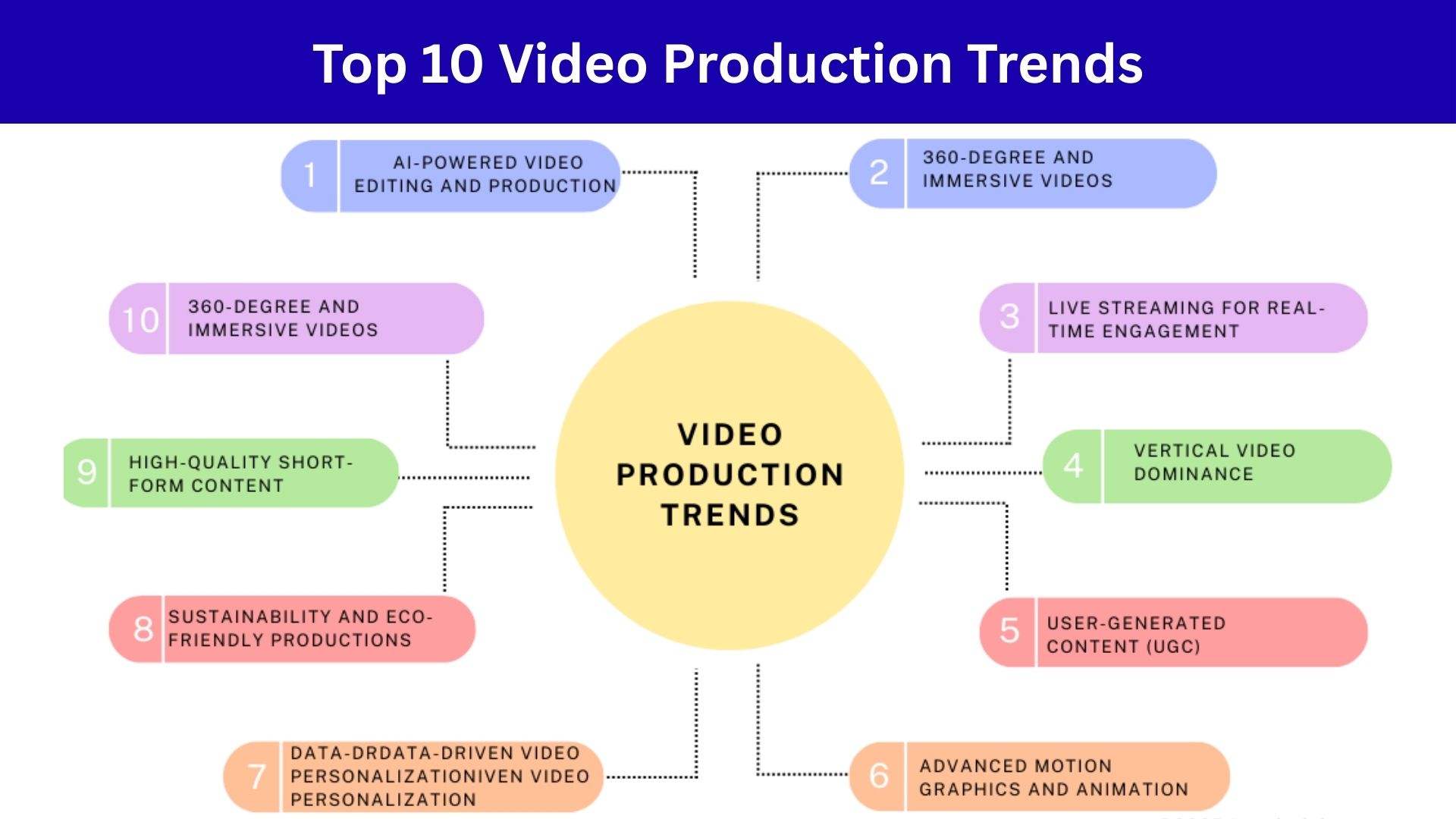
1. AI-Powered Video Editing and Production
Artificial Intelligence (AI) is revolutionizing the video production process. AI tools are automating repetitive tasks like video editing, sound mixing, and color correction, allowing content creators to focus more on creative elements. Platforms like Runway ML and Pictory are making it easier for brands to produce high-quality content more quickly and efficiently. AI-driven solutions can also help create personalized video experiences by analyzing viewer behavior and adjusting content in real-time.
2. 360-Degree and Immersive Videos
As consumer expectations evolve, immersive content is becoming a game-changer. 360-degree videos, Virtual Reality (VR), and Augmented Reality (AR) offer unique experiences that engage viewers in innovative ways. Whether it’s offering a virtual tour of a real estate property or showcasing a product demonstration in AR, immersive videos create experiences that leave lasting impressions. Industries like real estate, retail, and tourism are already using these technologies to enhance their brand experiences.
3. Live Streaming for Real-Time Engagement
Live streaming is becoming an indispensable tool for brands to engage with their audience in real-time. Platforms such as YouTube, Instagram, and Twitch are growing in popularity for live Q&As, product launches, and behind-the-scenes content. Real-time engagement allows brands to create authentic connections with their audiences, making them feel like part of the experience.
4. Vertical Video Dominance
With mobile-first platforms like Instagram Reels, TikTok, and YouTube Shorts, vertical videos have become a major trend. The vertical format is ideal for mobile viewing, allowing brands to capture attention and deliver bite-sized content that resonates with audiences on the go. Short, engaging videos that are tailored to these platforms are essential for businesses looking to stay relevant and increase engagement.
5. User-Generated Content (UGC) in Professional Videos
User-generated content continues to thrive, and more brands are incorporating UGC into their professional video campaigns. Whether through customer reviews, testimonials, or showcasing user experiences, combining UGC with polished production can result in authentic, relatable content. This helps build trust and credibility, and it’s especially effective for brands looking to connect with younger audiences.
6. Advanced Motion Graphics and Animation
Incorporating dynamic motion graphics and 3D animation into videos is a powerful way to capture attention and communicate complex ideas in a visually compelling manner. From explainer videos to product demos, advanced animation and visual effects are enhancing storytelling across industries. As technology continues to improve, we can expect even more innovative uses of motion graphics and animation in video marketing.
7. Data-Driven Video Personalization
Consumers expect personalized experiences, and video is no exception. Data-driven video personalization uses analytics to tailor video content based on viewer preferences, behaviors, and demographic data. Personalized videos can significantly increase engagement and conversion rates, making them an essential tool for marketers. Brands can create targeted video campaigns that speak directly to the needs and interests of their audience.
8. Sustainability and Eco-Friendly Productions
Sustainability is not just a buzzword—it’s a priority. In 2026, expect a rise in eco-friendly video production practices as brands seek to reduce their carbon footprints. This can include using renewable energy sources, reducing waste, or incorporating virtual production techniques that minimize travel and physical set construction. Environmentally conscious production practices are important for businesses that want to align with consumers’ growing demand for sustainability.
9. High-Quality Short-Form Content
Short-form videos have been gaining traction across social media platforms. In 2026, we will see more brands creating high-quality short-form content that captures attention in less than 60 seconds. These videos are ideal for quick promotions, product highlights, or teasers, and they’re highly shareable, making them perfect for social media marketing. Balancing creativity and brevity will be key to success in this format.
10. Multilingual Video Production
As global audiences become more diverse, the need for multilingual video content is growing. By incorporating subtitles, voiceovers, and dubbing, brands can expand their reach and connect with international markets. Multilingual video production helps brands localize their messaging, ensuring they resonate with a broader audience and build global brand recognition.
How to Incorporate These Trends into Your Video Strategy

To stay ahead of the curve in 2026, here are a few strategies for incorporating these trends into your video marketing plan:
- Leverage AI Tools: Use AI-powered editing platforms to speed up production and personalize content for your audience.
- Experiment with Immersive Technologies: Incorporate VR, AR, and 360-degree videos to offer unique, engaging experiences.
- Optimize for Mobile: Focus on creating vertical videos and short-form content designed for mobile-first platforms.
- Partner with Experts: Collaborate with professional video production agencies to ensure your videos are optimized for the latest trends.
Case Studies of Trend-Driven Video Success
- E-commerce Brand: A 360-degree virtual store tour boosted customer engagement by 50%.
- Tech Company: Personalized product demo videos increased conversions by 30%.
- Retail Chain: Short-form videos on TikTok generated 10x more shares than traditional ads.
Conclusion
Accurate transcription is essential for clear communication, compliance, accessibility, and operational efficiency. While automated tools can assist with quick drafts, professional transcription services continue to deliver superior accuracy—especially for complex content, multiple speakers, technical terminology, and industry-specific documentation.
The services featured in this guide offer a range of solutions, but organizations that require consistent quality, fast turnaround, and human-verified accuracy benefit most from trusted providers like VerboLabs. By combining expert transcriptionists with advanced tools, VerboLabs ensures transcripts that are reliable, readable, and ready for professional use.
Whether you need transcription for media content, legal proceedings, healthcare documentation, or business communication, choosing the right service in 2026 is a strategic decision that directly impacts productivity and accuracy.
Looking for fast, precise, and secure transcription services?
Partner with VerboLabs for industry-ready transcription solutions designed to deliver speed without sacrificing quality.

Ready to stay ahead in 2026? Let us bring these trends to life for your brand with our expert video production services. Contact us today to create videos that captivate and convert!
Frequently Asked Questions (FAQs)
The biggest video production trends in 2026 include AI-powered video editing, immersive 360-degree and VR content, live streaming, vertical videos, short-form content, personalized videos, and multilingual video production.
AI helps automate editing, color correction, sound mixing, and content personalization. This reduces production time and costs while allowing creators to focus more on storytelling and creative quality.
Yes, short-form videos remain highly effective in 2026, especially on platforms like TikTok, Instagram Reels, and YouTube Shorts. High-quality videos under 60 seconds perform well for engagement, brand recall, and social sharing.
Immersive videos create interactive experiences that increase viewer engagement and retention. They are especially useful in industries like real estate, tourism, retail, and product demonstrations.
Multilingual video production helps brands reach global audiences by adapting content through subtitles, voiceovers, and dubbing. It improves accessibility, audience trust, and international brand visibility.
Businesses can use data-driven insights such as viewer behavior, location, and preferences to create personalized video content. Personalized videos often lead to higher engagement, better conversion rates, and improved customer experience.
Brands can begin by using AI editing tools, focusing on mobile-first formats, experimenting with immersive content, and partnering with professional video production teams to ensure quality and consistency.