

A live game update changes the name of an item in the inventory, yet the old name remains in one of the dialogues. Two characters speak this line, but localized subtitles no longer match the audio timing. These are some of the problems that complicate the localization process of video games, as it is more than just converting the lines of the game into another language.
The following manual presents a comparison of ten localization solutions available for game studios, publishers, localization producers, and language vendors, keeping in mind the demands of production.
- CENTROID by VerboLabs: an AI-powered localization solution equipped with quality checks and a human check phase.
- Crowdin: Combination of professional translators and a gaming community.
- memoQ TMS: Offers translation production, terminology, and vendor workflows.
- Phrase Strings: Game text processing, metadata, and version control.
- Lokalise: Collaboration around digital products and game UI strings.
- Transifex: Continuous localization of constantly updated content.
- Gridly: Structured content for video games, including dialogue and dependencies.
- Localazy: Developer-led application localization.
- POEditor: Offers file translation and collaboration.
- Weblate: Managed translation workflow.
Compare the 10 Options by Buying Requirement
| Tool | Main focus | Pricing basis | Important buyer check |
| CENTROID | AI-led localization | Contact sales | Game-file and engine workflow |
| Crowdin | Community and professional collaboration | Free and paid plans | Contributor permissions |
| memoQ TMS | Translation production | Contact sales/custom plans | Game-specific filters and vendor handoff |
| Phrase Strings | Key-based game text | Subscription | Engine and branch workflow |
| Lokalise | Digital product localization | Subscription | Game-specific context |
| Transifex | Continuous localization | Subscription | File and update workflow |
| Gridly | Game content management | Contact sales | Dependencies and engine export |
| Localazy | Developer-led localization | Subscription | Resource files and build testing |
| POEditor | Resource-file translation | Subscription | Variables and reviewer controls |
| Weblate | Repository-managed localization | Hosted or self-managed | Hosting and maintenance |
What Should Studios Look for in Game Localization Tools?
Game Engines and Resource-File Exchange
First and foremost, ensure that the platform can connect with your development tools. A studio using Unity would likely have different requirements from one that uses Unreal Engine or an in-house engine.
Investigate whether the platform is able to import and export actual resources without changing asset IDs, and output them in a format that is usable for the development team.
Narrative Context and Terminology
The dialogue in games is often dictated by the character, scene, emotional involvement, and plot. What’s said might have different implications depending on who says it and, therefore, translators have to be provided with necessary details like names of characters, information about quests, screenshots, and previous dialogue. A glossary should contain appropriate names of characters, places, weapons, items, and abilities.
Variables, Plurals and UI Constraints
Video game text often includes value variables such as the player’s name, score, number of items, and awards. All of these must be translated correctly. Some languages require not only longer words, but also different sentences.
Live Operations and Contribution Control
Live games undergo regular updates, events, additions of items, and bug-fixing activities. Localization teams have to be aware of which strings are modified and which translations need updating. Check if the tool offers support in terms of project versions, branches, change tracking, and automated updates.
Linguistic QA, Audio and Commercial Scope
Quality verification of the text and testing in the gameplay are different activities. The translation will pass the spelling check and still appear wrong on the screen. Also, do not assume that the game localization platform includes voice casting, recording, dubbing, subtitle timing, and so on, as these require other tools, partners, or services as well.
How Did We Evaluate the Shortlist?
This is a desk research-based shortlist made with reference to the product’s official information and relevance to the workflows in game localization. No practical testing was conducted. The comparison includes game content management, file transfer, narrative context, translation memory, quality check, collaboration, and update handling. Vendor capabilities as presented on their websites are not proof of support for every game engine or production workflow.
Prior to purchasing, the studios must request a demo on the demo plan, based on their game files. Also, current pricing and independent customer feedback need to be checked separately.
The 10 Best Game Localization Tools for Studios and Publishers
1. CENTROID by VerboLabs – AI-Led Game Text Localization Candidate
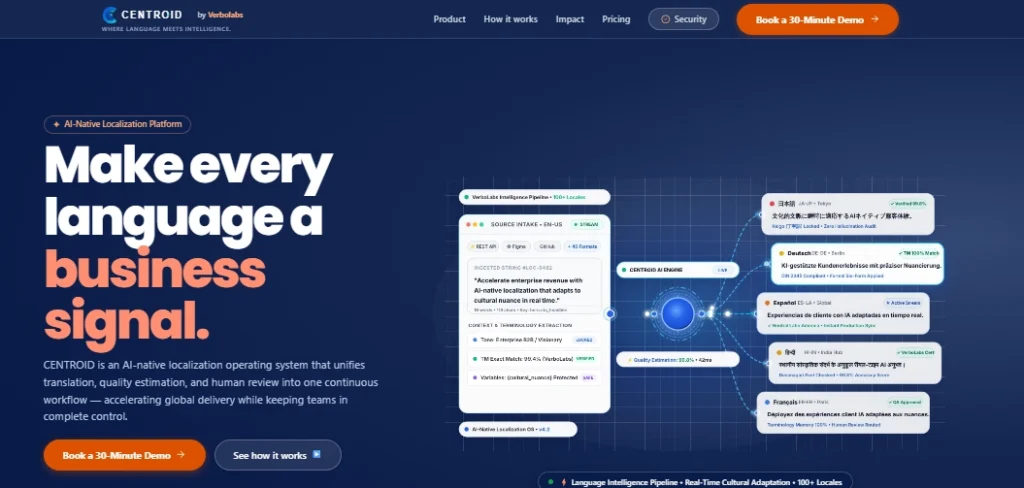
VerboLabs’ CENTROID is an AI-powered Translation Management software with tools for translation, terminology, quality checks, and human reviews. Game studios interested in AI-assisted localization should check if it meets their production and engine requirements.
Why CENTROID by VerboLabs Fits Game Studios
CENTROID appears to be a fit for studios that need to handle translation and quality review in a combined way, as its public information outlines the processes for receiving content, context-aware translation, human review, and product delivery.
CENTROID: Features, AI and Quality
Its features include machine translation of text, a system for editing translations, terminology management, MQM-based assessment, automated reviews, and human review.
CENTROID: Pricing and Customer Feedback
The company has informed potential buyers to ask for the platform’s cost through sales, as it also suggests a trial.
CENTROID: Limitations and Buyer Checks
To assess whether CENTROID fits your game development needs, please check how its class works in a game-contextual environment.
2. Crowdin – Community and Professional Game Collaboration
Why Crowdin Fits Game Studios
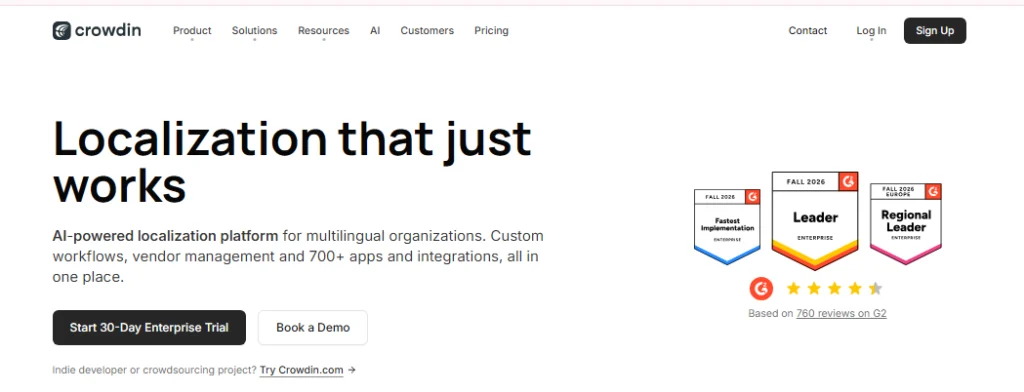
Crowdin is a suitable option for games with active communities of players and regular updates to the content. Studios can experiment with processes of combining professional translations with contributions from the community and use the software for both translation projects and collaboration.
Crowdin: Features, AI and Quality
The platform allows translation projects and collaboration, translation memory, a glossary, and integration. Crowdin also offers tips on how to localize games, including Unity processes and working with professional translators as well as communities.
Crowdin: Pricing and Customer Feedback
Crowdin has different plans for projects with small budgets and bigger teams. Refer to the pricing page to learn about project limitations, contributor limitations, and big companies’ usage limits.
Crowdin: Limitations and Buyer Checks
It is important to monitor community translations closely. Make sure to check how the information about unreleased content is protected, how to approve suggestions, and whether professional review would be involved in final project delivery. Test which engine connector is working and the export process.
3. memoQ TMS – Game Localization Production Workflows
Why memoQ TMS Fits Game Studios
MemoQ may work well for teams needing control over translation production processes, management of terms, and structured vendor workflows. Its game localization offering integrates with Gridly and Voiseed for managing content and audio production.
memoQ TMS: Features, AI and Quality
The platform has term bases, TM, customizable filters for files, updates of source texts, and options for machine translation. Content Connector is able to transfer the content from monitored folders to translation projects.
memoQ TMS: Pricing and Customer Feedback
The licensing and deployment options are different. Game developers should contact memoQ to obtain information on pricing according to the project size, number of users, and elements used.
memoQ TMS: Limitations and Buyer Checks
Make sure you understand what memoQ TMS includes and what requires the help of additional vendors. The pricing, integration requirements, and responsibilities should be checked, as Gridly and Voiseed have separate solutions for managing content and audio.
4. Phrase Strings – Key-Based Game Text Pipelines
Why Phrase Strings Fits Game Studios
That may be beneficial for development teams that require synergy between their translation processes and overall product development cycle.
Phrase Strings: Features, AI and Quality
Phrase supports a variety of over 50 file formats, tailored metadata, branching, translation memories, glossary support, and automated quality assurance. It presents a few workflows for game localization in addition to its API, CLI, and Unity integration solutions.
Phrase Strings: Pricing and Customer Feedback
Phrase states that there is a UI/UX software package plan costing $525 per month billed annually. That includes 15 seats for Strings users and up to a million words processed. It is up to the users to check for any current promotions and any restrictions the users might encounter.
Phrase Strings: Limitations and Buyer Checks
Make sure that your studio uses Unity Localization and the plug-in is appropriate for its configuration. Check the possibilities of branching, working with asset IDs, and exporting resources by working with a real game update and not just a demo version of the product.
5. Lokalise – Digital-Product String Collaboration

Why Lokalise Fits Game Studios
It is advisable for studios that work with mobile games or have digital offerings that frequently undergo UI improvements.
Lokalise: Features, AI and Quality
The various features that come with the plans that have been shared by them are translation memory, glossaries, workflow automation, AI and machine translation, screenshots, branching, etc. The features and usage limitations vary based on the plan that has been chosen by the user.
Lokalise: Pricing and Customer Feedback
Lokalise has 4 different plans, which include Explorer, Growth, Advanced, and Enterprise plans. Based on the pricing information provided on its pricing page, this service offers the Explorer plan at a starting price of $149 on a monthly basis, the Growth plan at a starting price of $379 on a monthly basis, and the Advanced plan at a starting price of $1,049 with annual billing. Please confirm the current prices and limits before subscribing.
Lokalise: Limitations and Buyer Checks
Do not assume that the general product localization features cover the game-specific requirements. Test the character contexts, dialogues, asset dependencies, and engine export. Verify what integrations are available as part of the selected plan.
6. Transifex – Continuous Game Text Updates
Why Transifex Fits Game Studios
The situation needs to be thoroughly evaluated if developers make text changes on a regular basis and require a reliable process for passing the updated text to translators.
Transifex: Features, AI and Quality
Transifex has a wide range of localization processes and tools that allow companies to get integration options and synchronize content automatically. Companies should check its integrations and processes to see how they fit the needs of their game development projects.
Transifex: Pricing and Customer Feedback
Transifex offers numerous subscription packages with various features and limitations. For information on prices, turn to its customer service and find out what subscription model suits you.
Transifex: Limitations and Buyer Checks
Check whether your game engine and format of resource files are compatible. Check how updated strings are identified, processed, and delivered to you.
7. Gridly – Game Text, Dialogue and Content Dependencies
Why Gridly Fits Game Studios
Gridly is useful for studios that need a single location to keep all game assets organized as well as to monitor localization processes. The utility ensures the functioning of both development and localization teams based on shared information.
Gridly: Features, AI and Quality
Available features include grids of content, workflows for translations, AI-based translation, automated quality assurance, screens, and ways of integration. It also boasts managing texts and metadata of games all in one place.
Gridly: Pricing and Customer Feedback
Gridly allows a testing stage and connects customers with the necessary demo in case they need to take advantage of the entire platform. Ask about the latest prices and available modules.
Gridly: Limitations and Buyer Checks
Inquire how the service manages the interdependency between dialogues, quests, descriptions of items, and sharing of sounds. Try to test exports with the engine and get confirmation on whether the platform handles translation production independently or if a connected TMS is needed (for example, memoQ).
8. Localazy – Lean Game UI Localization Pipelines
Why Localazy Fits Game Studios
Developers might take into account the management of translation resources without needing to create a large localization platform.
Localazy: Features, AI and Quality
Localazy provides the capabilities of translation memory, glossary generation, context provision, screen imaging, checking code and placeholders, plural rules, the command-line interface (CLI), application programming interface (API), and data conversion. This platform also includes features like branching and automated project management.
Localazy: Pricing and Customer Feedback
Localazy’s pricing options include a Professional Plan for $34/month and an Autopilot Plan for $78/month. Each subscription has its own limits on source-key operations and the amount of imported AI translation.
Localazy: Limitations and Buyer Checks
Localazy makes it easier to localize resource files; nevertheless, studios will still have to verify translations in the game. Be sure to check how the context of the character, dependencies of the quest, and references to audio will be processed outside the platform.
9. POEditor – Resource-Based Game Translation Collaboration
Why POEditor Fits Game Studios
It is essential to evaluate whether the game in use uses accepted support formats and whether the translation team wants to do things without complicated production arrangements.
POEditor: Features, AI and Quality
POEditor provides support for formats such as JSON, XLIFF, ARB, and RESX. The platform is equipped with functions for translation, proofing, and the provision of project statistics.
POEditor: Pricing and Customer Feedback
POEditor offers free and paid membership options. The price list changed in February 2026, so studios must refer to the current price list rather than rely on old comparisons.
POEditor: Limitations and Buyer Checks
Test the variables, item names, plural rules, and file exports of the actual game resource file. Verify the contributor’s privileges and the way accepted translations go back to the development team.
10. Weblate – Repository-Managed Game Localization
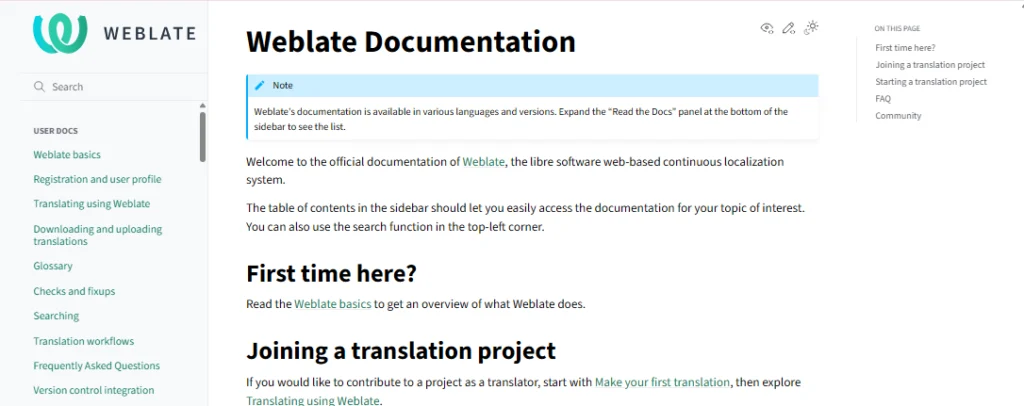
Why Weblate Fits Game Studios
One of the issues to consider is when the studio is already applying Git-based workflows and needs to organize translation changes along with the source files.
Weblate: Features, AI and Quality
Weblate provides translation memory, glossaries, quality checks, machine translation, and AI suggestions, as well as repository workflows. Its documentation includes information about approval controls ensuring that the translations that have not gone through the approval process do not reach the repo.
Weblate: Pricing and Customer Feedback
Weblate has hosted and self-hosted versions. Find out what the current tariffs and hosting conditions are to figure out what services and support options are included.
Weblate: Limitations and Buyer Checks
Self-hosting creates the necessity of taking care of updates, security, backups, and maintaining service. Check the file formats, repository configuration, and review process before connecting the application to the production game.
Which Shortlist Fits Your Game Production Workflow?
| If your priority is… | Consider | Why | Verify first |
| AI-led game text localization | CENTROID | AI translation and quality review | Game-file and engine workflow |
| Community and professional collaboration | Crowdin | Multiple contributor types | Moderation and access controls |
| Translation production | memoQ TMS | Terminology and vendor workflows | Partner products and costs |
| Key-based game text pipelines | Phrase Strings | Metadata, branching, and Unity support | Engine and export setup |
| Digital product strings | Lokalise | UI localization and collaboration | Game-specific context |
| Continuous text updates | Transifex | Ongoing localization workflows | File and branch handling |
| Dialogue and content dependencies | Gridly | Structured game content management | Engine export and linked assets |
| Lean UI localization | Localazy | Developer tools and automation | Build testing |
| Resource-file collaboration | POEditor | Structured file translation | Variables and approvals |
| Repository-managed translation | Weblate | Git-based workflows | Hosting and maintenance |
What Should Your Vendor Pilot Prove?
In a product demonstration, there must not be merely sample phrases, but actual game content.
A quest, an inventory screen, and a subtitle sequence in 2 languages must be created, specifying character names, variables, the description of objects, and information regarding a minor source update.
It is necessary to check if the tool:
- Works to store asset IDs, variable names, and formatting correctly;
- Provides correct context of characters and scenes to translators;
- Finds strings modified by the source;
- Keeps unreleased content confidential;
- Delivers translations that meet guidelines.
Evaluation of lore inconsistencies, context questions, problems with variables, patch changes, and inbuilt language issues should be completed. Use the same files and results for all vendors.
Ask the vendors: In case of modification of an object, which linked strings, subtitles, and audio materials are subject to review prior to building?
Document the starting point for metrics, results of tests, the name of the reviewer, and issues that have not been resolved yet. Only after testing results are achieved, performance claims should be made.
Final Recommendation
There is no single best tool for game localization that would work for all studios; it all depends on game engine type, structure of content, program for updates, the team of translators who will handle the task, and testing needs.
Lastly, CENTROID by VerboLabs should be studied more closely because it provides AI-powered translation services with quality checks. Nonetheless, it is necessary to check its game-oriented sharing of files between game engines and the ability to work with audio with a demo.
Find yourself a tool that will help protect both the story and the strings. Get a demo of CENTROID where you use your quest dialogues and other UI strings, as well as examples of game files sent by you.

Expand your global reach with VerboLabs! Get accurate, culturally adapted localization services to connect with new markets. Contact us today for expert solutions!
Frequently Asked Questions
In-built testing needs to confirm text clipping, font display, button labeling, UI context, references to gameplay, and proper subtitle timing. A translation can pass file-level checks for quality but fail on-screen presentation.
Not always. Voice casting, text translation, recording, dubbing, subtitle timing, and audio implementation are separate processes. Some platforms offer integrations or partner solutions, while others focus only on text.
Yes. While using community advice to make specific decisions, the studio must make sure its work is approved by professional translators as before. For that, it is important to have permissions, moderation, and control over privacy.
The pilot must consist of the playable quest, UI text, dialogue, variables, and source updates. Test translated content in the game and ensure narrative consistency, file accuracy, build defects, and delivery efforts.