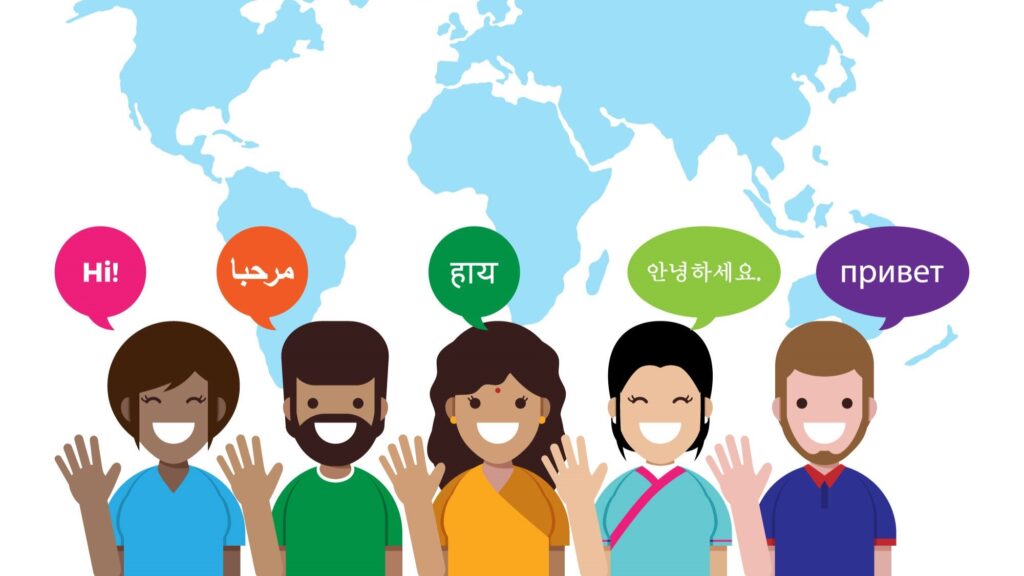


In 2026, partnering with a localization company can help you expand your business and generate revenue. It will not only translate your content into different languages, but also help with reaching local audience, deliver your brand message in more than one language, and deal with technical and legal documents in native dialects, and help your brand establish itself in the niche market.
However, choosing a partner that fits your expectations, budget, and timelines is very crucial. A good localization agency will help with multimedia localization, linguistic and functional QA, workflow automation, and also a combination of all these services together. This guide discusses the top 10 localization companies in the USA that can help your business go global.
How We Evaluated These Localization Companies
The criteria used in this guide include localization scope, industry expertise, technology and workflow capabilities, linguistic and functional QA, scalability, integrations, security and compliance, and suitability for different content types. Current industry reports also show that language providers increasingly combine traditional localization services with AI, platforms, and other technology capabilities.
What matters more than company size?
In the current scenario, the size of the company is not the main point of concern. Businesses look for an agency that can offer a broader service range, enterprise resources, and high support system for difficult multilingual needs programmes. An expert or technology-led service provider is often considered to be the better choice when businesses deal with website, app, or automated content localization.
Top 10 Localization Companies in the USA
1. Verbo Labs
What services do they offer?
VerboLabs provides translation and localization for content, websites, software, and apps. Its services also cover AI localization, multilingual content, dubbing, voice-over, subtitling, and related language services.
Which languages do they support?
The company works with 120+ languages, such as Indian regional and international languages, including Tamil, Telugu, Spanish, French, Japanese, etc.
Who do they work with?
Its stated industry coverage includes e-learning, healthcare, finance and banking, gaming and entertainment, e-commerce, travel and hospitality, as well as other business sectors.
What makes them different?
VerboLabs combines localization with multilingual content and multimedia services. Its current website also positions the company as a US-based localization partner using AI alongside human linguistic expertise.
Who are they best for?
It may suit businesses looking for a multilingual partner that can manage website, app, content, video, dubbing, or subtitling requirements through one localization workflow.
2. TransPerfect
What services do they offer?
TransPerfect offers localization services for websites, software, and mobile application. It also works with digital content, global SEO, testing and translation. Its GlobalLink technology supports multilingual content management and workflow automation.
Which languages do they support?
The company states that it provides services in 200+ languages.
Who do they work with?
Its services span sectors including technology, finance, retail, travel, life sciences, legal, gaming, and media.
What makes them different?
TransPerfect combines language services with its GlobalLink technology and offers technical testing for websites and software.
Who are they best for?
They may be a fit for large organizations with complex multilingual websites, software, apps, digital content, or enterprise localization programmes.
3. Lionbridge
What services do they offer?
Lionbridge provides software, mobile app, website, technical, and broader content localization. Its software localization services include internationalization, translation, engineering, user acceptance testing, localization testing, functional testing, and bug fixing.
Which languages do they support?
Lionbridge states that its technology translation services cover 380+ languages.
Who do they work with?
The company highlights experience across software and app development, consumer electronics, telecommunications, e-commerce, e-learning, IT, engineering, and other technology-related sectors.
What makes them different?
Its technical localization offering goes beyond translation to include engineering and functional testing. Lionbridge also uses human-in-the-loop workflows alongside AI and language technology.
Who are they best for?
They may suit technology companies that need software, website, app, or technical content localization together with engineering and testing support.
4. RWS

What services do they offer?
RWS provides translation, website and software localization, international SEO, e-learning localization, linguistic QA, accessibility, creative content localization, and ongoing localization support.
Which languages do they support?
RWS states that its website localization services cover more than 500 language pairs.
Who do they work with?
RWS works with businesses ranging from ambitious companies to global enterprises and covers industries and content types including technology, marketing, websites, software, training, and accessibility.
What makes them different?
RWS combines localization services with its own language technology ecosystem, including Trados and AI-supported workflows. Its website localization offering also includes international SEO and ongoing multilingual website support.
Who are they best for?
RWS may be suitable for organizations managing large multilingual programmes where translation, localization technology, content operations, and QA need to work together.
5. Welocalize
What services do they offer?
Welocalize provides language services and content transformation supported by its Opal service delivery platform. Its workflows combine machine translation, large language models, NLP technology, automation, and human experts.
Which languages do they support?
Welocalize states that it operates across 250+ languages and serves multiple industries.
Who do they work with?
Its stated industry coverage includes technology, life sciences, finance, legal, and consumer sectors.
What makes them different?
Opal is designed around configurable workflows and expert-in-the-loop review rather than treating every localization project in the same way. Welocalize also places significant emphasis on AI-enabled language delivery and enterprise security.
Who are they best for?
They may be a good fit for larger organizations that need high-volume multilingual content combined with configurable AI-supported workflows.
6. Smartling
What services do they offer?
Smartling focuses heavily on technology-enabled localization. Its offering includes a translation management system, translation proxy, LQA tools, AI-powered translation, translator tools, analytics, and integrations with more than 50 software platforms.
Which languages do they support?
Smartling provides multilingual translation and localization through its platform, with language availability depending on the selected service and workflow.
Who do they work with?
Its platform is designed for organizations managing websites, applications, marketing content, and other multilingual digital assets.
What makes them different?
The major differentiator is its technology-led model. Smartling connects localization with existing business systems through integrations, APIs, and its Global Delivery Network.
Who are they best for?
Smartling may suit digital-first businesses that want to automate content movement between their existing systems and a centralized localization workflow.
7. Acclaro
What services do they offer?
Acclaro provides content, website, software, marketing, social media, multimedia, and other localization services. Its current offering combines AI-enabled workflows with human linguists.
Which languages do they support?
Acclaro states that it provides translation and localization services in 125+ languages.
Who do they work with?
The company highlights experience with businesses in areas such as technology, SaaS, marketing, media, and e-commerce.
What makes them different?
Acclaro focuses on connecting linguists, workflows, technology, reviewers, and stakeholders within a single localization programme.
Who are they best for?
Acclaro may fit companies that need a mix of localization services and structured workflow support as their multilingual content volume grows.
8. LILT
What services do they offer?
LILT combines AI-powered translation technology with human verification and localization services. Its offering covers marketing, e-learning, technical content, web and mobile apps, e-commerce, multimedia, and customer support content.
Which languages do they support?
LILT states that its platform supports 100+ languages.
Who do they work with?
The company focuses strongly on enterprise organizations and supports content programmes across technology, marketing, etc.
What makes them different?
Its main distinction is its AI-first localization platform with human expert verification. LILT also connects with more than 100 business systems and uses customer-specific linguistic data, terminology, and translation memory within its workflows.
Who are they best for?
LILT may be suitable for enterprises looking to combine AI-driven translation with human quality control and automated localization workflows.
9. Centific
What services do they offer?
Centific works across localization, AI data, global experiences, and multilingual AI development. Its current localization-related work includes helping AI models handle language, cultural context, and real-world market requirements.
Which languages do they support?
Centific’s current public materials focus on multilingual and multicultural AI capabilities rather than publishing one universal language-count figure.
Who do they work with?
Its positioning is particularly relevant to technology and AI organizations that need multilingual data, model evaluation, localization, and global experience capabilities.
What makes them different?
Centific’s localization offering overlaps with its AI and data capabilities. It uses AI-assisted workflows and human feedback to help models operate across languages and cultures.
Who are they best for?
It may be a fit for technology and AI businesses whose localization requirements extend into multilingual model training, evaluation, data, or international AI experiences.
10. MotionPoint
What services do they offer?
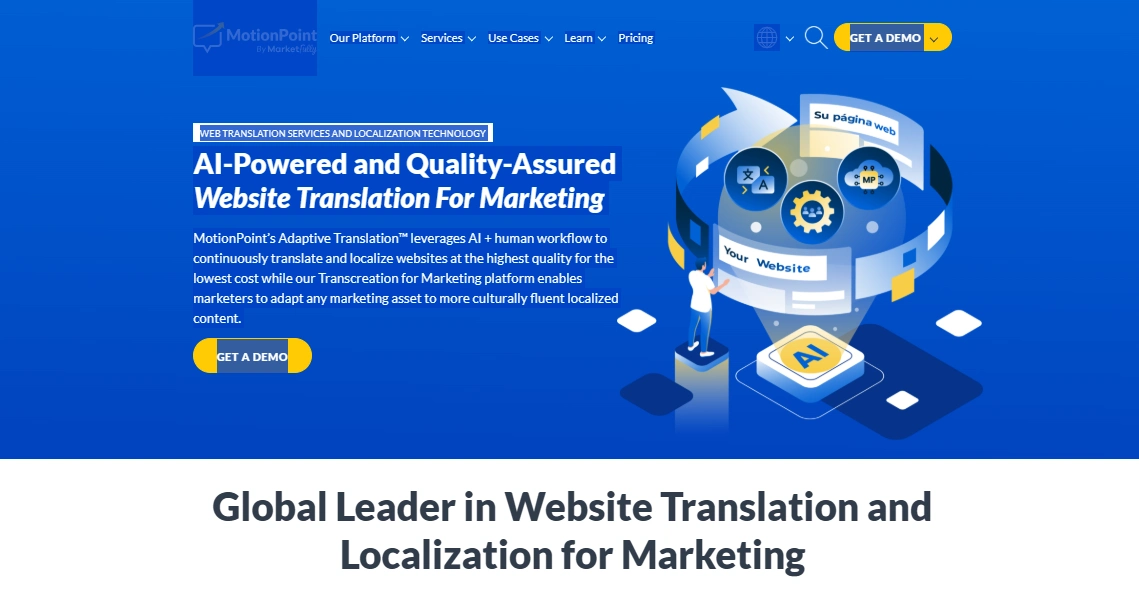
MotionPoint focuses strongly on website localization. Its platform uses proxy technology, connectors, plugins, and APIs to identify website content and route it through a managed translation workflow.
Which languages do they support?
Its website localization platform supports multilingual website deployment, with the exact language mix depending on the project and selected configuration.
Who do they work with?
MotionPoint is particularly relevant to businesses that need multilingual websites without creating a large internal localization operation.
What makes them different?
Its managed model is a key differentiator. MotionPoint’s platform can detect new website content and automatically send it through the translation process, reducing the amount of manual coordination required from internal teams.
Who are they best for?
It may suit businesses where website localization is the main requirement and the internal marketing or web team wants a more hands-off localization workflow.
How to Choose the Right Localization Company for Your Business
Before selecting a provider, assess the project rather than comparing companies only by language count or price.
- Define the markets and content: Identify the countries, languages, websites, apps, software, documents, videos, or other assets that need localization.
- Check industry expertise: Look for experience with the terminology, regulations, and customer expectations relevant to the business.
- Understand the AI and human workflow: Ask which content can be automated and where professional human review is included.
- Ask about LQA and functional testing: For software, apps, and websites, linguistic accuracy alone is not enough. UI, functionality, formatting, and language display may also need testing.
- Review integrations: Check whether the provider works with the CMS, TMS, repository, design tools, or other systems already being used.
Is VerboLabs the Right Localization Partner for Your Global Growth?
VerboLabs currently positions itself as a US-based global localization partner offering translation, AI localization, multilingual content, dubbing, subtitling, and language technology across 120+ languages. VerboLabs may be relevant for businesses that need:
- Website or app localization across multiple languages
- Software and digital content localization
- AI-assisted localization with human review
- Multilingual marketing and business content
- Dubbing, voice-over, and subtitling alongside localization
- Language support for sectors such as e-learning, healthcare, finance, gaming, e-commerce, and travel
Conclusion
There is no single localization provider that fits every business or every type of project. The practical choice depends on the content being localized, target markets, industry requirements, technology stack, QA expectations, project scale, and the amount of work a business wants to manage internally.

Expand your global reach with VerboLabs! Get accurate, culturally adapted localization services to connect with new markets. Contact us today for expert solutions!
FAQs
There is no fixed localization price because costs depend on languages, content volume, content type, technical work, quality requirements, and turnaround time.
Translation changes content from one language to another while preserving its meaning. Localization goes further by adapting language, cultural references, formats, visuals, user experience, and other elements for a specific market.
It is particularly relevant to software, SaaS, e-commerce, gaming, healthcare, finance, education, manufacturing, media, travel, and global consumer brands.
The timeline depends on content volume, number of languages, technical complexity, review requirements, and the type of localization involved.
Localization helps businesses adapt their products and content to the language and expectations of a particular audience.
The balance depends on the content, risk level, quality requirements, and workflow, with human review remaining important for context, terminology, cultural adaptation, and quality control.
Start by defining the languages, markets, content types, integrations, QA requirements, security needs, and expected volume.