Life sciences companies are working with complex data. This data must be accurate and unambiguous in each language. They need clinical documents, scientific studies, and regulatory filings translated. These services are also used for medical device materials, pharmaceutical content, and patient data. These are the needs that professional translation services can meet. But selecting a provider is more than just evaluating their translation skills.
10 Life Science Translation Services to Consider in the US
When comparing organizations, life-sciences teams should look at several key areas. These include scientific and medical expertise and clinical and regulatory domain coverage. Teams should also consider medical device capabilities and terminology management. Finally, they have to consider quality assurance, security certification, technology, language coverage, scalability, and project management.
1. VerboLabs
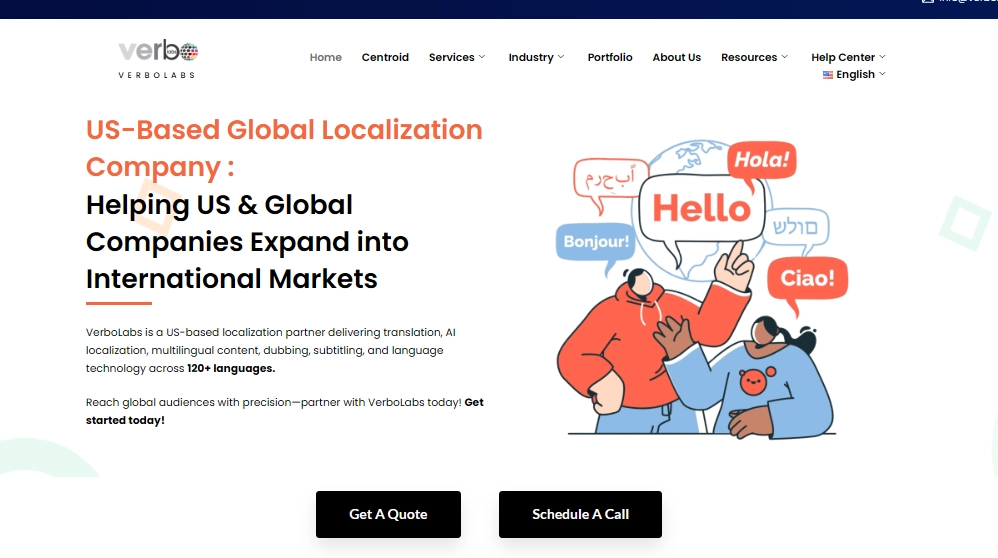
VerboLabs delivers translation and localization solutions in over 120 languages. VerboLabs offers technical and medical document translation services. According to the company, its technical translators have advanced degrees and relevant industry knowledge.
These services help life science companies translate technical, medical, scientific, and healthcare documents. We also support broader localization needs, so companies can succeed in international markets.
If you have clinical, scientific, regulatory, or medical device translation requirements, contact VerboLabs. Please provide your project details and the languages you require to request a quote.
2. Language Scientific
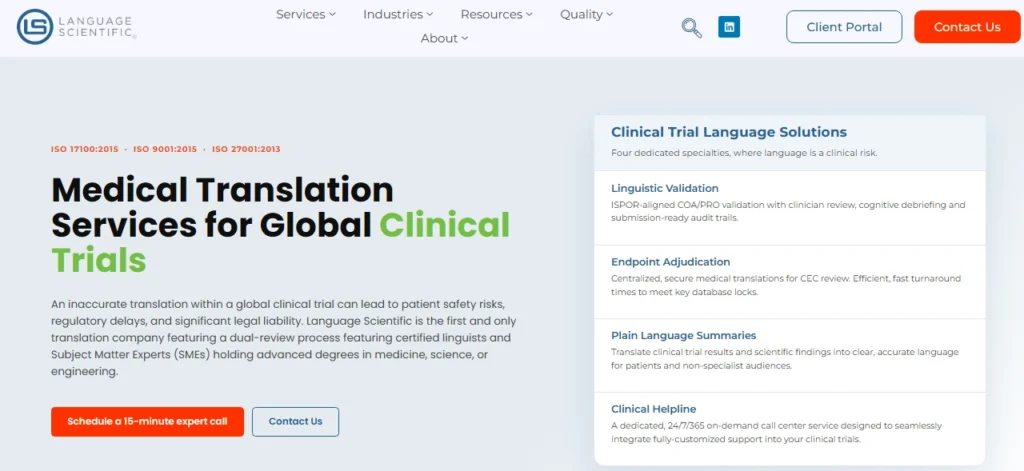
Language Scientific is a translation service for the life and medical science industries. It is a dual review process with certified linguists supported by subject-matter experts with graduate degrees in medicine, science, or engineering. The certified medical services helps buyers compare provider coverage and expertise for certified medical.
The services offered include clinical trials, linguistic validation, and other medical and scientific materials. The company also lists ISO 17100, ISO 9001 and ISO 27001 standards on its site.
This method can be useful for any organization in need of dealing with scientific terms by both linguists and subject- matter specialists.
3. aiaTranslations
aiaTranslations is an American company that specializes only in translation services for healthcare and life-sciences fields. According to the company, it has more than 30 years of experience in this domain. Its services include translation, transcreation, multilingual studio, interpretation, and training.
The company provides services for pharmaceutical and health-related communication and works in several languages. Its project management process is tailored to ensure consistency in the multilingual project.
4. Interpreters Unlimited
Interpreters Unlimited offers translation and localization services to life-science organizations across the U.S.
Their clients include:
- Major pharmaceutical firms
- Research departments
- Biotech companies
- Medical equipment manufacturers
The company states that its translators can handle complex medical and technical documents in about 200 languages.
Examples of these documents are:
- Research articles
- Safety sheets
- Research posters
- Product manuals
- Marketing documents
- Lab procedures
5. Language Connections
Language Connections operates as a language service provider in Boston, Massachusetts, United States. It provides life-sciences translation services in addition to technical, medical, legal, and business translation services. The legal language services helps buyers compare provider coverage and expertise for legal language.
Additionally, the business also speaks of its quality assurance procedures and its engagement of subject matter experts in the review of the translated text.
6. TransPerfect Life Sciences
TransPerfect provides language solutions specifically for the life sciences industry. Its areas of expertise include clinical trials, pharmacovigilance, regulatory documents, patient engagement, medical affairs, medical devices, and digital content.
TransPerfect’s GlobalLink technology helps manage large amounts of translated content. It supports translations with tools like translation memory, terminology management, automated checks, and linguistic review.
7. RWS
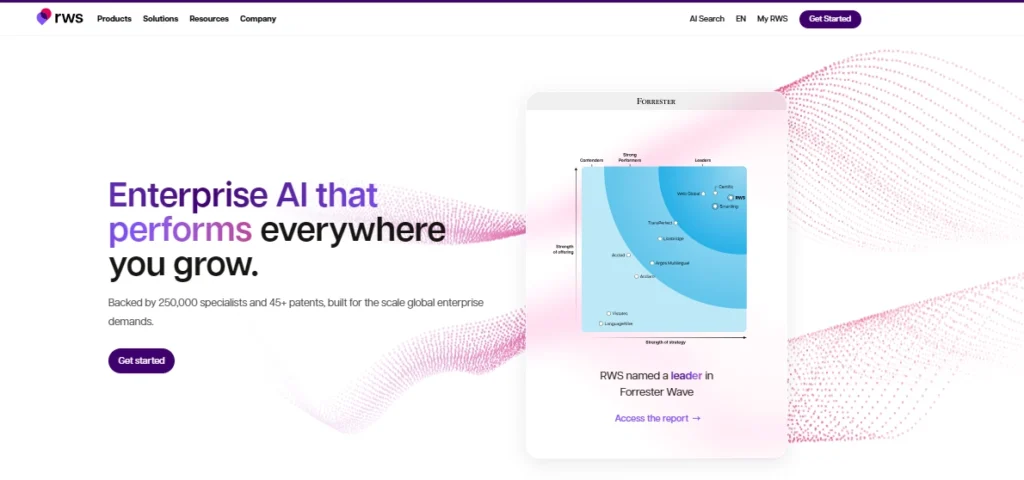
RWS offers a range of life sciences language solutions, including translation and linguistic validation. The company has grown this segment through acquisitions, most recently buying Connecticut-based Corporate Translations, Inc.
For organizations needing organized help with regulated life sciences content, RWS may be a good option.
8. Stepes
Stepes is a translation agency for the life sciences industry. They work with drug, biotechnology, CRO, medical device, and healthcare clients. They help with documents for clinical trials, drug registration, labeling, market introduction, and post-market activities. The medical device services helps buyers compare provider coverage and expertise for medical device.
Their document types include:
- Clinical trial protocols
- Informed consent forms and applications
- Drug labeling and safety documents
- Instructions for use and medical device operating instructions
- Packaging, scientific reports, and educational documents
9. Tomedes
Tomedes provides life-sciences translation services for many written works, including research papers and educational materials. It offers more than 120 languages and 950+ language pairs for translating life-science documents.
The company has a US office in Beaverton, Oregon. It also provides academic and research translation, including independent proofreading services by specialists.
Thus, Tomedes may prove useful for companies that deal with life-sciences translation of documents as well.
10. LinguaVox
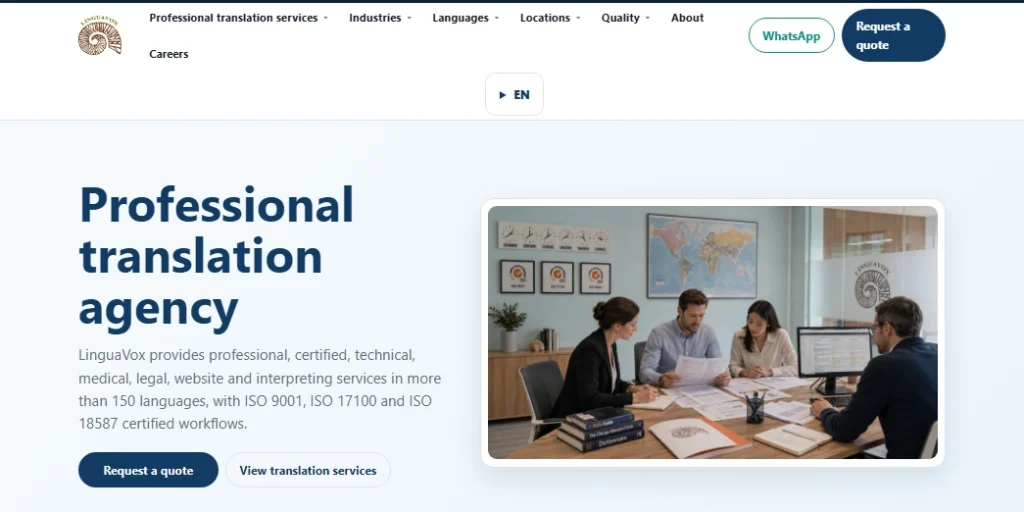
LinguaVox translates documents for the life sciences industry. This includes pharmaceutical, biotech, CRO, medical device, and healthcare companies. They support more than 150 languages. They are certified with ISO 9001, 17100, and 18587.
Their services include translating information about pharmaceuticals, biotechnology, clinical research, medical devices, and healthcare. They focus on terminology management, specialized translators, project management, and proofreading.
Why VerboLabs can be a better choice for life science translation services?
Translating life sciences documents requires deep knowledge of medical and scientific terms. VerboLabs offers technical and medical document translation in over 120 languages. Their team includes specialists with advanced technical education who handle these documents. The medical records services helps buyers compare provider coverage and expertise for medical records.
VerboLabs also provides localization services. This means they don’t just translate word for word; they adapt the content to a specific language or market. The compare language services explains the steps teams can use to plan this work.
Conclusion
When choosing a life sciences translation provider, language count alone is not enough. Organizations should also consider factors such as:
- Scientific expertise
- Medical and regulatory experience
- Terminology management
- Quality control
- Security
- Technology
- Certifications
- Scalability
VerboLabs offers technical and medical translation in over 120 languages, along with localization and quality-focused services. It may be a good option for clients with these needs.

Expand your global reach with VerboLabs! Get accurate, culturally adapted localization services to connect with new markets. Contact us today for expert solutions!
FAQs About Life Science Translation Services
Documents related to life sciences are often characterized by the use of many different medical, scientific, and technical terms. So, a translator with experience in translating life sciences documents understands the meaning of these terms
The types of life sciences translation services can include translations of clinical trial documents, research papers, regulatory documents, medical device manuals, instructions for use (IFUs), etc.
Certainly, various professional providers are able to translate clinical trial protocols, informed consent forms, patient materials, etc.
Indeed, several companies do provide translation services for regulatory submissions, product labeling, safety reports, and similar documents.
Linguistic validation is a quality-check process used when translating medical and clinical documents. It involves methods such as translation, back translation, and revision to ensure the translated text preserves the original meaning and is culturally appropriate for the target audience.
Definitely, AI could be helpful for the translation process, especially for large amounts of information to be translated.
Assess the provider’s expertise in science, background in healthcare and regulations, proficiency in languages, levels of service quality, and so on.
The duration of the project will depend on its length, languages used, complexity of the information, formatting of the document, checking required, and number of languages used.